Klaus Kinski Film Jukebox on Electric Sheep

Delia Sparrow kindly invited me to submit ten Klaus Kinski films for a Film Jukebox on the Electric Sheep website. You can see which ten films I picked here:

http://www.electricsheepmagazine.co.uk/features/2011/11/16/raechel-leigh-carters-film-jukebox/

With just a week to go until the 20th anniversary of Klaus’ death, I’m hoping that you will all submit your lists of favourite KK films to Du dumme Sau! to share – so get thinking about it and send them in when you’re ready.  I like hearing from you!

Posted in Other Kinski Stuff | Tagged , , , | 2 Comments

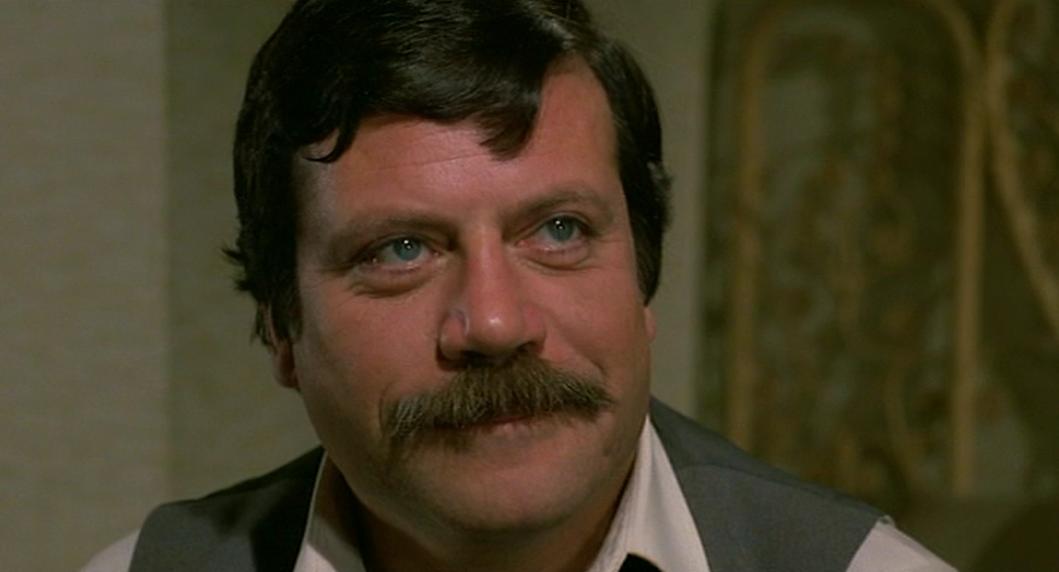
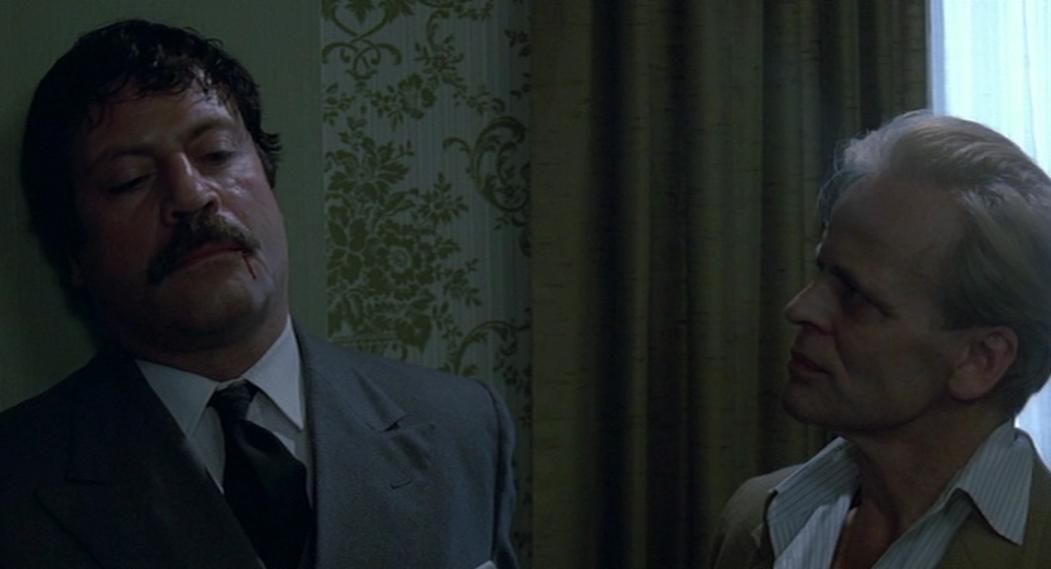
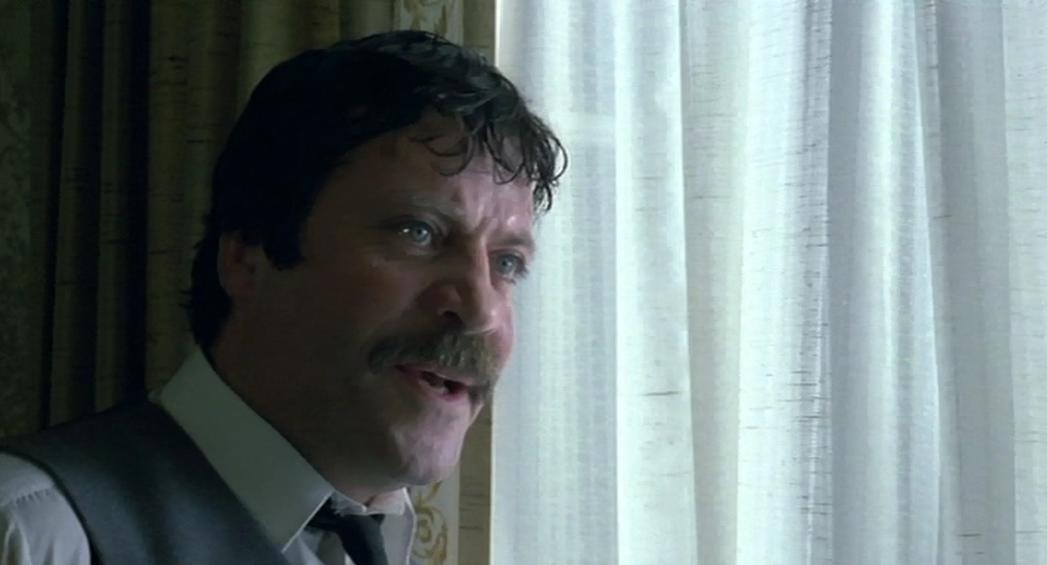
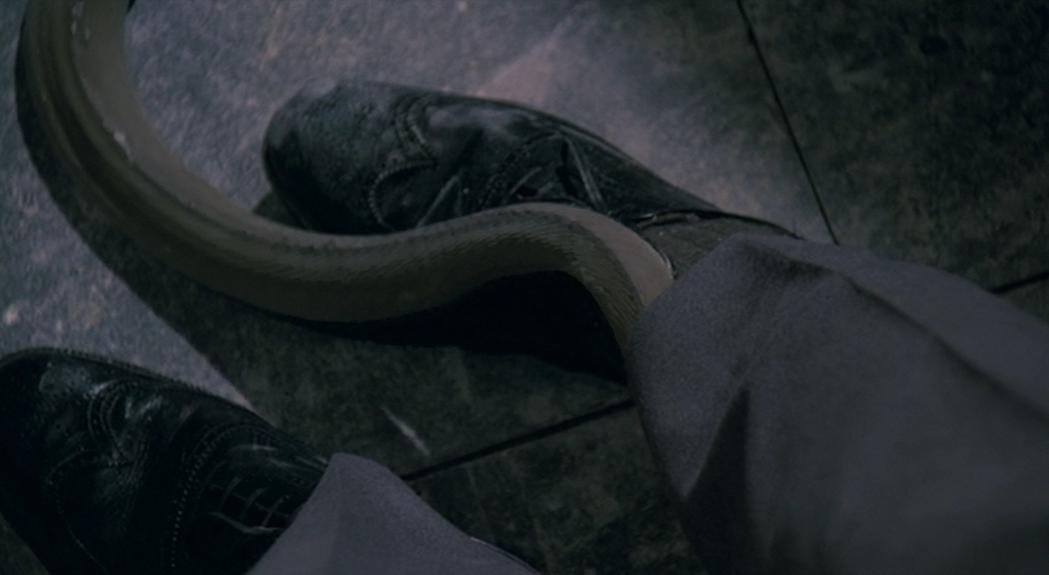
Klaus Kinski beats off Oliver Reed’s trouser snake

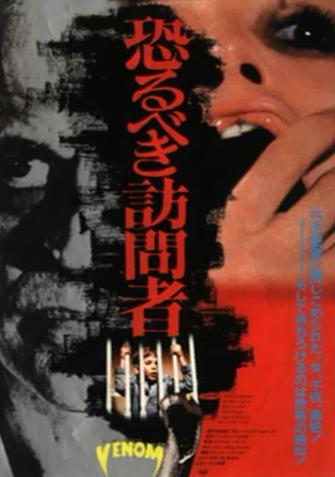
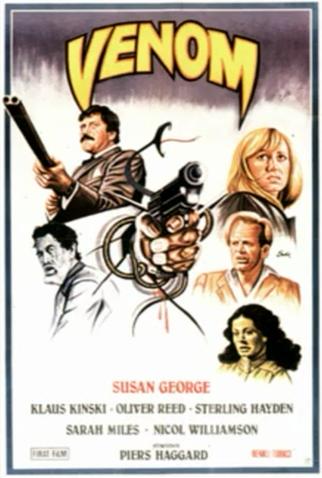
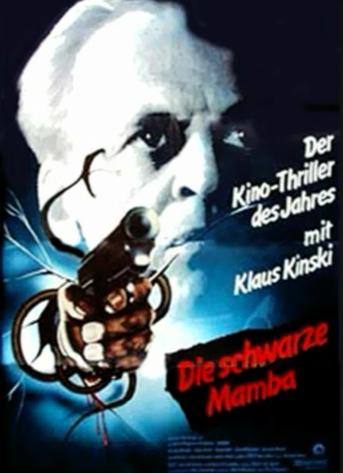
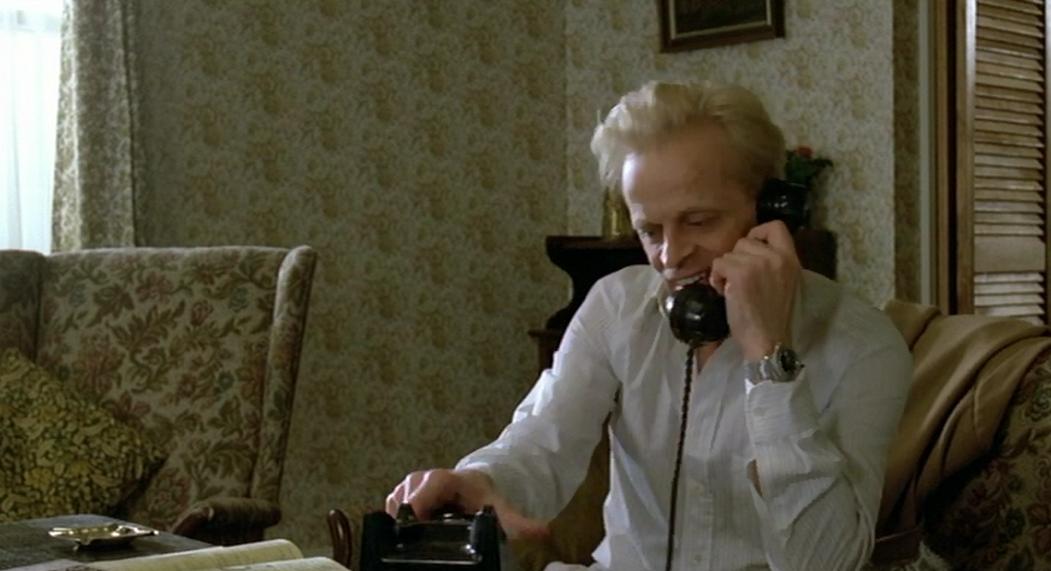
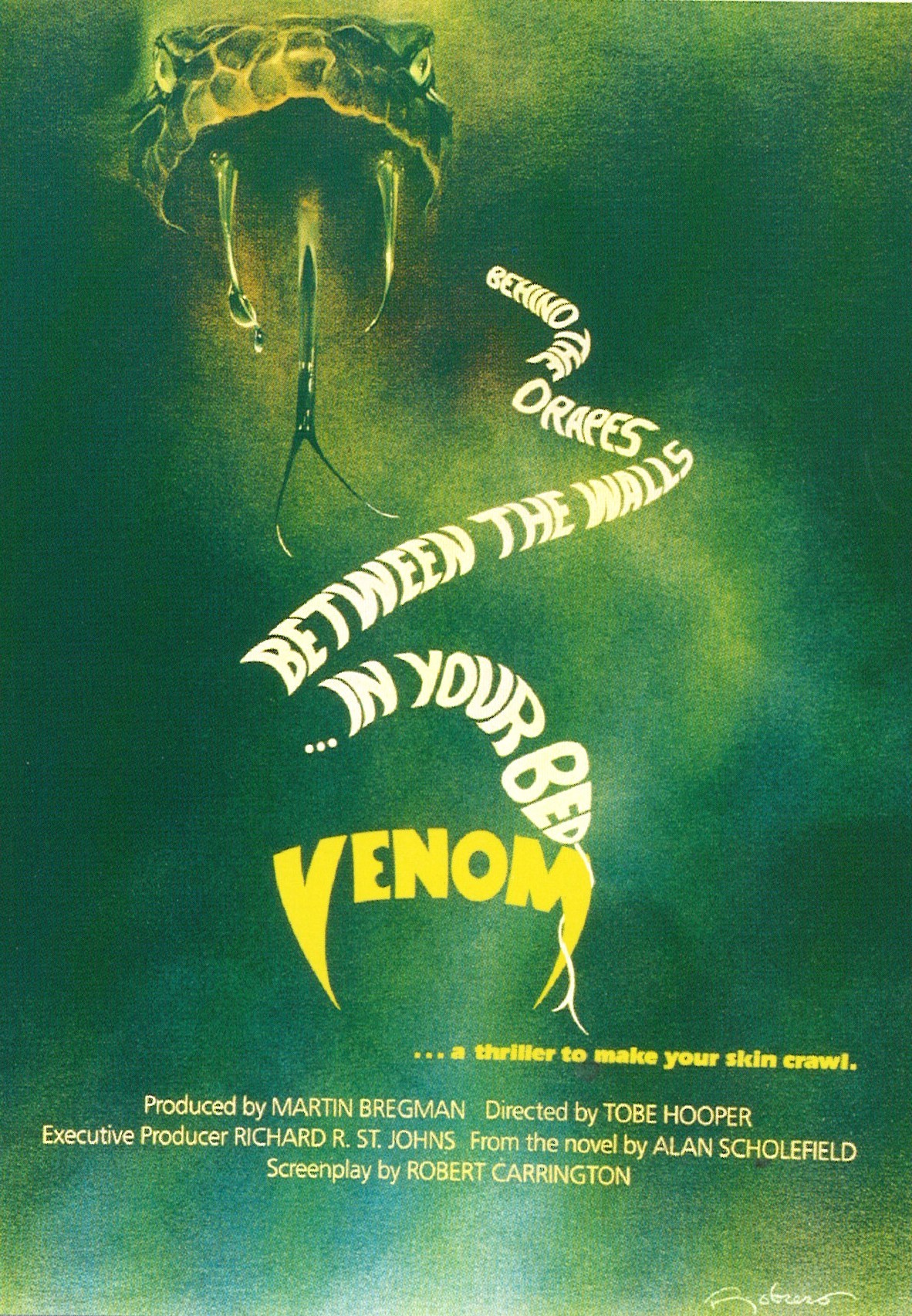
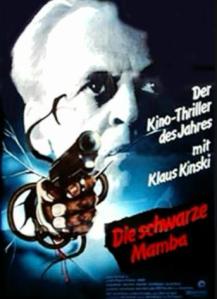
Venom aka Die schwarze Mamba (Dir Piers Haggard, 1981)
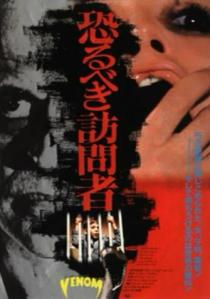
Basic plot:  Two crooks team up with a nanny to kidnap the child she cares for with the hope of getting a ransom from his wealthy parents, but the plan goes wrong when the child’s pet snake escapes from its cage.  Unbeknownst to them all the snake is in fact a deadly poisonous black mamba…
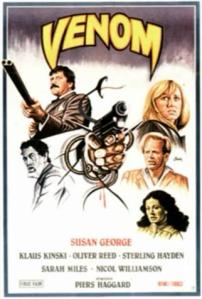
Did they forget to colour in Sterling Hayden?

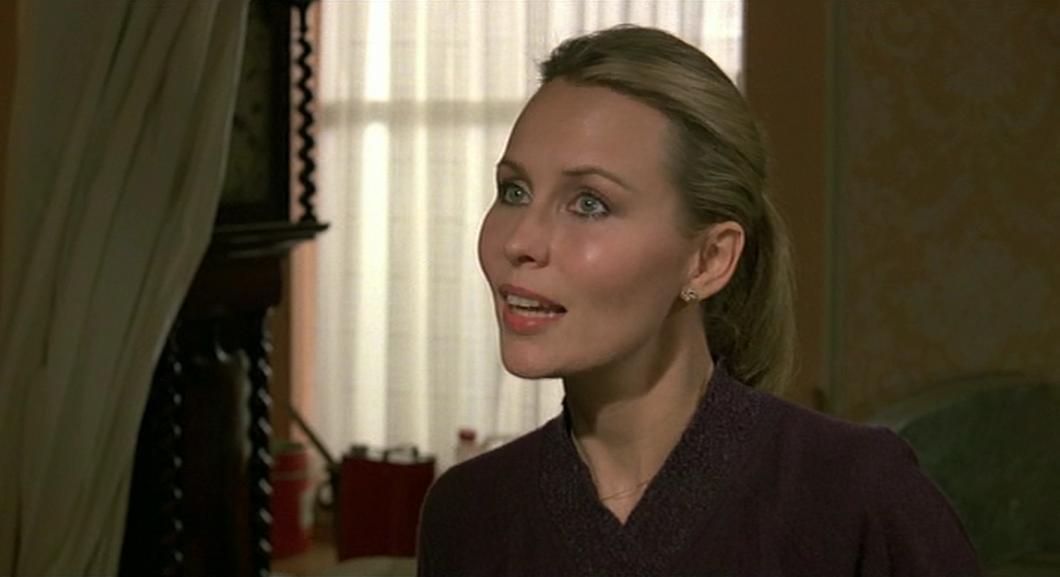
Cast: Jacques Müller – Klaus Kinski; Dave Averconnelly – Oliver Reed; Cmdr William Bulloch – Nicol Williamson; Dr Marion Stowe – Sarah Miles; Howard Anderson – Sterling Hayden; Ruth Hopkins – Cornelia Sharpe; Philip Hopkins – Lance Holcomb; Louise Andrews – Susan George

Filming location: Elstree Studios, Borehamwood, Hertfordshire and location shots in London

Release date: 19 January 1982

Availability:   The Blue Underground DVD looks fantastic with its shiny cover.  The DVD is also packed with loads of extras, including an audio commentary with Piers Haggard, various TV spots, biographies for Klaus Kinski and Oliver Reed, a gallery of lovely posters, French lobby cards and publicity stills and a theatrical trailer.  You can pick it up for about £5 plus postage from Amazon.
The film in full – *SPOILER ALERT*:

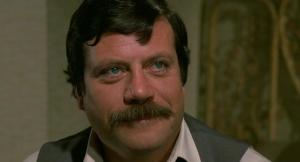
The film opens with Ruth Hopkins fussing over her son Philip outside the American Academy of London; she does that spittle on a handkerchief thing and the emotional blackmail thing (“You wouldn’t want me to spend my time in Rome worrying about you, would you?) and the general over-protective, smothering thing.  She’s annoying.  And, improbably, she has employed Oliver Reed (Dave) to be her chauffeur, so she’s asking for trouble…
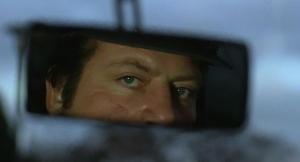
Dave somehow manages to get Ruth and Philip home safely without getting pulled over for drink-driving.  This is a shame because only a few minutes into the film they are already irritating me a great deal – Ruth, because she is bossy, a moaner and an emotional blackmailer; Philip, because he is a sickly child who likes reptiles.  That said, I guess she’d make me sick if she was my mum and I’d definitely rather spend time with a poisonous snake than with her.
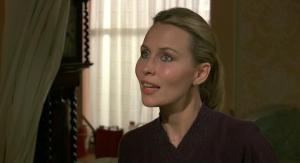
Ruth’s dad, Howard, is staying with her and he’s also a bit sickly but even he thinks that Ruth is too fussy.  She says that Philip’s “azma” (I think she means asthma) terrifies her and she thinks she ought not to go away but at this Howard practically begs her to go, saying that she needs to see her husband.  Her husband would probably not thank him for that intervention; the husband seems to have got the right idea, spending most of his time working away so he can avoid the fussing and the sickness and whatnot.
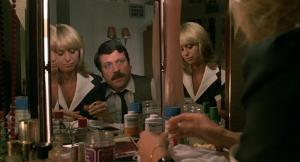
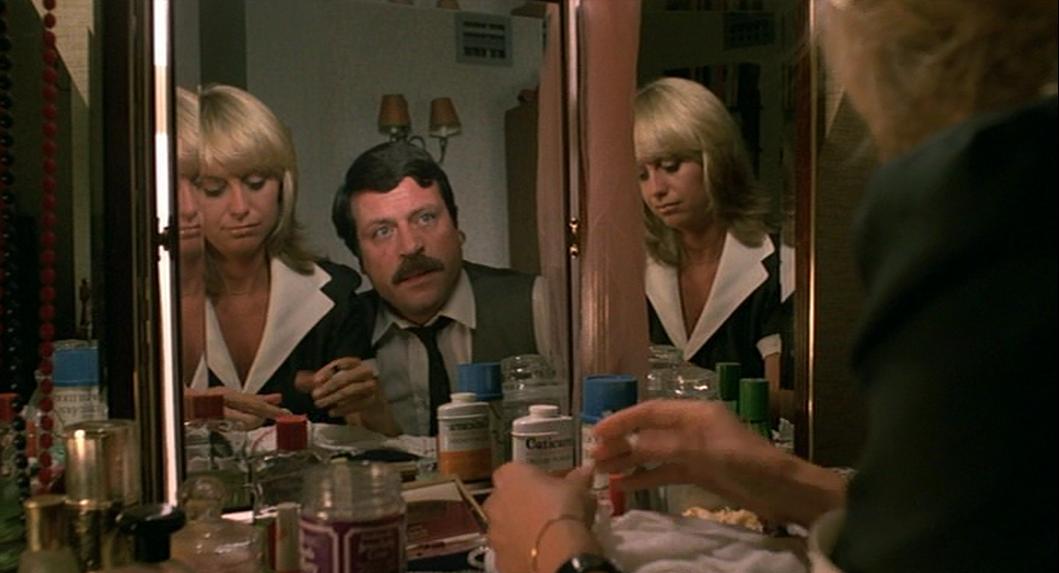
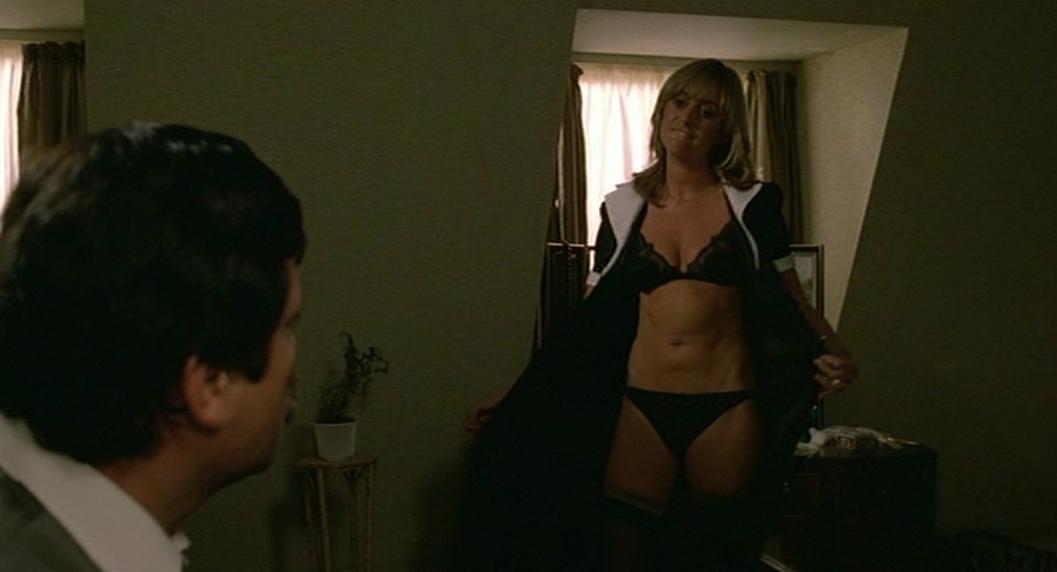
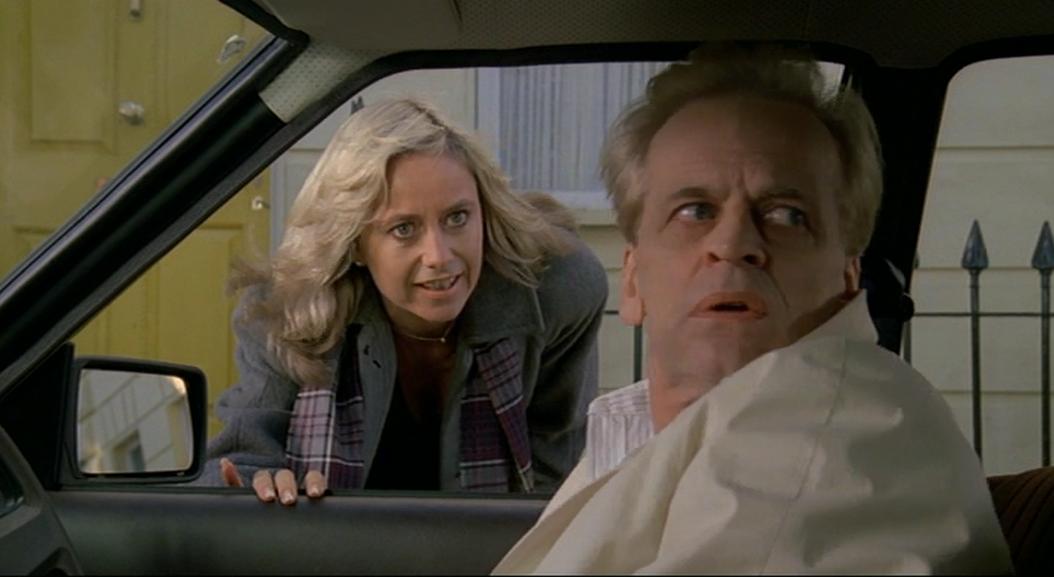
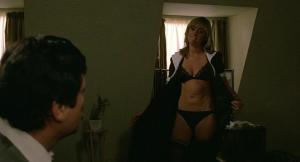
Susan George plays Louise, a glamorous Cocker-nee nanny, wearing a black dress with white collar and cuffs; a look so clichéd that it’s bound to turn the men on.  Dave sees her and beckons for her to go upstairs with him, see what I mean?  Well, actually he just wants to get her alone to air his concerns about the plans they have made to kidnap the sickly kid for a ransom.  Louise is convinced that nothing will go wrong but Dave has his doubts; to take his mind off it all, she tells him that instead he ought to worry about what she is going to do to him.  Then she unbuttons her dress, lumme!  Dave suddenly looks pleased with himself.
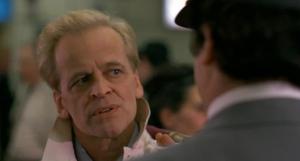
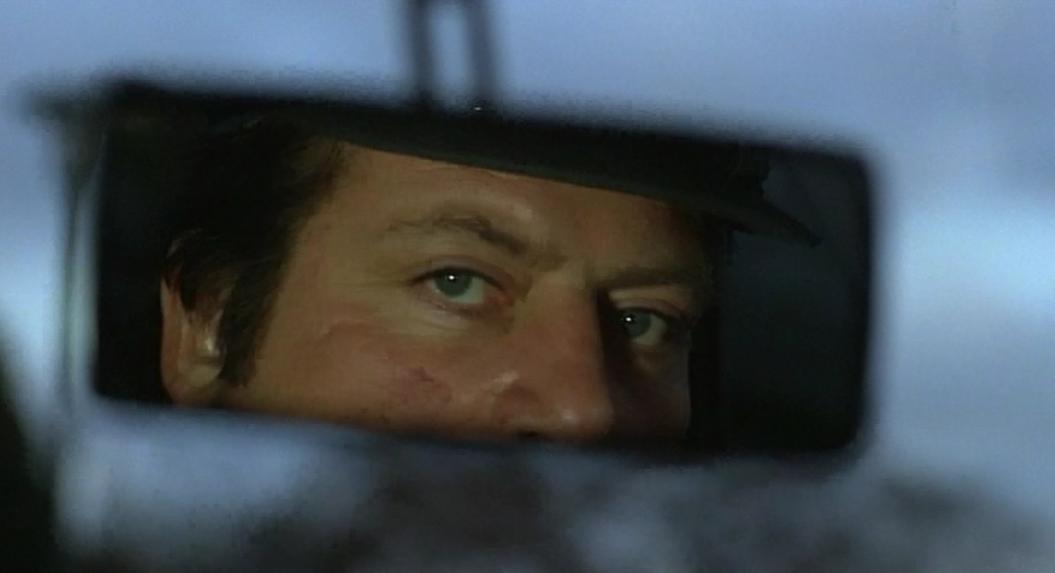
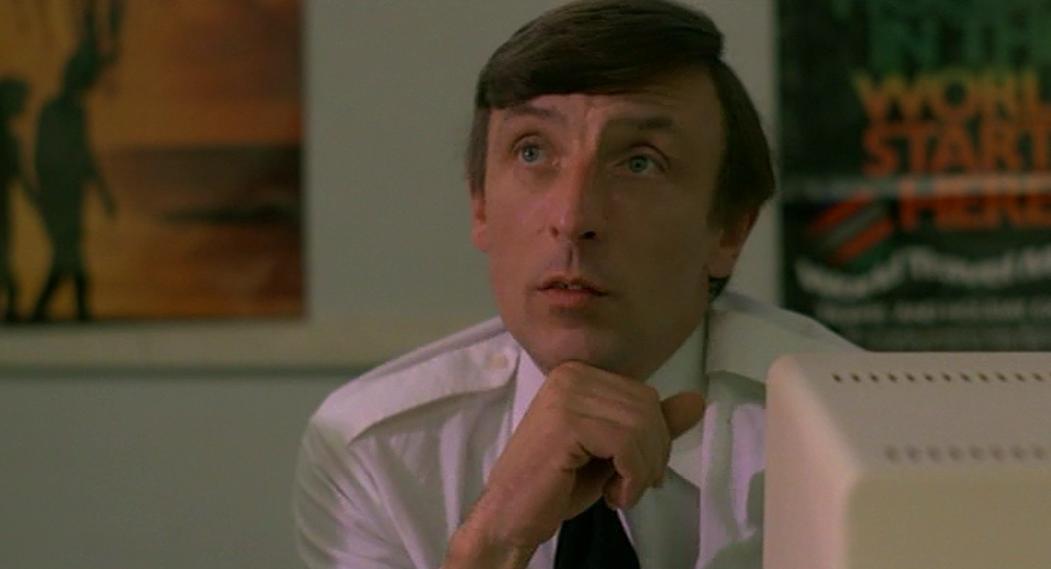
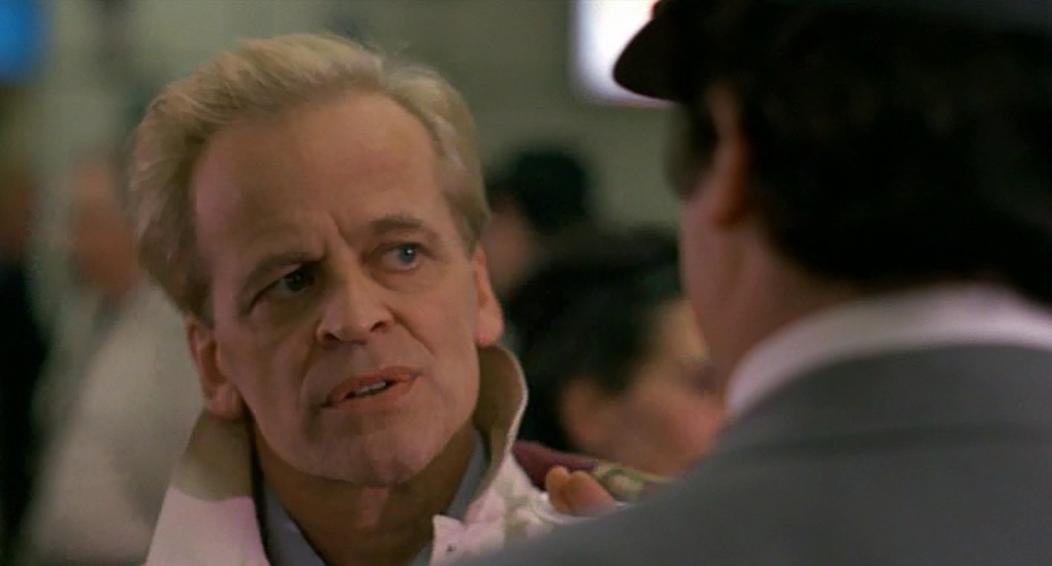
Dave finally gets Ruth off to the airport and everyone breathes a sigh of relief – Howard and Philip, so they can relax a little, and Louise, so she can get cracking on her kidnap plans with Dave and the mysterious Jacmel, who Dave has arranged to meet after dropping off Ruth.  He can’t find Jacmel, so Dave asks Bob Cryer of The Bill if he knows when the flight from Madrid might arrive and their exchange looks like it might get a little heated when Jacmel saunters over casually with his collar up and his suit bags over his shoulder.  You can tell Dave hates him already.
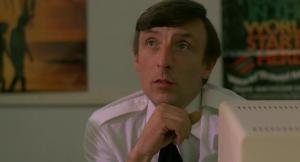
Just to wind him up even more, Jacmel tells him they need to go because they’re running late and then when Dave opens the car door for him to sit in the front, he spurns his offer and lets himself into the back.  Dave is fuming but it doesn’t stop him from giving Jacmel a gun when he asks for it.  Bad move, Dave, bad move…

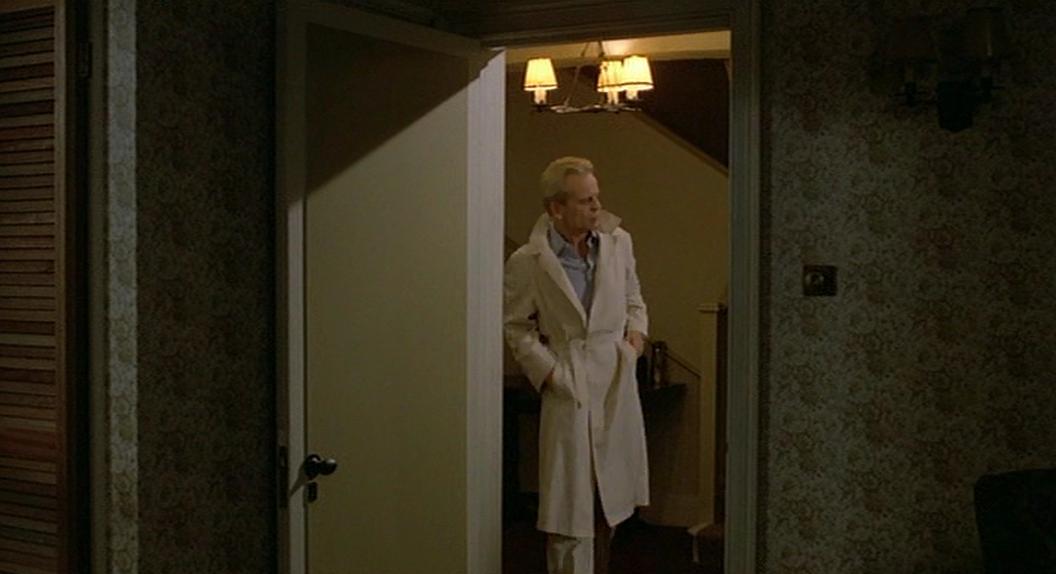
They finally arrive at a secluded house in the countryside, which Dave has been renting for the past few months in order to cover their tracks, and Dave gives Jacmel the keys to a yellow car and the house and promptly leaves him to it. He explores the house (with his hands pretty much in his pockets throughout) and finds some breathing apparatus in the bedroom, just like Philip’s back at the Hopkins’ place in London.  Just as well, really, there’s so much chintz in the house that it’s bound to bring on a panic attack.
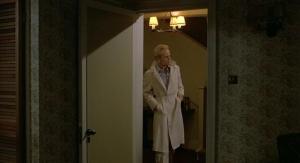
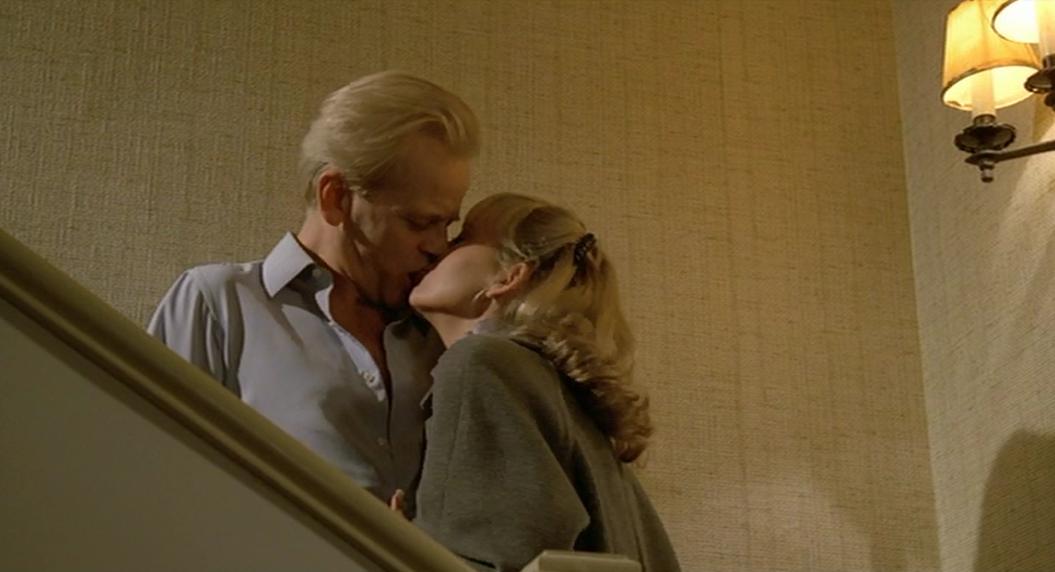
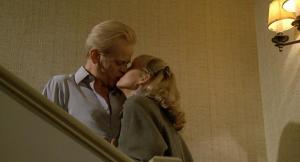
Louise arrives, calling Jacmel “darling” – clearly there is something between them, even though only hours ago she’d been “worrying” Dave by doing stuff to him back at the Hopkins’ house.  Jacmel runs down the stairs with a beaming smile, and promptly puts his hands in his pockets as he casually greets Louise.  They kiss and Jacmel announces, “I don’t like this… Dave… his hands sweat.”  That’s from the DTs, Jacmel.  When Louise says she’ll “handle” Dave, Jacmel shows he knows her only too well and replies: “You’ve handled him already…”  She has as well.
Meanwhile, back at the ranch, the sickly kid is having one of his turns so the sickly grandpa has to go and see to him.  The kid is supposed to have trouble breathing but it doesn’t seem to stop him from shouting repeatedly to get his grandpa to come and help him; I’m just saying…

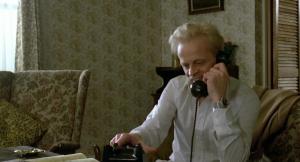
The maverick grandpa still lets Philip go out in a taxi alone the next day to pick up his new pet snake and in the process the two of them get into a tussle with Louise who, for reasons of her own, is not very keen on letting Philip out of her sight.  But Howard makes sure that Philip gets away in the taxi and this makes Louise very angry indeed.   She storms back into the house as Howard takes a call from Jacmel who is pretending to be a film producer, working on an adventure film set in central Africa. 

Jacmel says he wants to meet Howard to discuss the possibility of him working on the film, flatters his ego by telling him that he is “the best that there is” and that he is “practically a living legend.”  Naturally, Howard agrees to meet him in 30 minutes’ time in the cocktail lounge at The Tower Hotel, who wouldn’t?  Jacmel then calls The Tower Hotel to tell them that when Howard arrives that they should tell him that he has been slightly delayed.  Whilst Jacmel is on the telephone Louise has been trying to get through to Jacmel to tell him that Philip is not at the house.  O dear…
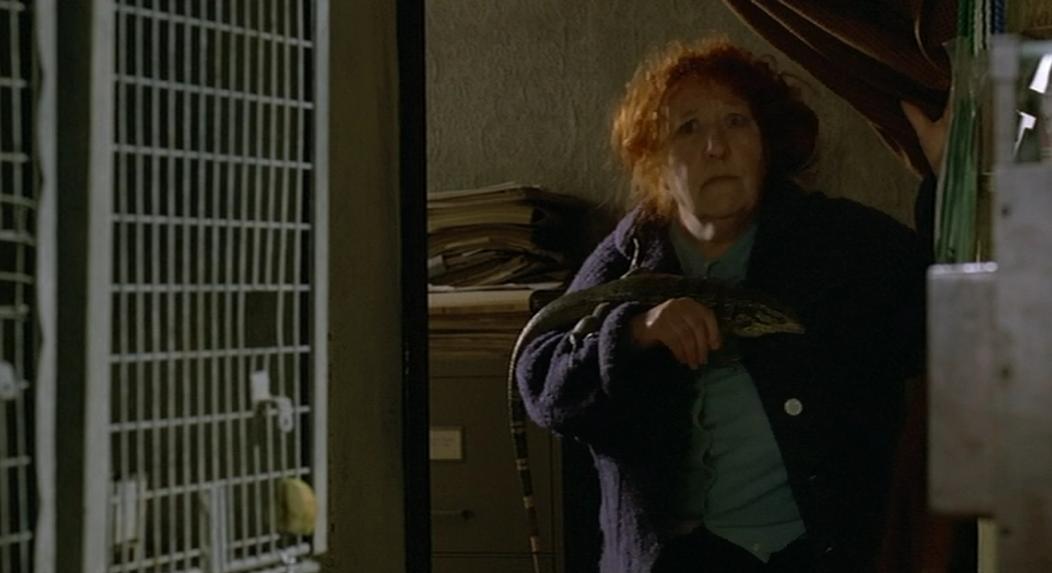
Philip has arrived at a rather crummy looking pet shop in the East End where he is due to pick up his new pet snake.  Mr Loewenthal does not appear to be there, so Rita Webb (who seems to have a lizard stuck to her hand) serves him instead and gives him a wooden box, which she says contains his snake. 
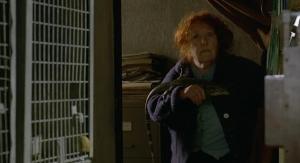
Over at the London Institute of Toxicology (I know, I wonder where this is all going as well…) Dr Stowe is trading catty comments with her daughter.  The Institute has just received a shipment supposedly containing their new black mamba snake (probably the most poisonous snake in the whole world, apparently), but Mr Mukerjee pops in and tells Dr Stowe that he doesn’t believe it’s really a black mamba as it’s not yet moved or attacked anything.  Uh oh, now I understand…

For no apparent reason, Dr Stowe’s bitch of a daughter impersonates Mr Mukerjee in what is essentially a racist sort of way and then claims she was “only joking”.  This adds nothing to the story, so I’m not sure why it was even included.

Dr Stowe confirms that Mr Mukerjee was right and that the snake they have just received is an African house snake.  Mr Mukerjee blames this on the fact that he was dealing with Rita Webb (and the lizard attached to her hand) and not with Mr Loewenthal. 

Against all odds Dr Stowe’s racist daughter likes foreign food, so they are off to get chop suey when it suddenly dawns on Dr Stowe that she may need to warn the police about the missing black mamba, in case someone else has received it in error.  The police are quick to react when Dr Stowe calls: “Toxicology…?  That’s poisons, isn’t it…?” 

Dr Stowe tells the police that Rita Webb remembers giving an order of an African house snake to a young boy before the shipment of the black mamba went out, so the “Toxicology…? That’s poisons, isn’t it…?” policeman puts two and two together and realises that the young boy has probably got the black mamba in error.  Hooray!  Never let it be said that the police don’t do a good job!  But Dr Stowe says the police need to hurry because if anyone gets bitten, they could be dead within minutes, and although she has an antidote for the bite she would need to get over there with it and by the time she arrives it might be too late…
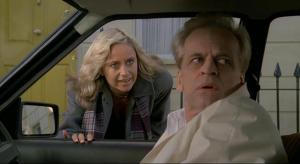
It’s all happening right now – Jacmel has arrived at the house to find Louise in a panic because it’s all going wrong, with Philip nowhere in sight; Howard has got fed up of waiting for the non-existent film producer to turn up at The Tower Hotel and has decided to go home, meaning that he will arrive back before Louise, Jacmel and Dave have had a chance to kidnap Philip; and Philip is heading back to the house with his poisonous snake. If Rita Webb can dig up Philip’s details from the records at the crummy East End pet shop, presumably the police will be heading over there shortly too…

When he arrives back at the house, Louise tries to convince Philip to get in Jacmel’s yellow car to go off and see his grandpa who has “gone out on business” but Philip is having none of it; it’s nothing to do with the car being yellow, apparently, it’s just that he needs to put his snake away first.  He dashes past Louise, who is, let’s face it, rubbish at her job; she can’t even outrun a sickly kid with “azma”.  But little does he know that he is running into the path of the rather sinister Dave:  “Hallo, Philip, what have you got there, a Bengal tiger?  Who gave you that, Mrs Gandhi, I suppose?”  Uh oh, we have another racist in our midst – he should join Dr Stowe’s daughter for some chop suey.

But Dave has other ideas and he shouts at Philip: “You’re a cheeky little bastard, aren’t you?  Well, he bloody is a cheeky little bastard.  HE IS A CHEEKY LITTLE BASTARD!”  Philip is totally unfazed by all of this and just continues as if it’s normal for his mother’s chauffeur to abuse him in such a way.  In fact, Philip is so determined to settle his snake in that he is wilfully disobeying Louise and I am starting to think that he is “A CHEEKY LITTLE BASTARD” after all.
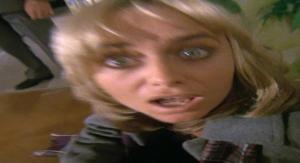
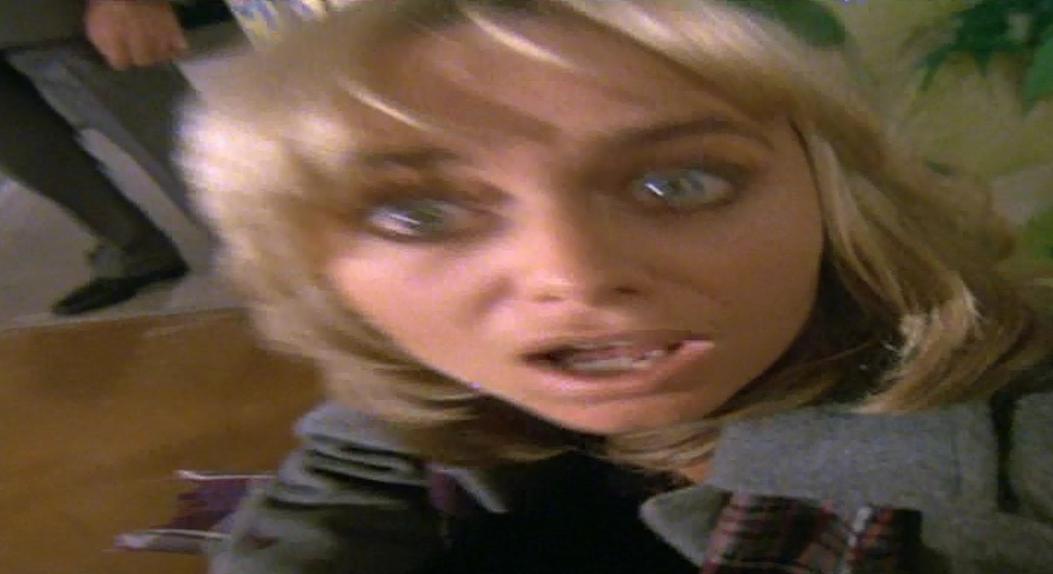
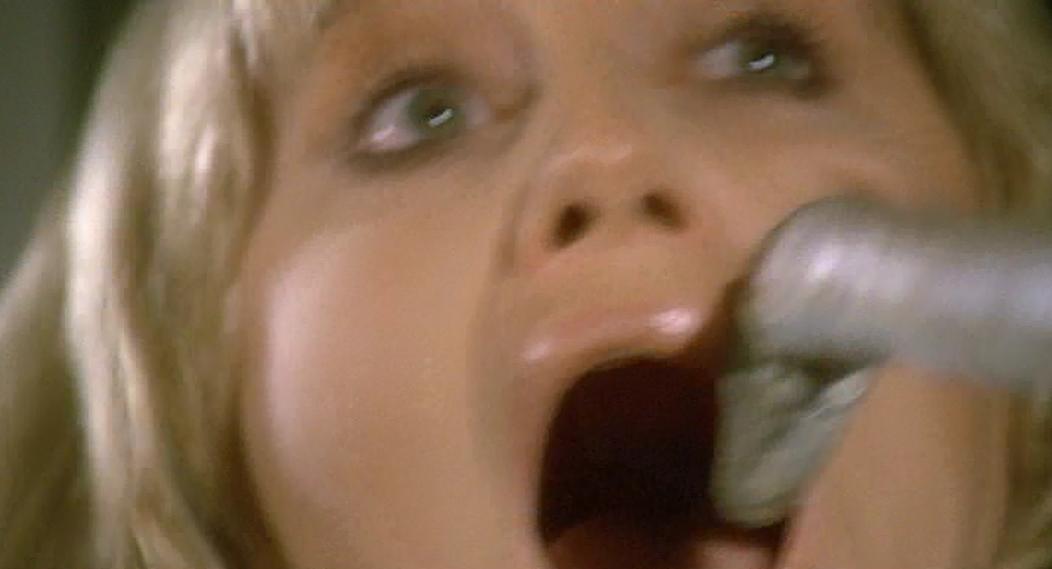
In the other room Dave has just taken a call from the police; he comes in to tell Louise as Philip opens the box and…YIKES!  Cut to Howard returning in a taxi below, screams from Louise upstairs, and then finally we see Louise in the snake’s eye view as the black mamba attacks!!!
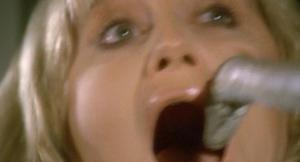
The snake attaches itself to Louise’s top lip – a bit like Jacmel did earlier – bites her twice and then makes its getaway behind the Airfix kits in Philip’s room.  Howard seems to think Louise will be alright as it’s only a house snake, but Dave thinks otherwise.  He’s absolutely fuming.  To make matters worse, Jacmel (his enemy and love rival) barges in and starts bossing him around and telling him to shut up.  Jacmel goes over to Louise and although he looks concerned, he takes his time to take his hands out of his pockets to comfort her. 
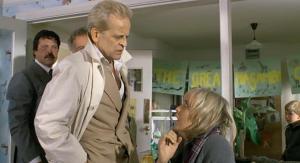
In the meantime Dave picks a fight with Howard, who is trying to make a telephone call – he wrenches the wire out of the wall (well, that’s one way to stop him making a call) and then punches him in the gut twice (and that’s another way).  Philip, aka the “CHEEKY LITTLE BASTARD”, lives up to his name and wades in to Dave, kicking him so hard that Dave feels obliged to throw him against the wall. 

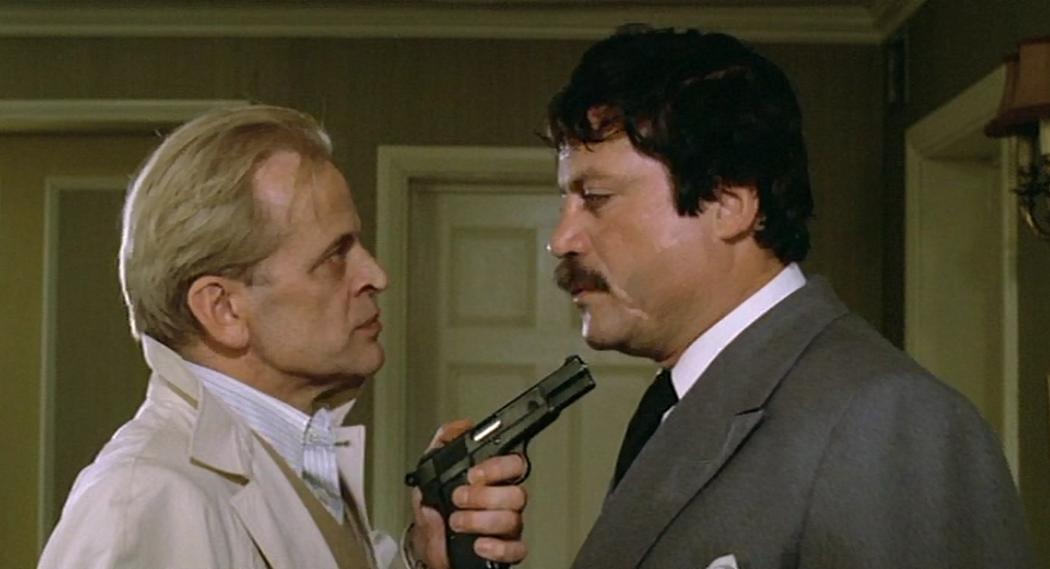
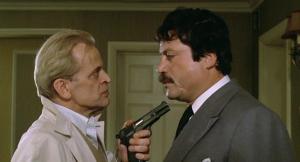
Jacmel shouts at Dave to leave Philip alone; it’s okay, he just hasn’t realised yet that he’s a “CHEEKY LITTLE BASTARD”, but give it time.  Jacmel and Dave really don’t get on at all – Jacmel tells Dave that he can’t touch anybody unless he says so.  “I will tell you what to do, when to do it, what to say… I will tell you when to breathe,” he says, pointing a gun at Dave.  Then he tells Dave to lock Howard in the cellar and he takes Philip with him, saying that he will be going away for a few days. 
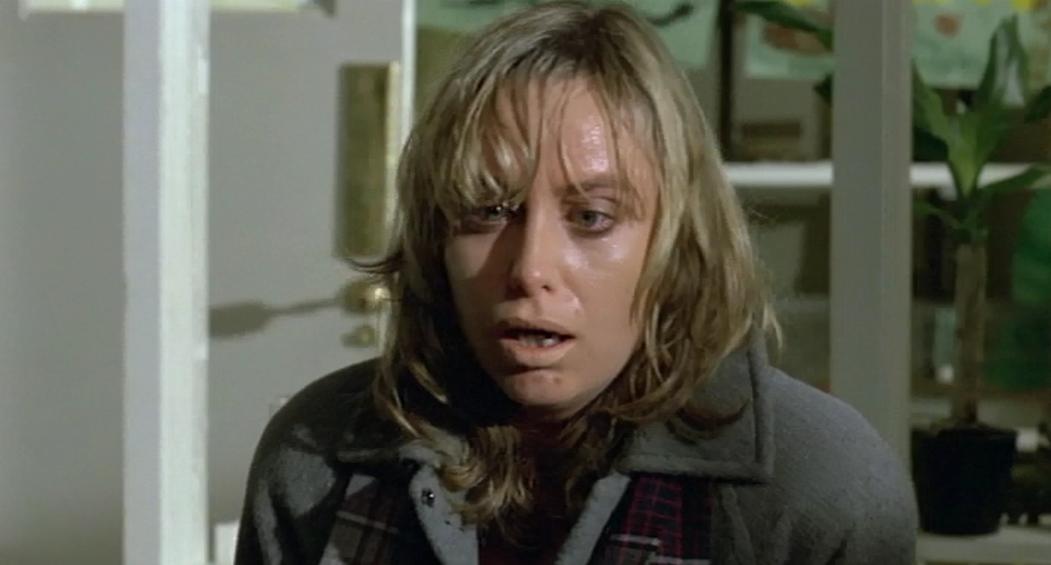
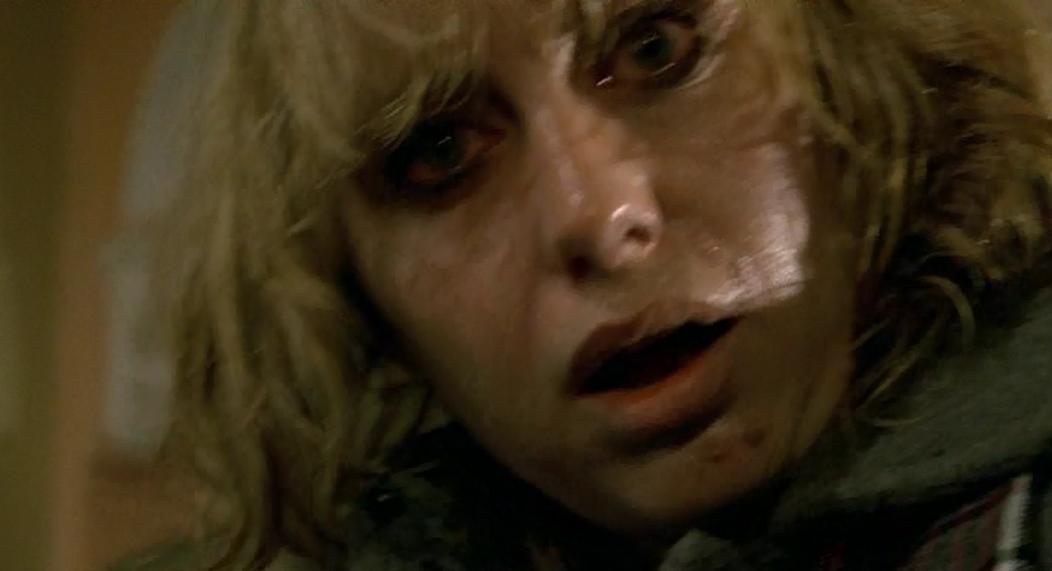
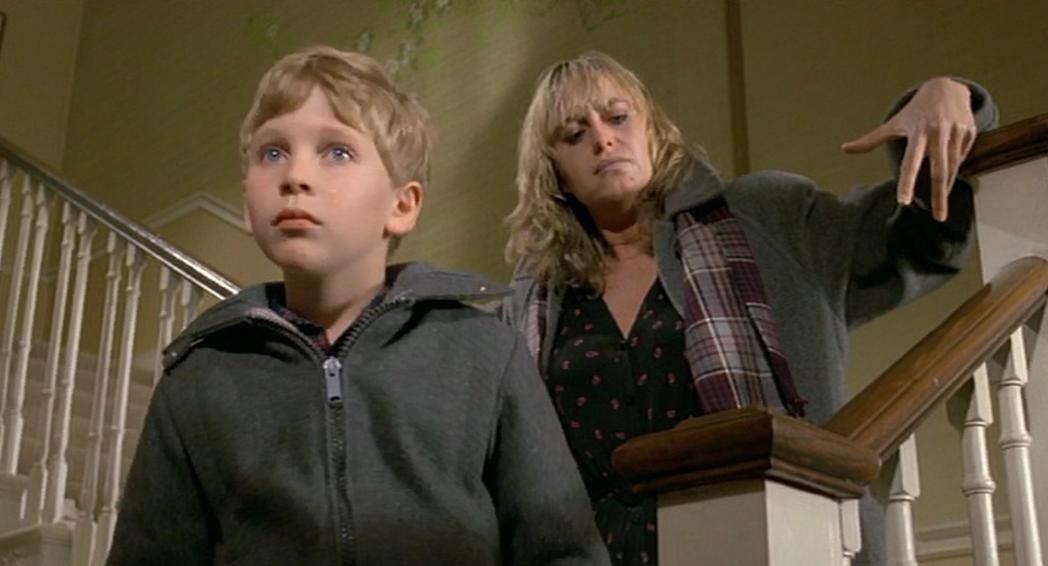
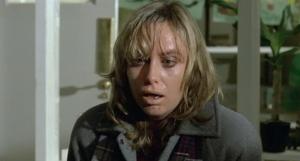
In the meantime, the previously glamorous Louise has deteriorated – she now has cross-eyes, a sweaty forehead and a dingy looking grey coat on; quite frankly she looks like a wino (I don’t know what Klaus and Ollie ever saw in her, not that I am jealous nor nuthin’).  She tells Jacmel that she thinks she is dying – at this he tells her, “You will lie down soon, but not yet,” and then he proceeds to drag her around the house.
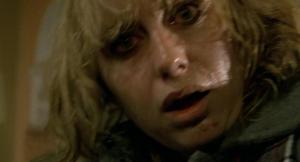
Back in the cellar, Dave tells Howard if he makes one sound he’ll put his foot through his stomach; best be quiet, old man!  Dave takes one of Howard’s rifles and loads it with cartridges – he has plans, but I’m not sure who he’s after first: Jacmel, the “CHEEKY LITTLE BASTARD”, or the old man.

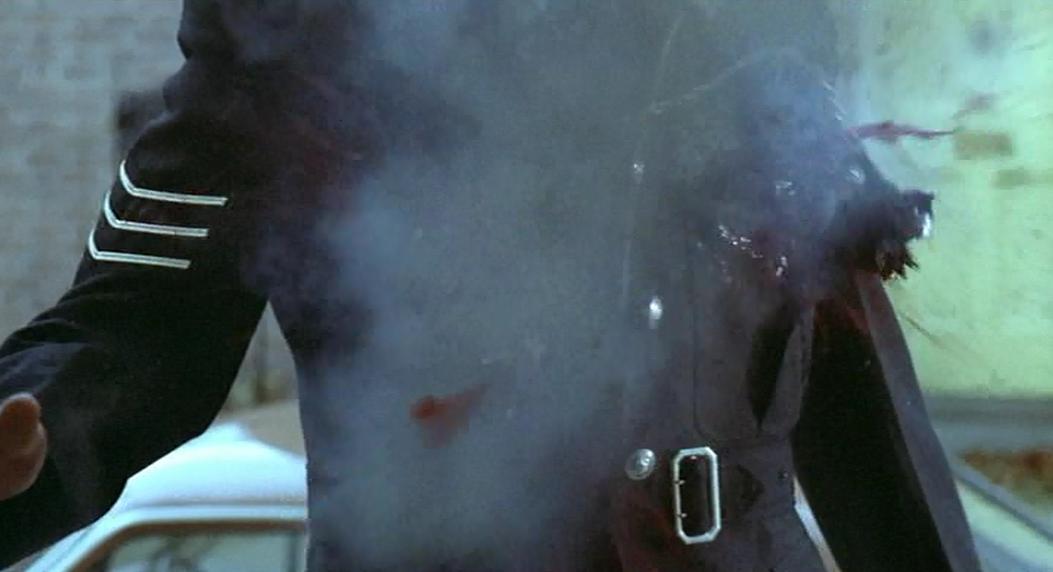
The doorbell rings just as Jacmel and Dave argue about Dave wielding the rifle and just when they don’t need it, the “CHEEKY LITTLE BASTARD” screams out “HELP!” in the hope that the person at the door will hear him.  See, told you he doesn’t really have a problem with his “azma”; he can summon enough breath when he needs to.  Upon hearing the shout, the policeman outside the door pushes the door open to reveal Dave and his rifle and Jacmel, the wino and the “CHEEKY LITTLE BASTARD” standing on the stairs.  O dear, bad move, now Dave will have to shoot him in the chest…
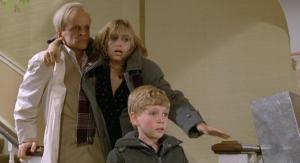
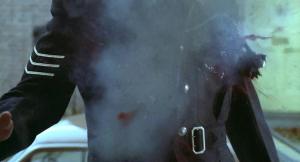
The policeman valiantly tries to get through to his colleagues on his speakie weakie, but with his flesh and blood dangling out all over his police uniform you know he’s not got long to live.  RIP “Toxicology…? That’s poisons, isn’t it…?” policeman…
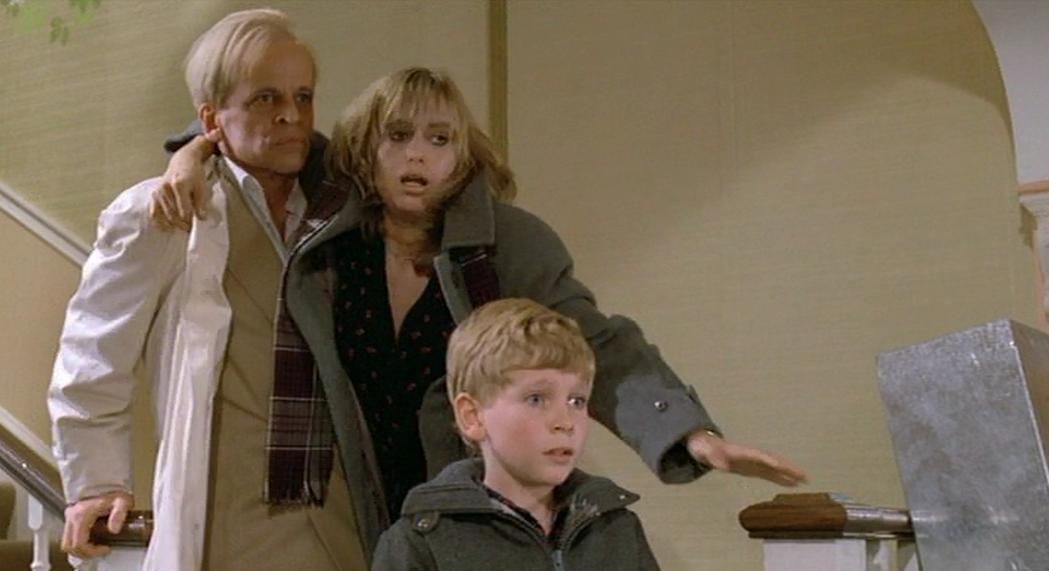
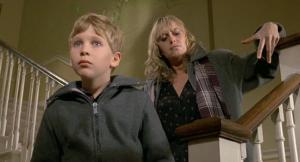
Now everyone is going into panic mode – Dave and Jacmel are arguing, whilst the wino has taken to standing on the stairs, pulling a close approximation of the “booyakasha” hand gesture behind the “CHEEKY LITTLE BASTARD”’s back; pressure makes people do strange things, I guess.  I don’t blame the “CHEEKY LITTLE BASTARD” when at the first opportunity he tries to make a run for it, but instead of chasing him himself Jacmel just orders Dave to do it. 
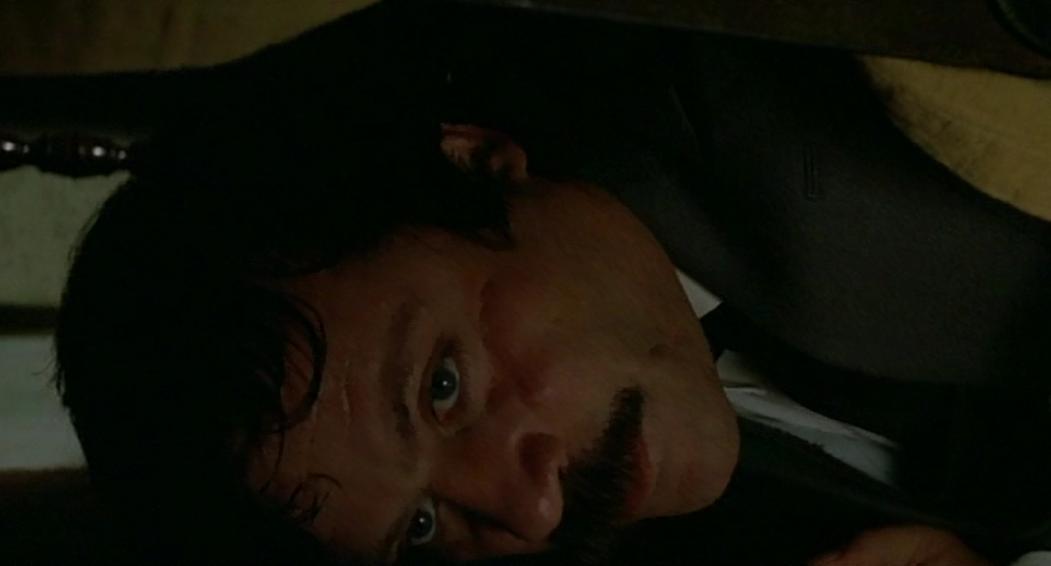
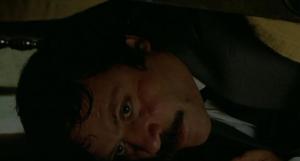
The “CHEEKY LITTLE BASTARD” gets away and hides under the bed – big mistake, would you really want to see Dave peering at you under the bed like this?  It would make you pee your pants, and the things is, Sarah Miles has not even arrived in time to drink it for you, so that would be a real waste.  I note also that I need to revise the name for Philip now as Dave has taken to just calling him, “YOU LITTLE BASTARD.”  Not so cheeky now, just a little bastard.  Right, I’m with ya.
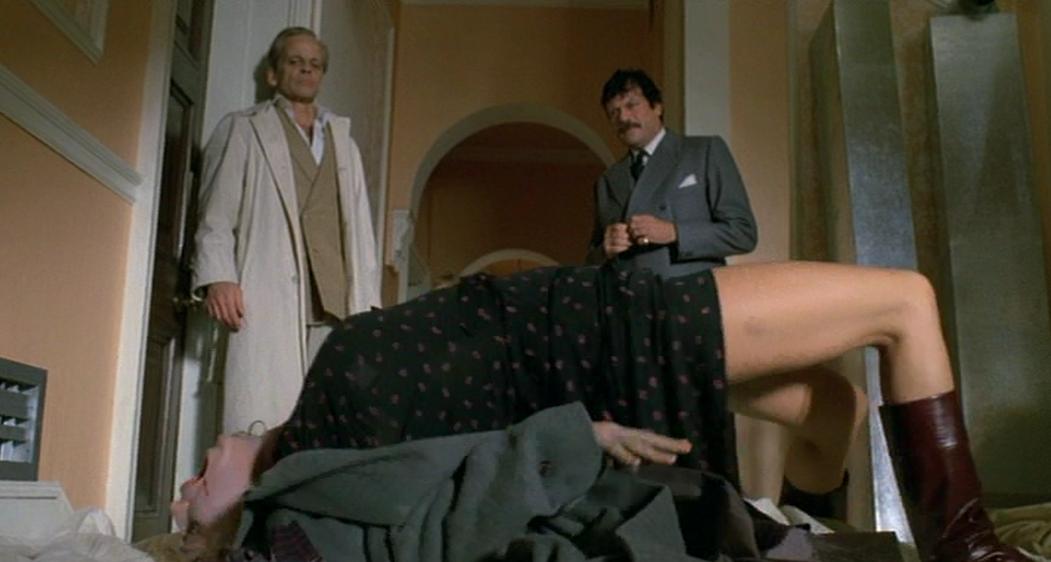
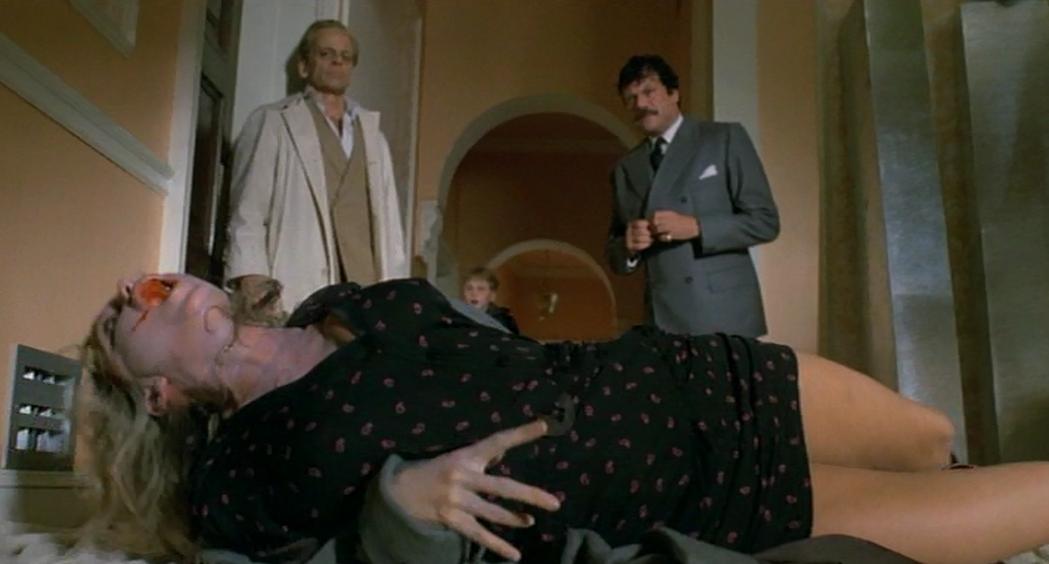
Meantime, the wino is now dying in the most undignified manner on the painters’ covers on the hall carpet.  And Jacmel clearly does not approve:
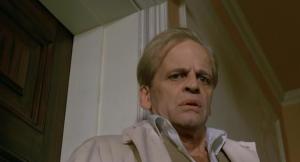
She has now gone purple like Violet Beauregarde and she’s doing the hand gesture thing again – just give up, wino, it’s doing nothing for your street cred!  She’s purple everywhere apart from her legs, so I am making a mental note that those American tan tights do the world of good for your complexion.  Dave, who clearly loved the wino more than Jacmel, hugs her as she dies whereas Jacmel has moved on already and wants everyone else to do so:  “Come on, move!”
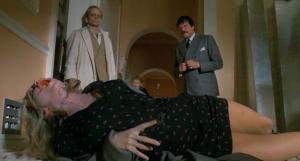
Outside the police arrive and Dave realises it’s too late now; they’ve had it.  They seem to care more about the police outside than they do about the escaped black mamba inside; and that’s despite seeing the wino go purple and croak it. 

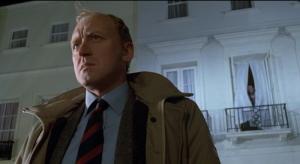
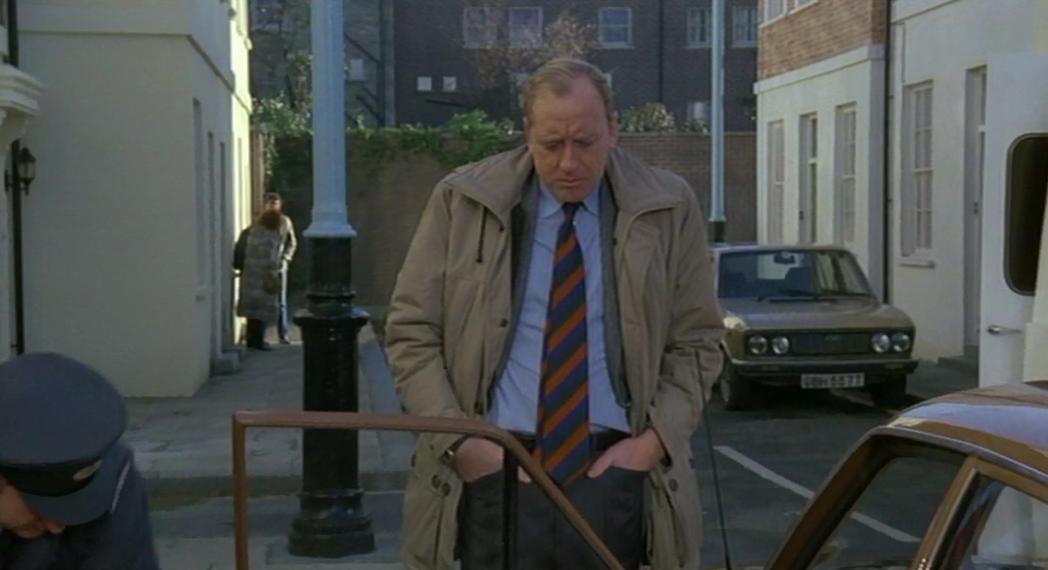
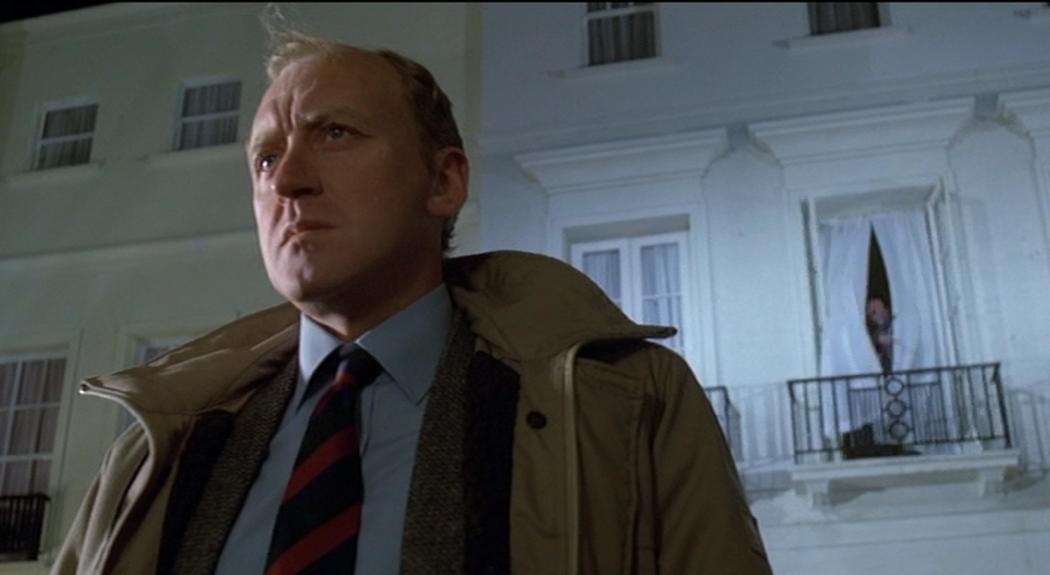
Commander Bulloch arrives in his Peter Storm style anorak, cheap tie and trousers with front pockets.  He doesn’t look too happy:
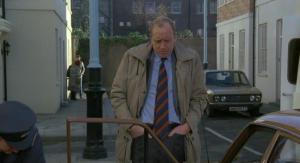
It’s understandable in that outfit…

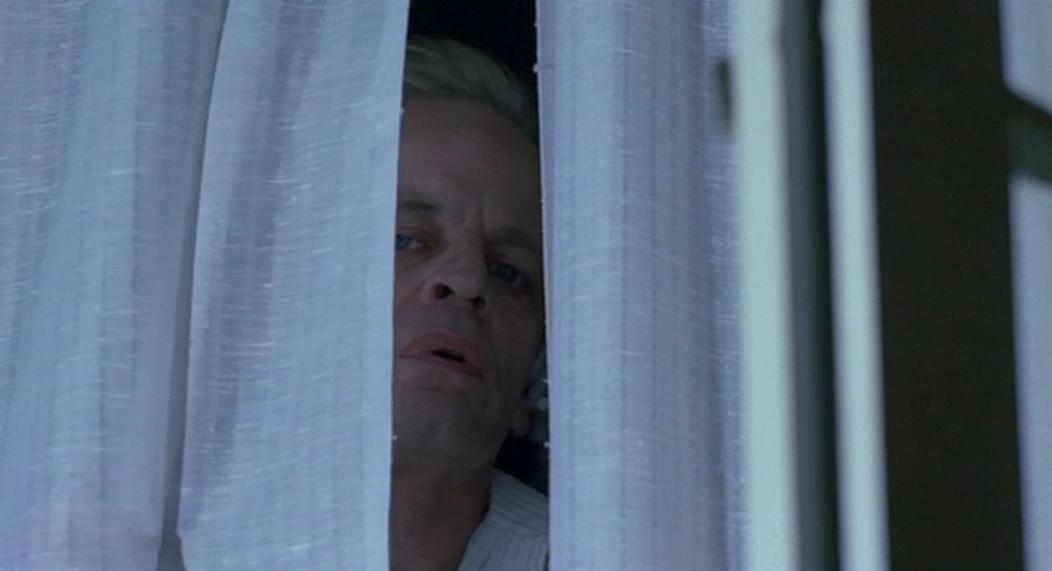
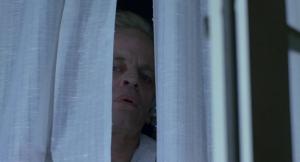
Jacmel opens the sash window slightly and peers out at the Commander, and in a voice a little louder than a whisper says, “Can you hear me?”  Clearly not, he’s several feet away and you’re not talking very loud.  He raises his voice, asking the same question again, and this time, by some small miracle, the Commander can hear him.  Jacmel tells him that he has a 10 year old boy in the house, Philip Hopkins (he means “YOU LITTLE BASTARD”, but he never got the hang of Dave’s name for him).  Jacmel says it’s impossible to send “YOU LITTLE BASTARD” out to the police because, “there are serten sings I wish.  I talk to you?  Have you ausority? …I wish to leave soon, please fetch your superior, someone who has ausority.”
The Commander does not take this request lightly, he heads off to his car and asks where his coffee is whilst two of his men rush around him pouring instant coffee from an orange vacuum flask and lighting his cigarette for him; that’s the life!  The good news is he does not think it’s a football game (Phew! That could have caused a few problems if he did!) and there’s no score (That’s good.  I think…).
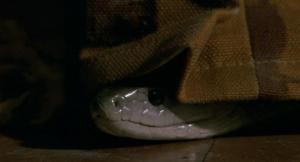
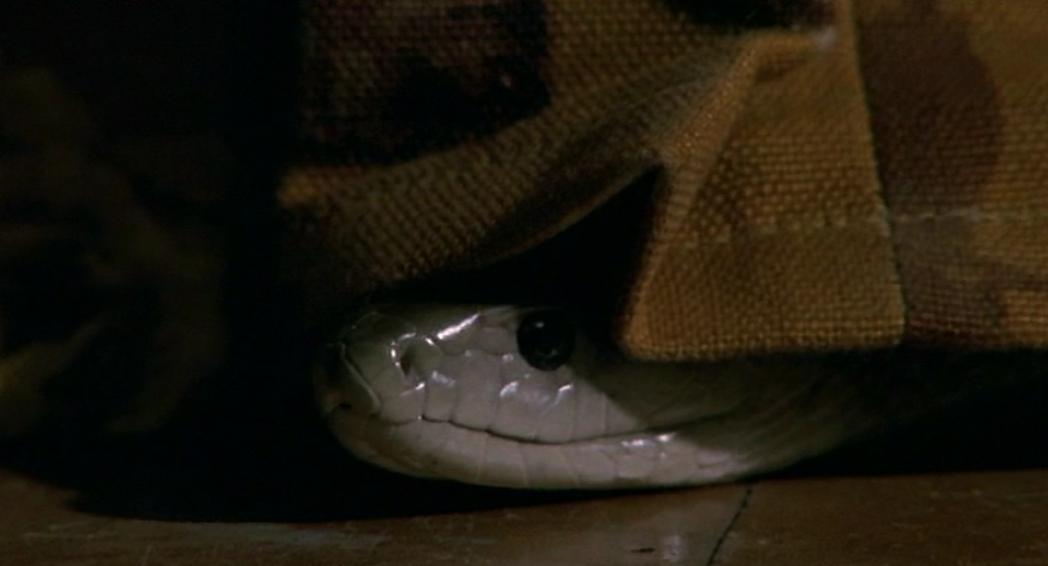
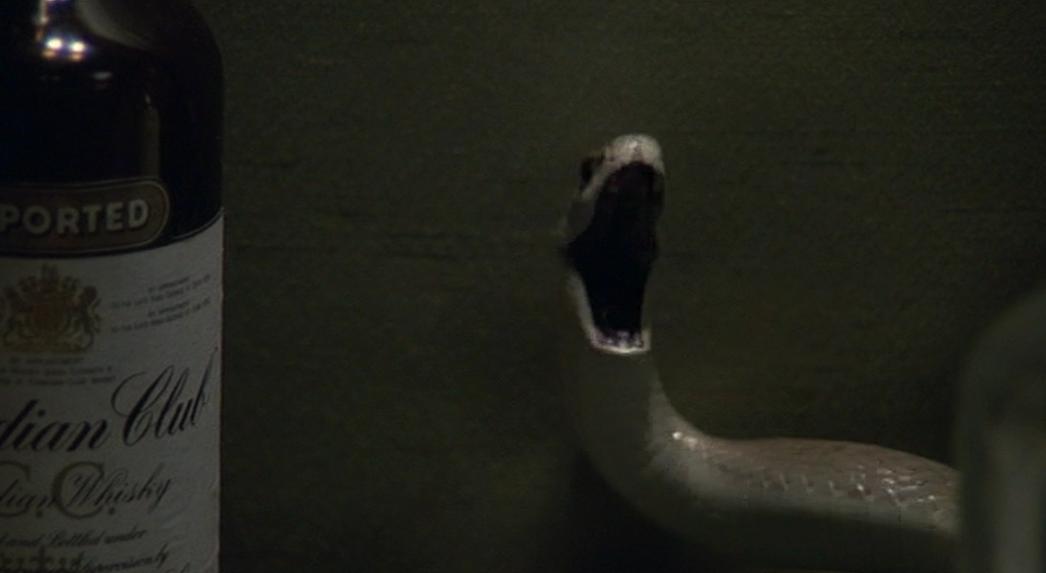
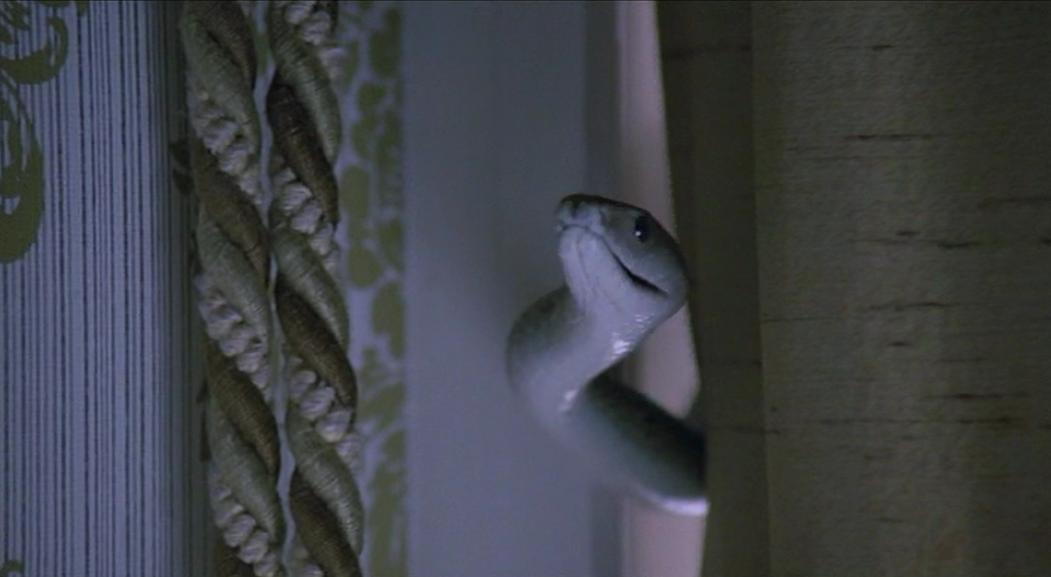
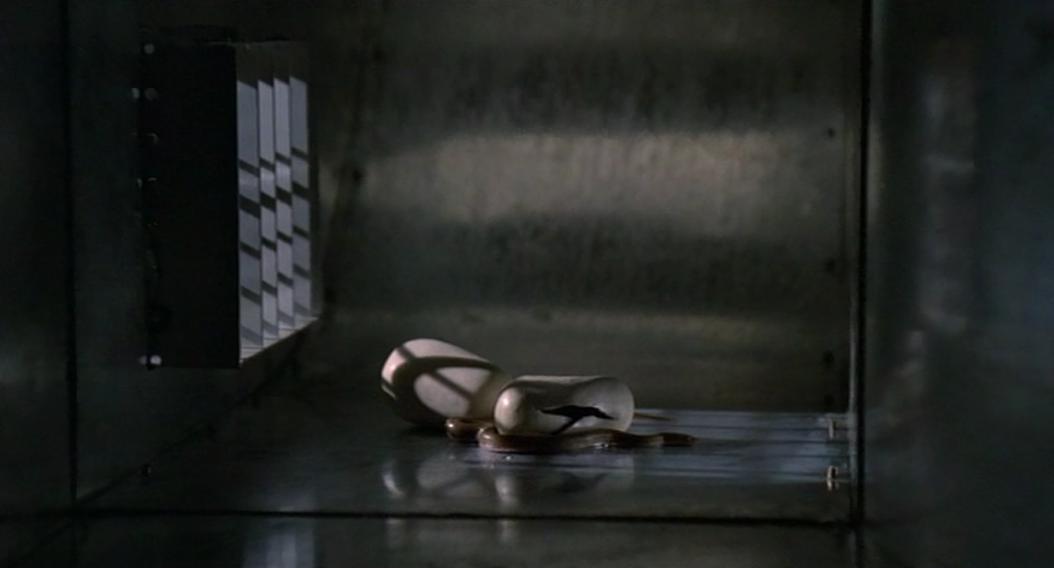
Meanwhile, the black mamba is rearing its ugly head – it’s been under the bed, a bit like “YOU LITTLE BASTARD” earlier, but I think you’ll agree it doesn’t look half as scary as this:

It is a little bastard in its own right, though, as it eats one of “YOU LITTLE BASTARD”’s pet rabbits.  Poor little rabbit.

Outside again, a policeman announces over a loudspeaker that people in the neighbourhood should stay inside their houses, so Jacmel puts the double-lock on and bolts the door just in case there’s any trouble; why he thinks he needs to stay inside, I don’t know, he’s one of the trouble makers they’re talking about if he did but know it.

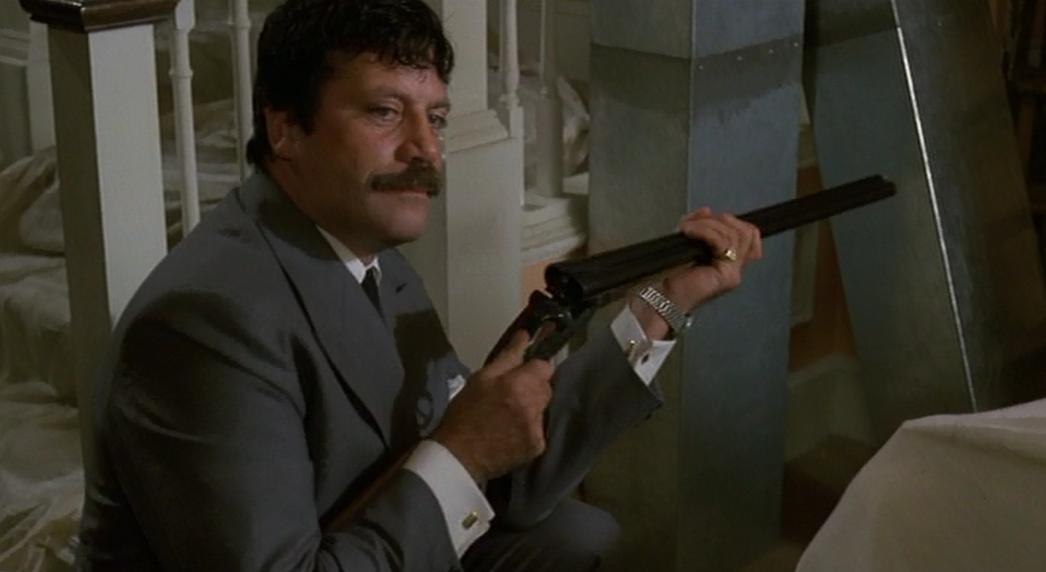
Then he tells Dave to “get the old man”; Dave gets excited at this and cocks his rifle barrel.  Oo-er missus!
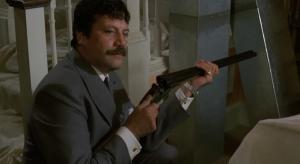
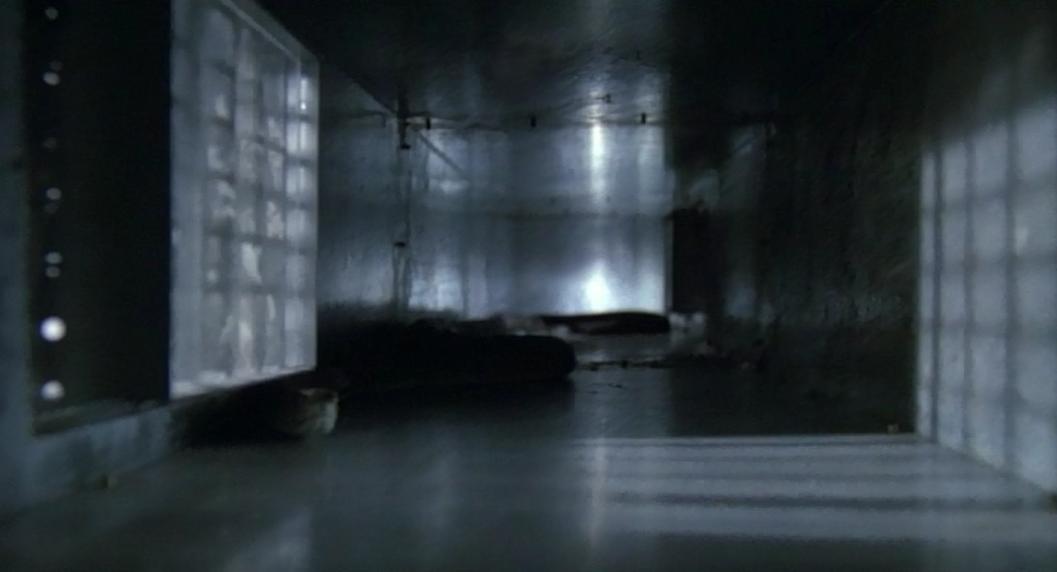
The black mamba is now in the crawlspace (a bit like Klaus Kinski in Crawlspace), after having demolished his way through “YOU LITTLE BASTARD”’s pet collection.  And the old man has inspected the wino and identified the bite marks as those of a black mamba, so now they know what they are up against.  Jacmel then forces the old man to do a recce of the premises to see if they can locate the snake, little realising what danger he is putting them in; he may have a gun, but the snake’s reflex would be quicker than his.  Crikey, Jacmel!
Outside the Police Control vehicle has arrived (someone has to control the police, I guess) and so the Commander finishes his coffee and fag break and goes to supervise as several policemen appear to take a large roll of grey plastic out of the back of the vehicle and put it on the road outside. Um?

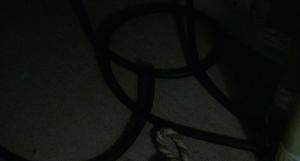
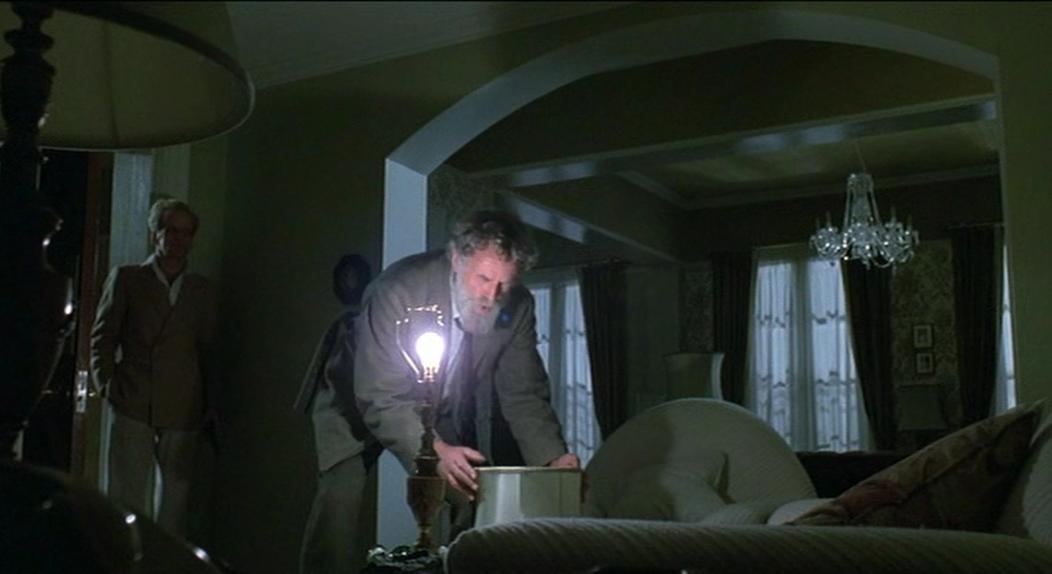
Inside, the tension mounts as Jacmel and the old man go snake hunting upstairs.  Jacmel would stand little chance if the snake attacked him now as he has (yes, you’ve guessed it!) one of his hands in his pocket and the other hand on his gun.  The old man wouldn’t stand much chance either as he goes in rummaging around with a cushion and a table lamp for weapons.  He finally proceeds to whack and hack a black cable to pieces with a poker, like the safari expert that he is.  That’s my boy!
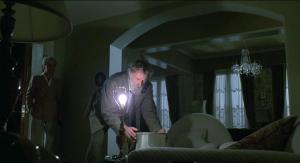
“YOU LITTLE BASTARD” dashes into the room and says to his grandpa, “You weren’t afraid, were ya?”  No, kid, he wasn’t because it was just a black cable and not a black mamba.  Bit of an anti-climax, that.

Back outside the Commander goes over to greet the marksmen as they arrive with their berets and rifles and he gives them some really good advice:  “Try not to freeze your arses off.”  Yes, because a marksman walking around with no arse would be neither use nor ornament and any fool should know that.  But they had better not make a mistake because as the Commander puts it, any man that does, “I’ll have his balls”.  O dear, so if they freeze their arse off and make a mistake, they’ll wind up with no arse and no balls.  There’s a lot at risk here, lads…

Dave’s not sure about the grey plastic either:  “They’re putting up some kind of a… some kind of a… plastic curtain.” 

The marksmen take their positions quietly (well, they don’t want to lose their balls!) at windows opposite the Hopkins’ house and wait patiently.  Until the Commander spits on the pavement and then two guys in a police van come up and tow Jacmel’s car away.  Ah!  I get it.  When the Commander spits, that’s a sign to tow the yellow car away, I see.  But this makes Dave very angry indeed – I didn’t know he was so attached to Jacmel’s yellow car, but apparently he was – and he’s so angry that he busts his way onto the balcony with his rifle, yelling at the police not to take the car or he’ll blow their heads off.  He doesn’t get a chance though as Jacmel grabs him and slaps him around the face twice.  Ooh, enjoy that!
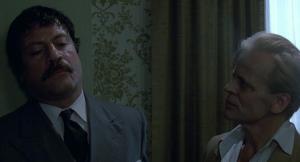
Dave’s just about had enough and now he warns Jacmel that he needs to “be careful”, and he means it; Jacmel knows this.  Dave is crazy and a liability, but it’s too late to worry about that at this late stage in the game.

To defuse the tension, Jacmel continues his nice little chat with the Commander, you know, the one about his superior and “ausority” and all that?  Jacmel asks the Commander if he’s “playing games” with him, but we know that the Commander has already realised that it’s not a football game, and the Commander confirms this when he tells Jacmel: “No, I never play games – I just went for a pee and a cup of coffee.”  He actually went for a cup of coffee and a fag.  And we all know Sarah Miles is not there so nobody should be going for a pee just yet; waste not, want not.

Even though the Commander is clearly being a tad naughty, Jacmel decides to make demands anyway.  It seems I was wrong about this yellow car, it clearly is important as Jacmel wants the yellow car back and he also wants £1M – he’s not asking for much, is he? 

Meanwhile, Detective Constable Spencer narrowly avoids the Commander “having his balls” by giving him some important news – Dr Stowe has finally got in touch to let them know about the black mamba.  What took her so long? 

“YOU LITTLE BASTARD” is having a relapse and needs some treatment for his “azma”; tough, Jacmel says he can’t have any.  Outside, the Commander is requesting plans for the area, intelligence on the owners of the house and their servants, and coffee.  This seems to be Detective Constable Spencer’s main job – so much so that I am beginning to wonder if he’s a barista disguising himself as a policeman. 

Dr Stowe has only just arrived and already she is drinking the Commander’s coffee.  She explains how dangerous the snake is and says that without the anti-venom anyone who is bitten by the snake would stand no chance at all; mamba bites are 100% fatal.  But even the anti-venom can be fatal if you’re allergic to that too.  She brings good news with her, uh?

The Commander convinces Stowe to go with him and to tell the occupants of the house about the danger they are putting themselves in, but she says they need to get David Ball, the Reptile Man at the London Zoo, in case they need assistance.

Dave is getting riled again about the yellow car or lack thereof; he’s so angry that he helps himself to the contents of the drinks cabinet.  O dear, things are bound to go downhill from here… In order to get him to pace himself a little bit, Jacmel tells Dave to make sure he saves some for later.  That’ll do the trick.

Dave spies the Commander outside in the street with Stowe and I swear he says, “He’s bought a woman with him”, rather than “He’s brought a woman with him”.  But Jacmel doesn’t notice the mistake and he sees that it’s only Sarah Miles so he doesn’t get excited either.  Stowe explains that she works at the Institute of Toxicology (Remember, “Toxicology…?  That’s poisons, isn’t it…?”?)  and that she knows about the black mamba “YOU LITTLE BASTARD” took home in error.  She says she has an antidote in case anyone gets bitten.

Jacmel tells her the maid (he means the wino) has been bitten and that she may use her medicine on her if she wishes to do so.  That’s nice of him; bit late now, but what the heck.  Jacmel says he’ll bring the wino to the steps if Stowe will come and inject her with the antidote.  What is he up to…? 
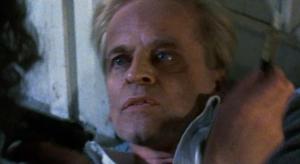
Jacmel makes Howard drag the body outside onto the steps – and as Stowe approaches with her antidote and asks the maid if she can move, the blanket uncovers to reveal… Jacmel!  How daring and impudent of him! There in front of the marksmen, and Stowe with the antidote in her hand which she could inject him with and he may or may not be allergic to it, yikes!
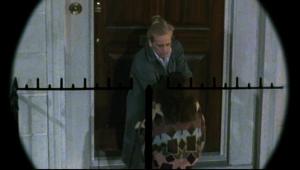
Instead of injecting him, Stowe drops the syringe and before the marksmen’s very eyes (and rifles) Jacmel leads Stowe inside the house.  And there ain’t nuthin’ they can do about it, the silly sausages.

Dave sees her and demands of Jacmel, “What the hell did you bring her in here for?”  Yes, he’s realised it’s just Sarah Miles too.  But Jacmel had thought she could watch “YOU LITTLE BASTARD”.  Relations between Dave and Jacmel are now worsening and they’re almost fighting on the stairs, both with their guns out (it’s a bit like the scene in Women in Love, only not really – actually not one bit, sorry to disappoint, ladies…). 
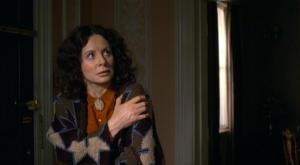
Stowe is holding her arm as if Jacmel had hurt her or something (I’m being naughty, see Other Information about the Film below for more on this), when Jacmel threatens to shoot her if she pulls any tricks.  He demands that Howard and Stowe go upstairs with him and Dave. 

Outside the Commander gets all aggro about the plans he requested, but he’s told that they’re on the table – well, that’s alright then… He gives the plans the once over and thinks he’s onto something; it would seem there was once a different entrance to the house, at the back, so he sends the barista off to check it out for him. 

The reptile doctor, who clearly knows all about kids (having a racist daughter of her own), demands that Jacmel get “YOU LITTLE BASTARD” his inhaler immediately.  Dave doesn’t give a damn if the boy dies or not, but Jacmel lets Howard go with him to get the medicine. 

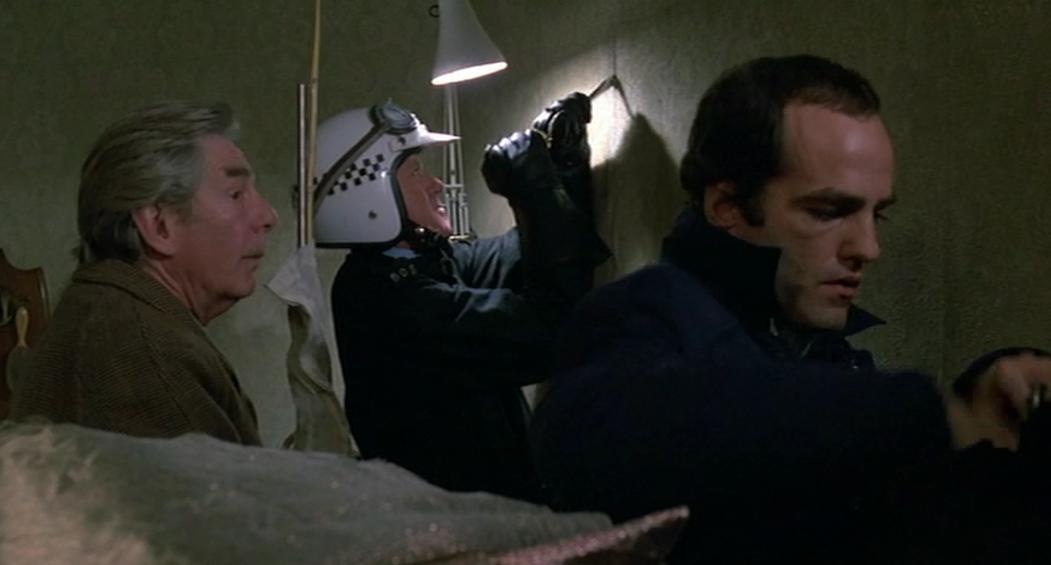
Meanwhile, the barista is breaking and entering into a ladies’ clothes shop called Julia, which is presumably what the Commander was asking him to check out.  He taps on the back wall a bit. 

Dave has been left with the reptile doctor long enough to ask her if she’d like to share a drink with him.  Dave thinks it will “help us to relax” and Dave definitely needs to relax a bit as his nerves are totally on edge right now.  The doctor watches as he puts the rifle down to open the drinks cabinet, but that’s the least of Dave’s worries as he is faced with the black mamba when he opens the cabinet doors!
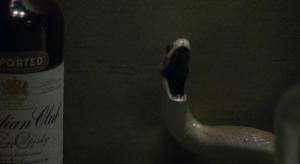
Jacmel comes to the rescue and throws the cabinet door shut and catches the reptile doctor in time to stop her taking Dave’s rifle.  Bloody hell fire, Dave!  You can’t be trusted for one minute with a woman and a drinks cabinet in the vicinity, tut tut…

The snake apparently got into the cabinet through the duct behind the cabinet, which just happens to have a snake sized hole in the back.  What are the chances of that, eh?  Jacmel manages to squash it back into the duct with the aid of a cushion (cushions are useful when used against snakes after all!) and then pushes the cabinet back into place.  Phew! At least Dave can have his drink now, right?

The reptile doctor pipes up with an idea – she suggests that they should turn the central heating off and then the snake might go into a coma as its body temperature lowers.  Sounds like a good idea but Jacmel says he’ll have to think about it; he must be cold himself as he still has one hand in his pocket. Brr!!!
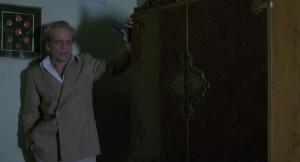
The police have come up with the intelligence on the Hopkins’ staff now – apparently Dave has “no previous” (he’s made up for it in the last 24 hours though), and nor did Louise, but Interpol had been keeping tabs on her since she had been living with a “German underworld figure.”  YES! I knew Klausy would be the ringleader!  This excites the Commander more than somewhat – so much so that he flicks his fag away without finishing it off.  Time for a coffee, I’d say, how about you?

“YOU LITTLE BASTARD” is milking the difficulty with breathing thing for all it is worth and despite having his equipment, he’s still putting on some show; he’s in danger of actually hyperventilating at one point, but I suppose it gives him something to do.  Little does he realise, his mum is on her way back from Rome right now – now that’ll give you something to hyperventilate about, “YOU LITTLE BASTARD”!

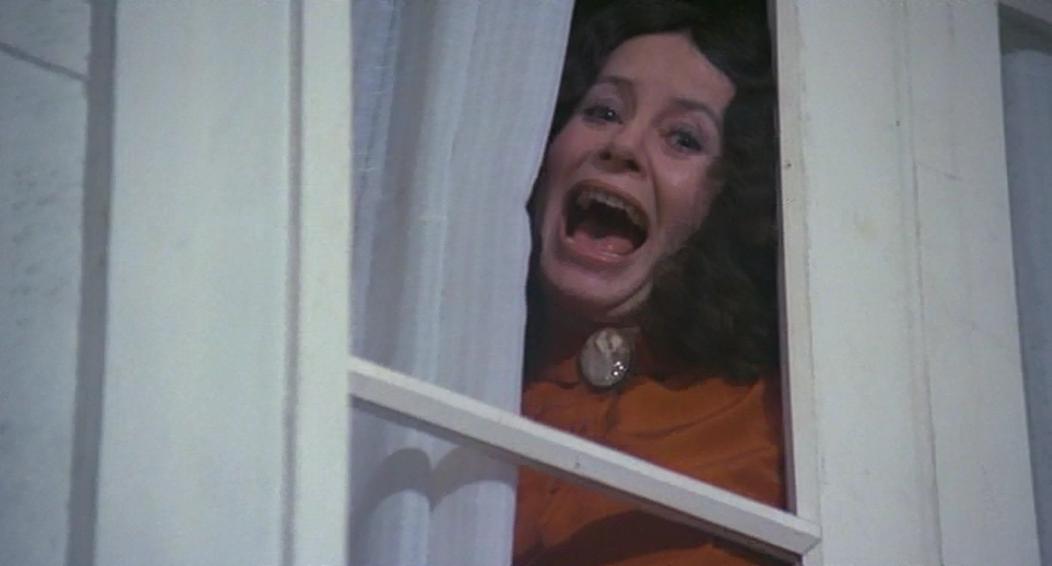
The barista comes back with news of the secret passage way through the back of the mews shop, just as a scream is heard coming from the house – so instead of putting the kettle on, the barista runs outside with the Commander to see what the kerfuffle is about. 
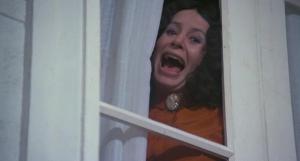
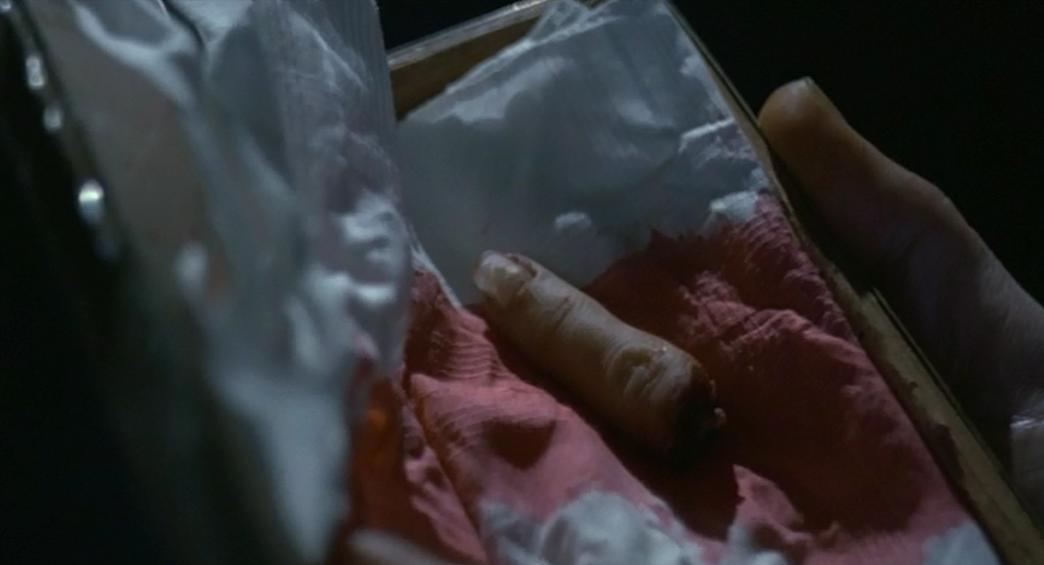
Dave is manhandling the reptile doctor, while Jacmel shouts down to the Commander: “I will throw somesing from the window; a gift from Dr Stowe.”  A metal box bounces past the Commander, and Jacmel promises that every half an hour he will throw “somesing” else down until he gets the money and the precious yellow car that he and Dave so adore.  The Commander opens the box and finds… a finger!
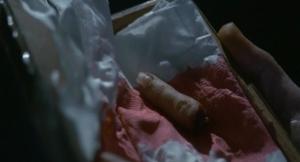
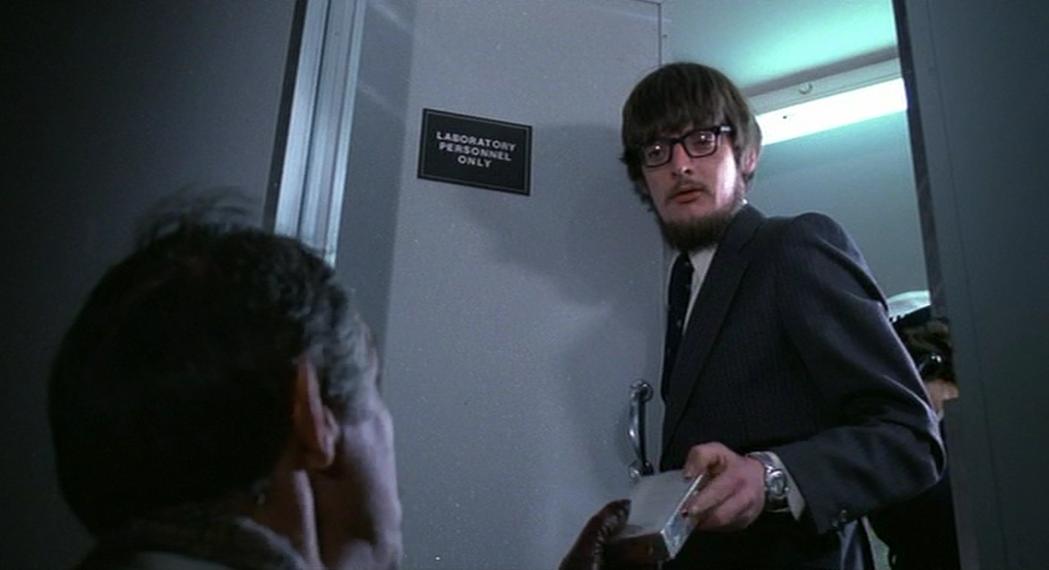
A policeman gives a laboratory assistant the finger, so to speak.  He looks like a cross between Manfred Mann, Rolf Harris and Jarvis Cocker, see:
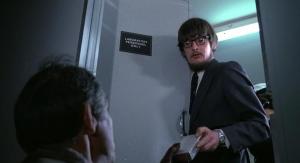
They ask him if he knows what it is yet (do you see what I did there?), but he has to do some tests on it first, of course.

The Commander is in a stinking rotten mood now – he practically ignores David Ball when he is being introduced to him, and says he wants a tall motorcycle patrol man and his revolver – I don’t know what his plans are, but I don’t like the sound of it at all…

Dave perks up for the first time in ages when he spots the yellow car out of the window – “They’re bringing back the car!”   But Jacmel is more concerned about the money, which he is told is “on its way”.  I believe you, Commander, thousands wouldn’t!
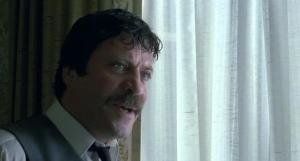
Meanwhile, Mrs Hopkins has arrived at the airport and she is so upset that she is walking into people and not apologising for it.  What’s more, Dave hasn’t even bothered to turn up to take her home – you just can’t get the staff, can you?  – so she has to take a taxi.

Dave is back at her house drinking her out of house and home “to celebrate”.  Jacmel is not exactly celebrating – he’s more experienced in this line, of course, and he doesn’t believe the Commander is going to just hand over the money in the way that Dave thinks he will.

Jacmel advises Dave that they need to keep checking everything and so he sends him downstairs to check that the house is still secure.  Dave doesn’t want to go alone, so he takes the old man with him in case he needs him to fight off any black cables with a fire poker or anything like that. 
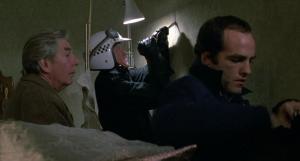
Outside the Commander is planning on breaking into the house with the help of the barista and David Ball, the Reptile Man from London Zoo.  The Commander has kitted himself out with the tall motorcycle patrol man’s outfit and his revolver.  The three of them easily pull the panelling off the back doorway that has been boarded up, only to find that the door is locked – dammit!  So the barista has to do a bit of lock picking and door oiling, which he appears to be expert at, and they manage to push their way through the plasterwork just as Dave and the old man are checking out the cellar. 

The Commander shoots Dave in the shoulder and then finds out who the old man is, just as David Ball sees the black mamba behind them!  The Commander makes a run for it back into the ladies’ clothes shop, closing the door on the old man and Dave.  That’s right, Commander, think of your own safety first.  Luckily for the old man, he manages to make his way up the stairs out of the cellar, leaving only an injured Dave down the cellar and now in the black mamba’s sights…
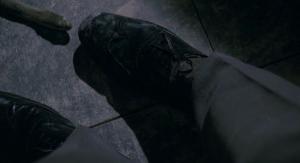
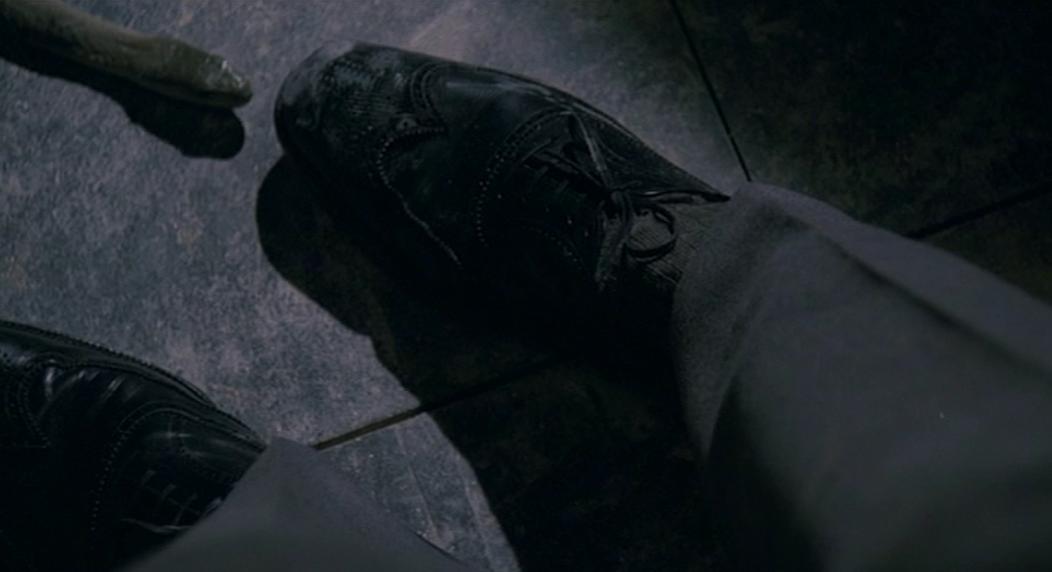
Dave is just dragging himself up the stairs when he realises that, Good God, the black mamba is now shimmying its way towards him.  And straight up his trouser leg, gulp!
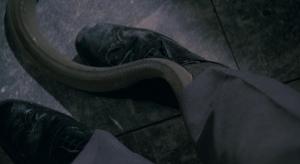
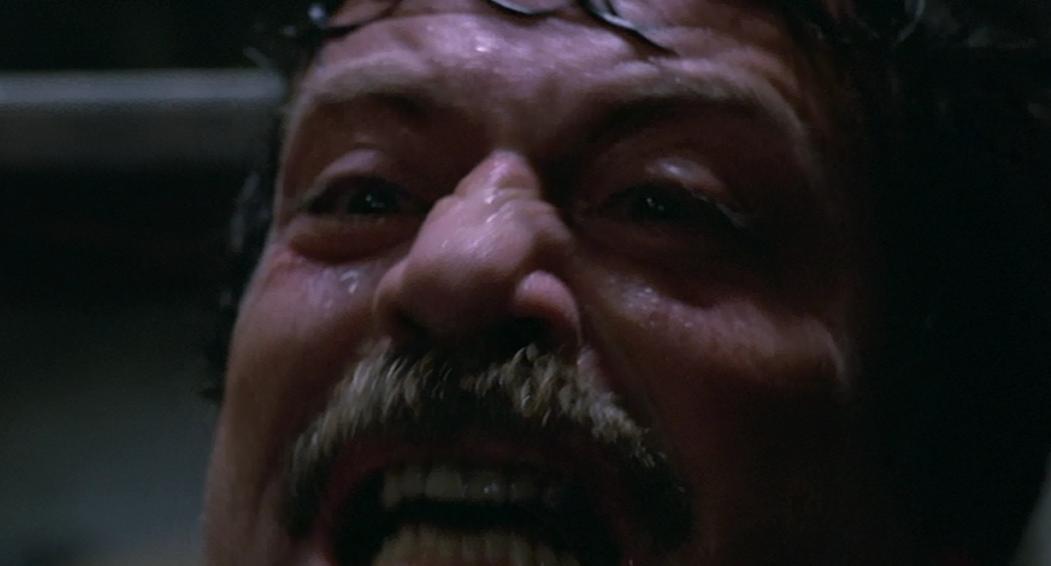
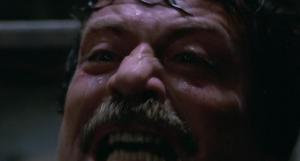
Oliver Reed’s face as the snake “has his balls” (as the Commander would put it) is a picture:
Outside Mrs Hopkins is doing her nut and Manfred Mann/Rolf Harris/Jarvis Cocker is waiting patiently to give the Commander the finger – or the results on his tests, at least.  He eventually gets to tell the Commander that the finger did not come from a living body.  That’s all, but maybe it’s important somehow.

Meanwhile, Jacmel has just discovered that the old man has returned from the cellar alone.  He tells Jacmel that no one should go down to the cellar as the black mamba is down there, so they all troop off to the front room where “YOU LITTLE BASTARD” is still pretending to be sickly etc. 

The Commander shouts up to Jacmel that the money has arrived and is at the bottom of the street.  The Commander wants to know that all the hostages are okay before the handover, so Jacmel gives the reptile doctor a kick in the arse as a parting gesture; don’t go feeling sorry for her, she deserved it anyway because she has a racist daughter.  Then Jacmel prepares her for her appearance at the window by wrapping her hand in a towel – to disguise the fact that she has not had her finger removed – and pushing her forward.  Neither the reptile doctor nor the old man has worked out what is going on.  But what the old man has worked out is that the black mamba is coming…
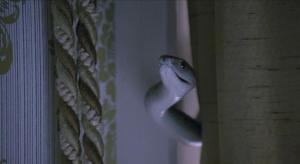
Even “YOU LITTLE BASTARD” has noticed it now.  With the reptile doctor out on the balcony, effectively safe from harm, there is only Jacmel who hasn’t realised the danger he is in.  But as the reptile doctor starts slowly making her way back in from the balcony, the black mamba appears behind the curtains and launches itself onto the back of Jacmel’s neck!
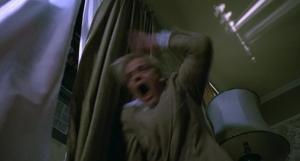
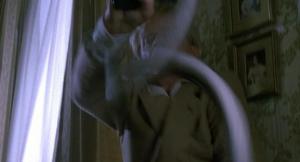
Jacmel begins a fight with the snake, whilst the old man takes “YOU LITTLE BASTARD” and makes a run for it and the reptile doctor is warned to get out of the line of fire so the marksmen can try and take a few pot shots at Jacmel. 
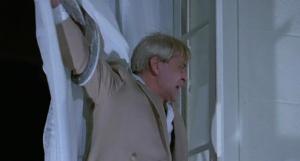
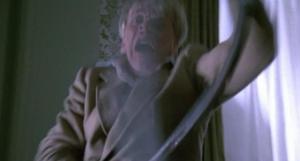
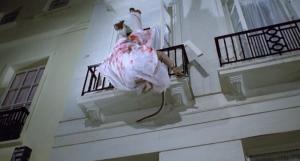
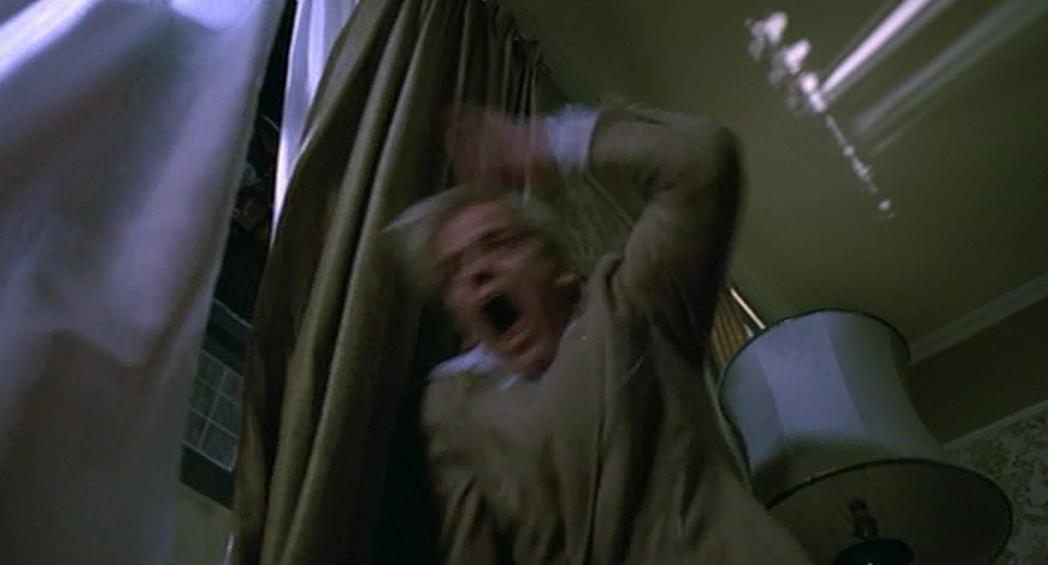
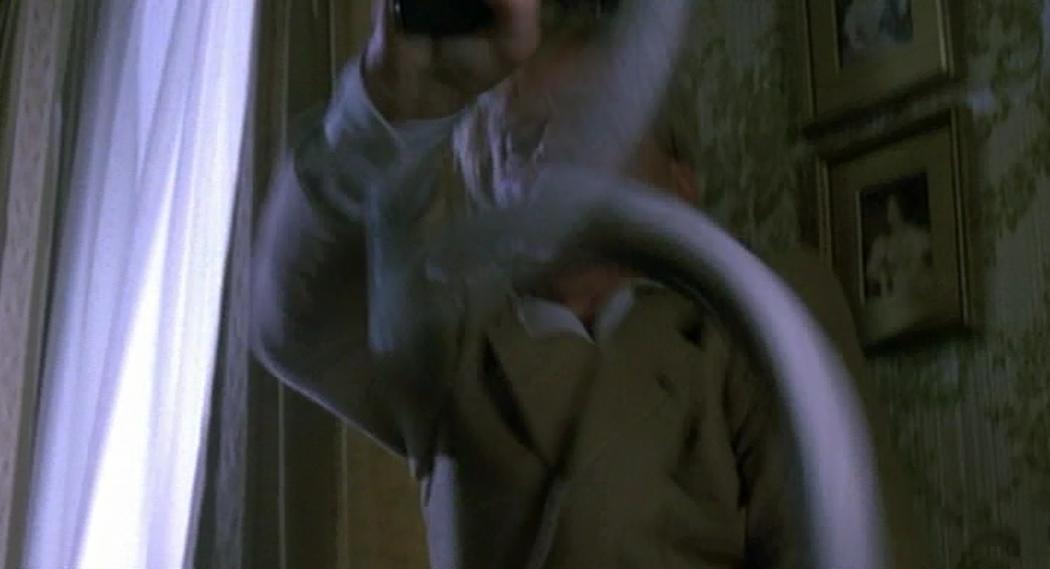
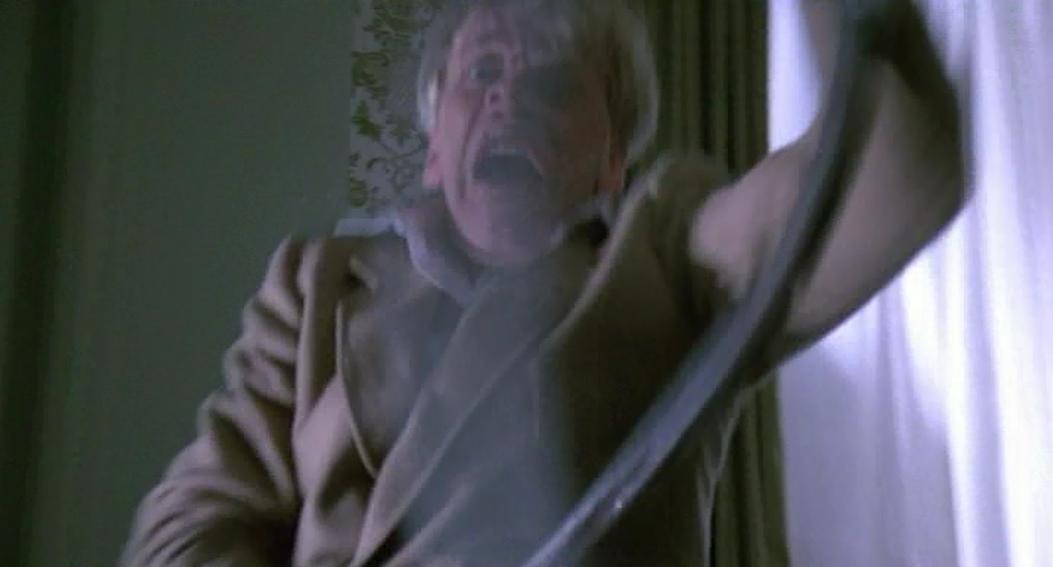
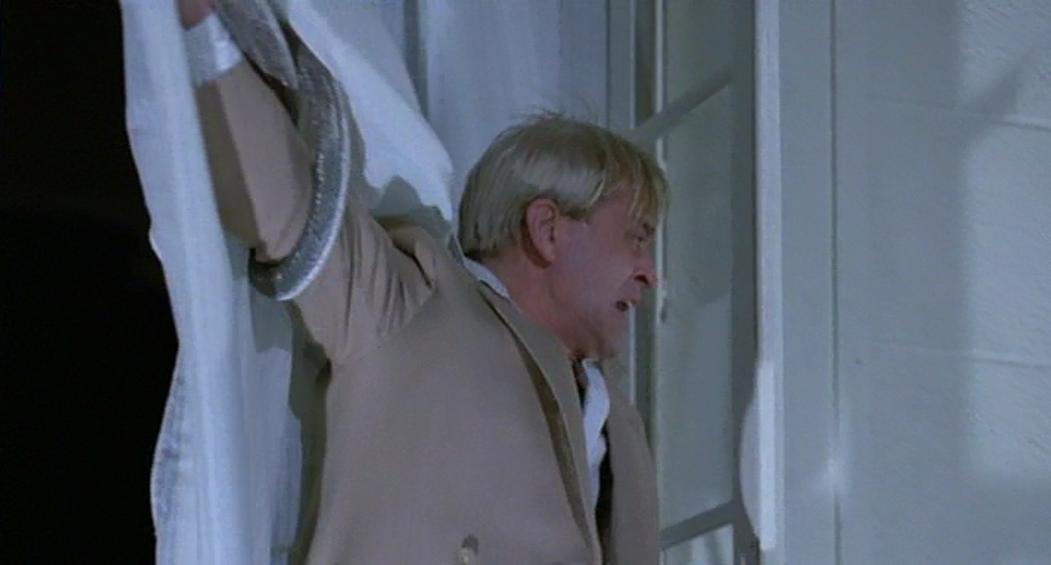
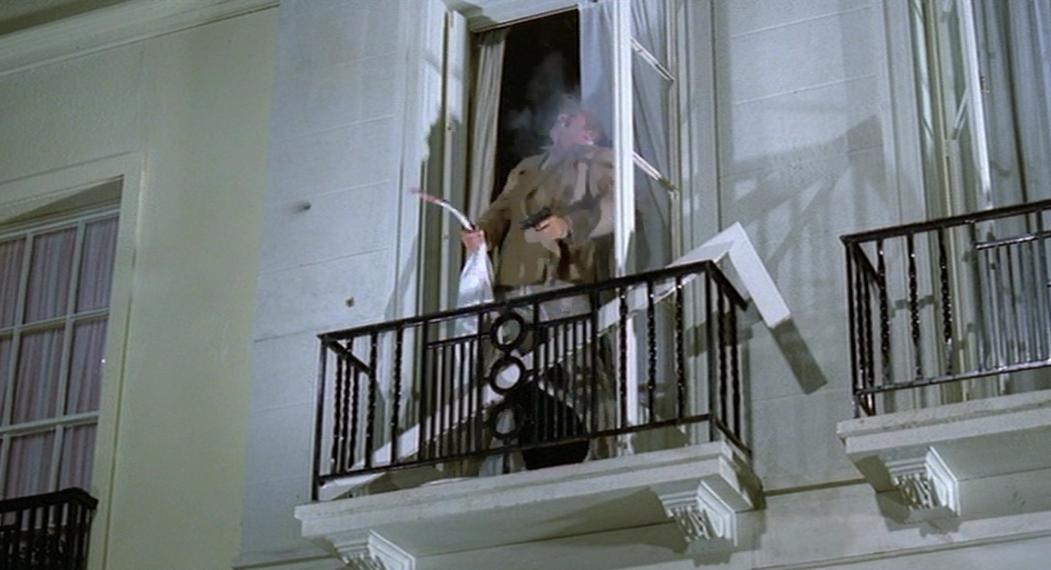
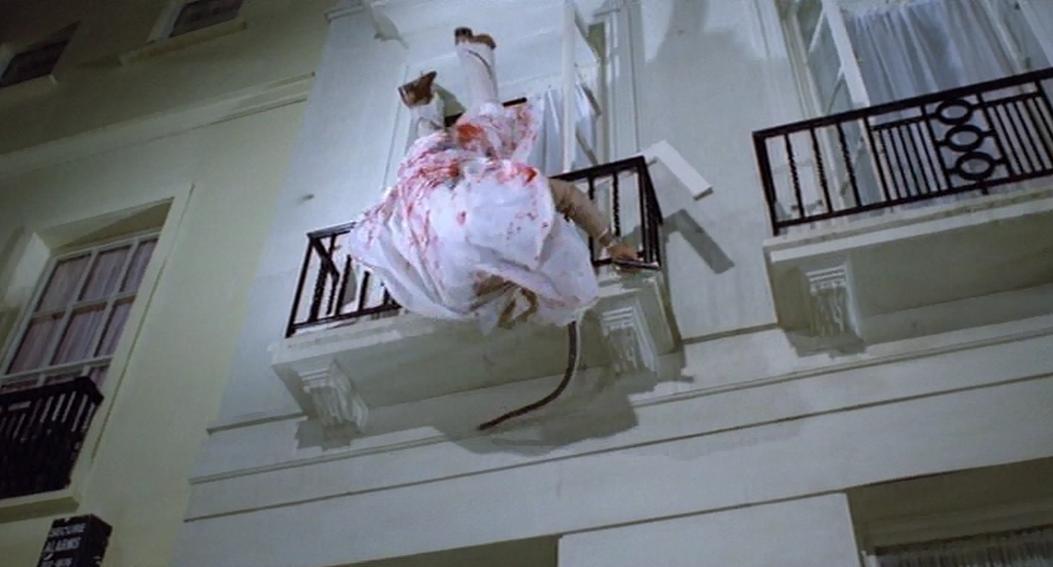
If you think Oliver Reed was great in the trouser snake scene, wait until you see Klaus Kinski fighting off a rubber snake with far more enthusiasm than necessary.  He eventually stumbles his way through onto the balcony, still fighting off the snake and shooting at it, whilst himself being shot at by the marksmen.  He certainly earned his money on this film, I’ll give him that. 
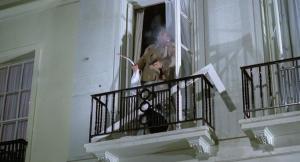
To close it all, the old man grabs the reptile doctor to safety and they all live happily ever after etc.  Apart from Mrs Hopkins who I have decided is determined to be miserable and moany forevermore.  But that’s okay because there is a baby snake hatching out in the duct right now and, with any luck, it might just be there waiting for her when she gets back from the hospital…
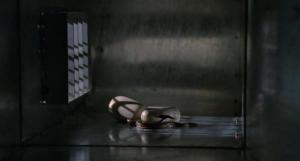
What a brilliant film! I loved it and so should you.

Other information about the film:  There are so many stories about Venom… In Kinski Uncut (Bloomsbury Paperbacks, London, 1997, p294) Klaus says the following: 

“Steven Spielberg offers me a part in Raiders of the Lost Ark.  Someone brings me the script from Hollywood to Paris.  But much as I’d like to do a movie with Spielberg, the script is as moronically shitty as so many other flicks of this ilk.  At the same time, Claude Lelouch is nagging me to do his film Les Uns et les Autres (Bolero).  I’d be willing to do this project, but not for the shabby pittance that this rat offers me.  Besides, the American movie Venom is still in the running – all three at once.  I pick Venom because the salary is very high, even though I hate London, where the flick’s to be shot.”

Also in Kinski Uncut (p307) Klaus says that the dubbing for Venom was done in New York.

In Kinski Die Biographie (Aufbau Verlag, Berlin, 2008, pp284-285) Christian David says that in June 1980 the producer Martin Bregman offered Klaus a part in Venom, which was then to be directed by Tobe Hooper (director of The Texas Chain Saw Massacre).  Klaus was paid $250,000 for 7 days of shooting and one week of rehearsals.  But he also insisted on staying at the five star Dorchester Hotel in Mayfair and having a chauffeur driven car take him to the studios in Elstree each day, which apparently took his costs up to $325,000. 
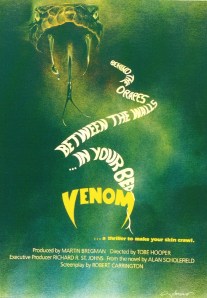
  A pre-production advertisement credits Tobe Hooper as Venom’s director

Working on Venom was not as comfortable as Kinski’s accommodation, it would seem, as filming met with so many problems and delays.  According to Neil Norman in “Film Buff on Location” in The Face magazine (sorry, not sure which issue!), when he visited the set they were running five weeks over schedule and aside from the change of direction (more on this below) there were many other problems: “Stirling [sic] Hayden has had to leave for the States where his son is having an emergency operation for cancer of the spine… Oliver Reed hobbled on to the set nursing a suspected tendon injury, though he seems to be trying to persuade everyone it is gout.  “That’s all part of Ollie’s image of himself,” scoffed one anonymous bystander… Susan George is commuting between Britain and America where she is simultaneously engaged in another film, and can only spend two days a week on the set of Venom… Overheard Nicol Williamson making unhappy noises to the director over his role as the Chief Superintendent… And just about everyone was badmouthing Klaus Kinski whose reputed inflexibility, ego and twelve inch cigars are getting up several noses it seems…”

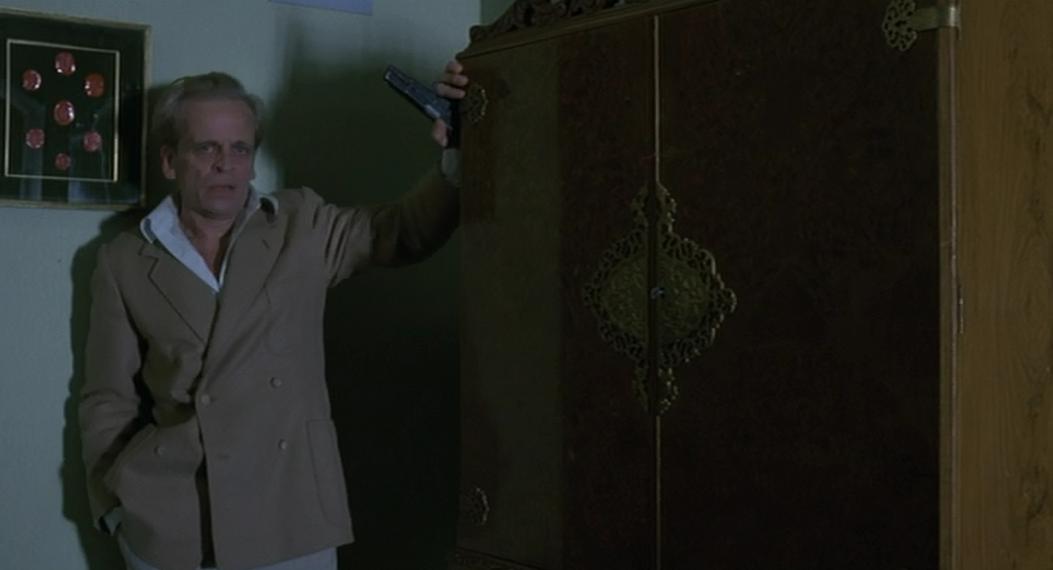
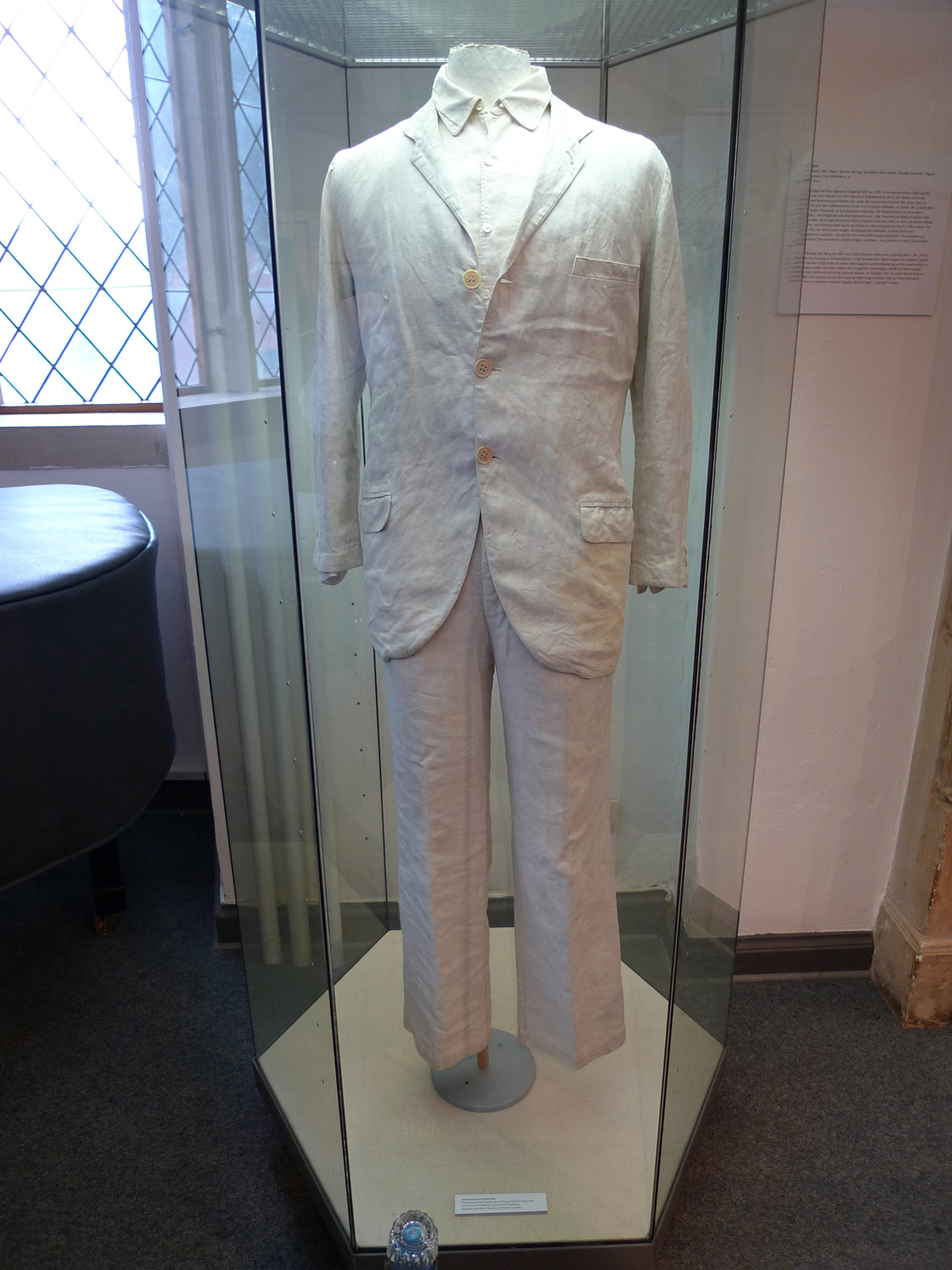
Piers Haggard says in the film’s (very interesting) audio commentary that he took over from Tobe Hooper (the original director) as “things hadn’t gone well”.  Hooper had been shooting for about 9 days when he left but it was two weeks before Piers Haggard could pick the film up due to other commitments.  When he did he effectively started from scratch, ditching all of the footage Hooper had shot and changing some of the storyline slightly – altering Klaus’ role from being “a grim Nazi” to being “a smooth international operator”.  When Haggard made this suggestion, “Klaus was wildly pleased, I said he should look smart so he immediately went off to some Bond Street store and bought innumerable ties on the production.  He preferred to have a lovely pale fawn suit and nice shirts and ties and so on… He was pretty pragmatic about nicking the costume…” 

Given that Hooper was an experienced director it’s not clear what the problems were on Venom, other than as Haggard put it, there were  “…a lot of big personalities involved.”  That’s a bit of an understatement, of course, as several of the cast were known to be difficult.  Here’s Haggard’s description of the cast:

Klaus Kinski:  “…quite a tricky man… very nervy and he was completely unprofessional in terms of hurting people and not being able to control himself… he had a great capacity for danger… he was a very awkward man and I think that life was difficult for him… he didn’t respect other people, other actors particularly… he was an egomaniac, completely self-centred, and he did wanted he wanted to do, and he fitted in […] with people [only] when he needed people…”

Oliver Reed:  “…quite a naughty boy really, liked to have a laugh and he and Klaus didn’t really get on very well, which is a bit hard because they have most of their scenes together… he was a handful… he would test you all the time… made Klaus’ life a misery…”

Sarah Miles:  “…sometimes thought to be tricky… a high voltage personality…”

Between them they were so bad that Nicol Williamson, himself well-known for his tantrums, promised to be a good boy for Piers Haggard as he knew the others were giving him a hard enough time already.

It was no wonder that Klaus and Ollie didn’t get on because in some ways they were too similar – both bad boys, both taking any film if the price was right, both powerful performers – and in others they differed wildly; as Haggard put it, Ollie was a prankster and Klaus “unfortunately had no sense of humour”.  Red rag to a bull with Oliver Reed, I’m sure.  Here’s one of Haggard’s stories:

“Oliver used to amuse himself by going to Klaus Kinski’s trailer and shaking it – cos Ollie was as strong as an ox – and shaking it and saying… “Oh, you fucking Nazi bastard! Nasty Nazi bastard!”  And then Kinski would come out, you know, trembling with rage and swearing back as best he could.”

Haggard says that Klaus and Ollie never actually came to blows because it was more “like an elaborate ritual” with them both making life as difficult as possible for each other on set.  However, things well and truly took a turn for the worse when they completely fell out over one scene in the film….

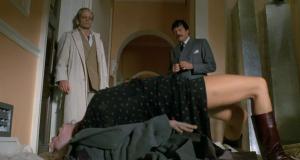
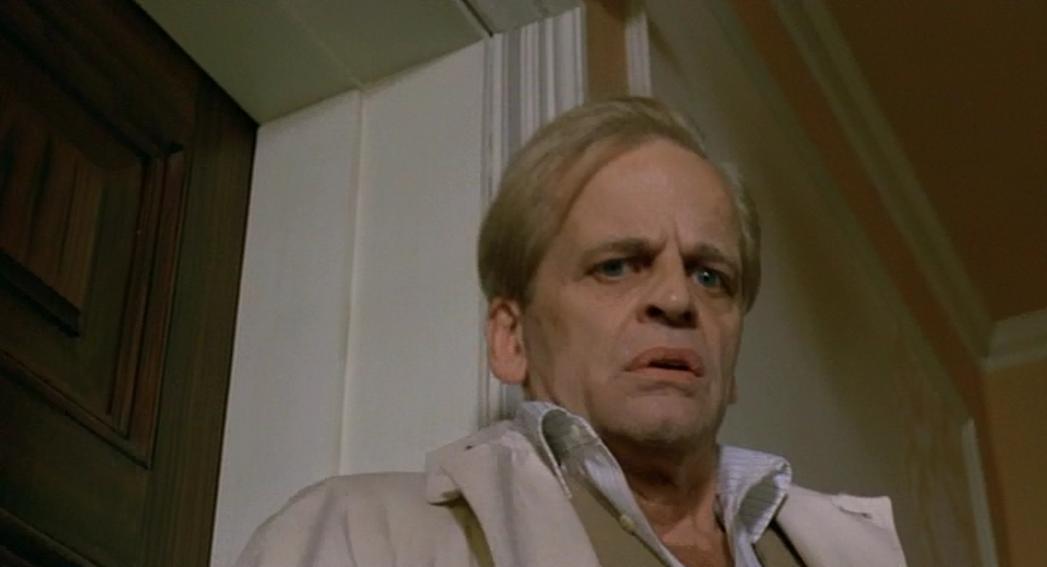
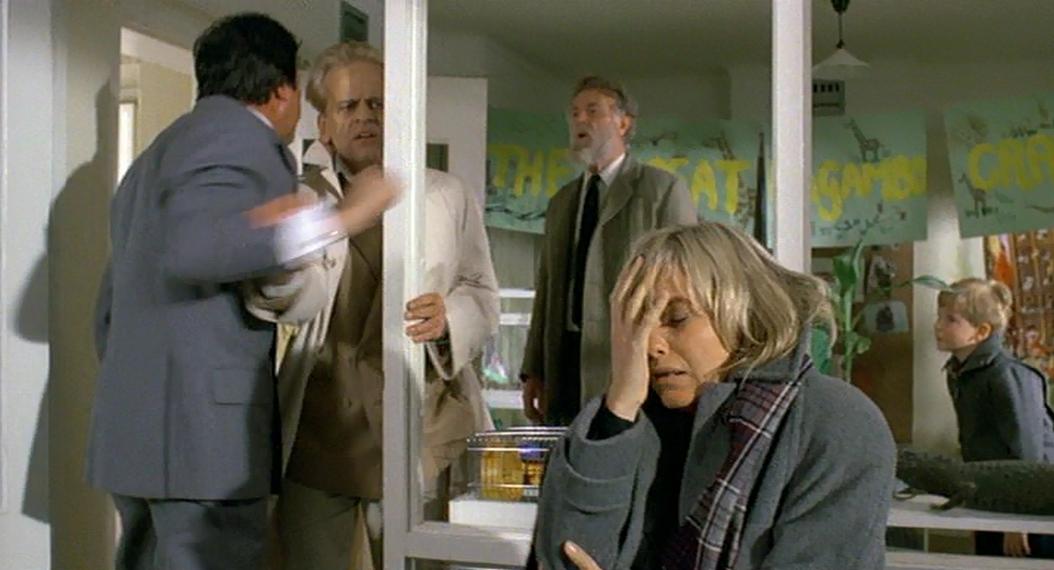
Haggard: “It was all over who was standing in the doorway and whose arm was in front of whose face… it was when [Klaus] first comes in and then Oliver has to come past him.  And Klaus put his arm across that door and Oliver said, “What am I supposed to do about this arm?”  And then I said to Klaus, “Do you think perhaps you could just take your arm down?”  “No, I feel like this; this is how I want to stand.”  And then Oliver said, “Don’t worry, I’ll take care of it.”  So when he comes in the room, he comes in and he gave Klaus’ arm the most almighty crack with the edge of his hand and Klaus took his arm out of the way and Oliver came through the door.  And that was the beginning of the enmity.  So when you see those two playing these scenes together, there is genuine hostility.”
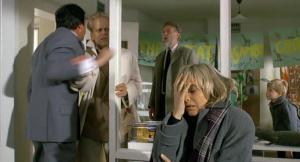
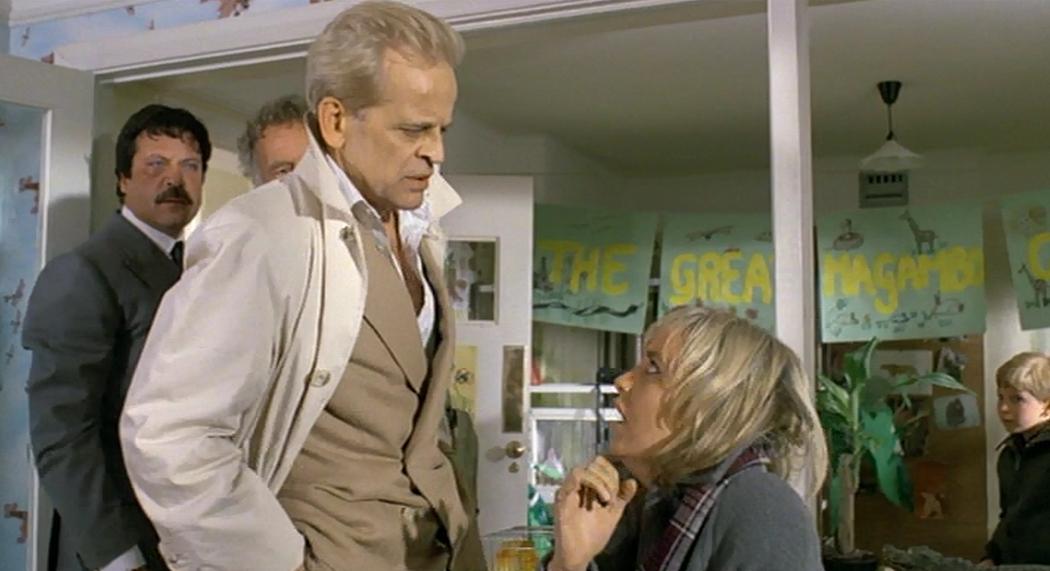
It’s funny because in the scene, I only saw Klaus barging past Ollie who had his arm over the door, and not vice versa.  See the picture above.

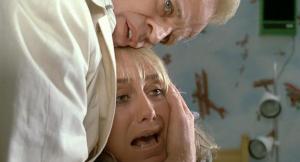
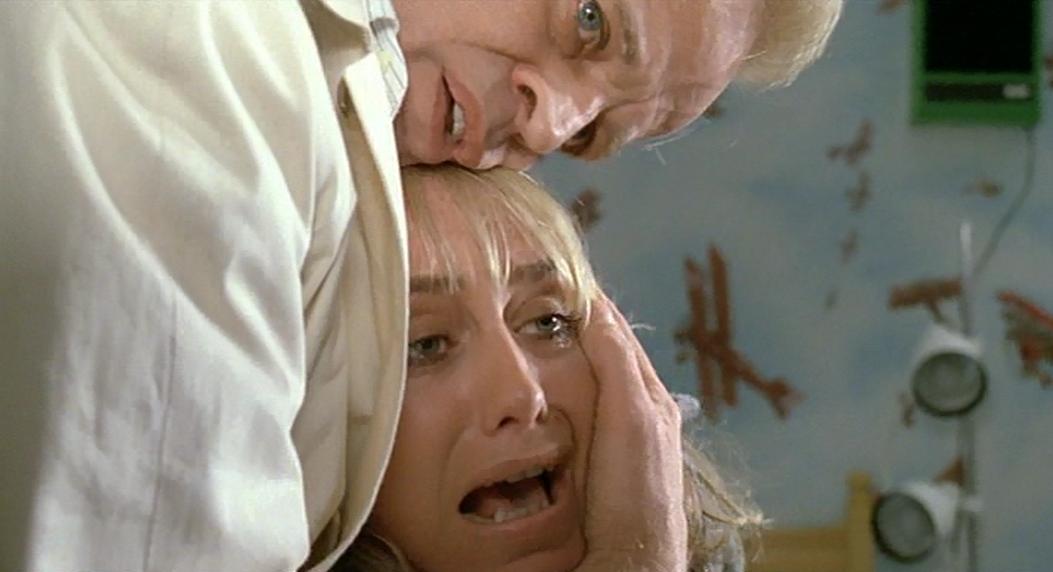
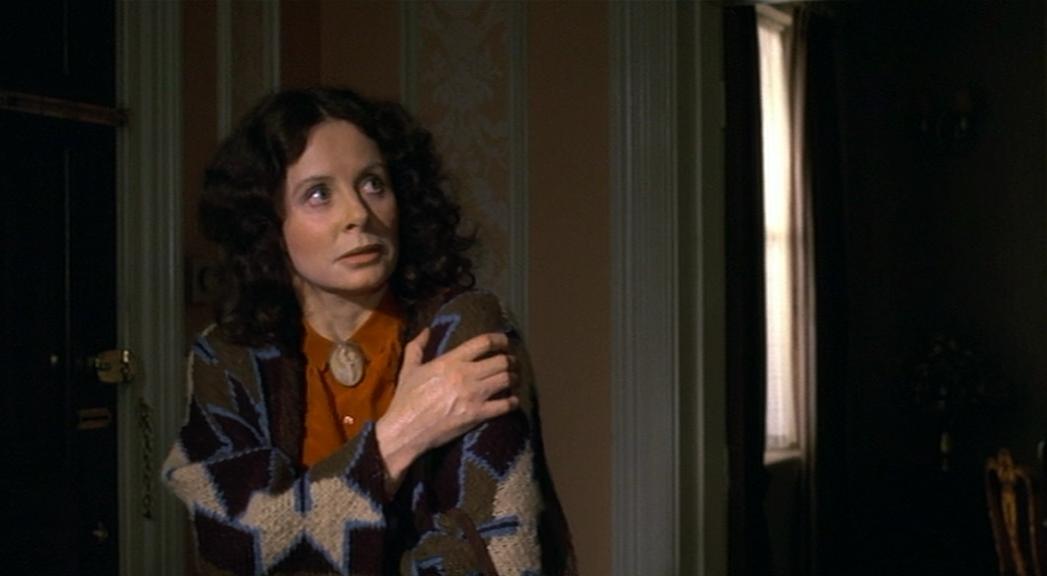
But Klaus didn’t only have problems with Ollie; he also managed to rile Sarah Miles too.  Haggard:  “[Sarah Miles], however, became a bit difficult after Klaus had manhandled her in this scene and left her arm with bruises.  He had not controlled himself; he had not been technically correct or professional in the way of holding her.  He had left her with the most monstrous bruises and she was furious and so she defended herself.  So she got a little tricky at times for that reason.”

O dearie, me! You don’t want to piss off the piss drinker, Klaus!

Haggard says that, amongst other things, with the problems between Klaus and Ollie they ran over on the shoot and the producer and the Director of Photography ended up shooting some of the opening shots at the beginning of the film (where Ollie was driving the car through central London), because he was busy trying to get the film finished up. 

Summing it up, Haggard said: “So, all in all, it was a nest of vipers; not just one black mamba.  There was quite a lot of conflict between the people, which needed handling on a daily basis and was a terrible strain really.”  No wonder Tobe Hooper walked!

There was talk of a sequel – the ending was left open for this reason – but I doubt that Piers Haggard would have done another Venom, although with the Klaus and Ollie characters killed off in the film already I guess it could have been possible…


Click the image to purchase from Amazon

Posted in Film Review | Tagged , , , , , , , , , , , , | 3 Comments

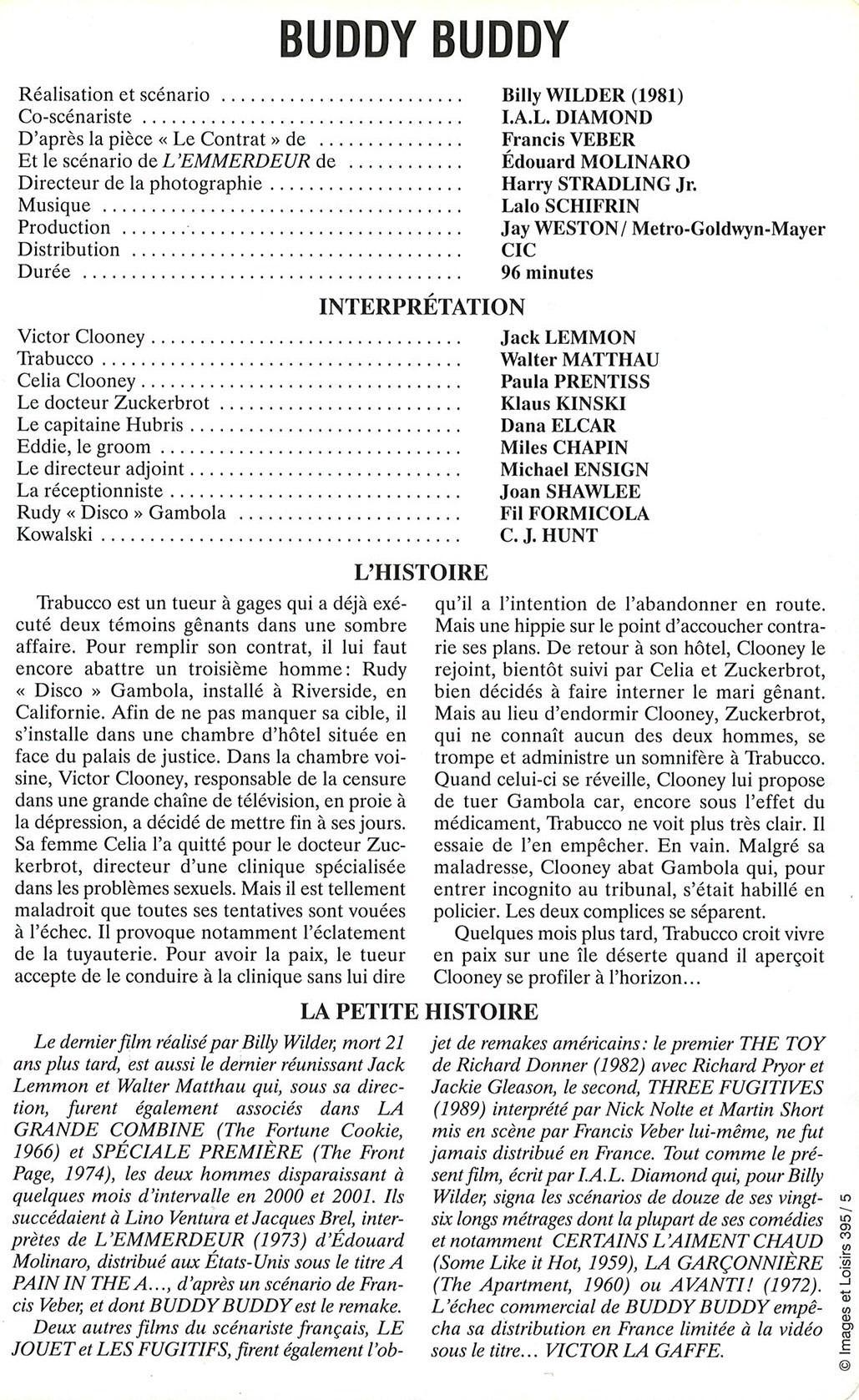
Klaus Kinski Buddy Buddy cinema card

The Venom review should (finally) be uploaded by tomorrow, but in the meantime here is another one of those French collectors’ cards, this time for Billy Wilder’s Buddy Buddy (1981), which I’ve still not got or seen.

More soon…

Posted in Photos | Tagged , , , , | Leave a comment

Klaus Kinski is reanimated

In Kinski Uncut (Bloomsbury Paperbacks, London, 1997, pp322-323) Klaus Kinski addressed his son Nanhoï (Nikolai) with these words: “People will say that I am dead.  Don’t believe them! …Don’t be sad, Nanhoï.  The truth is, I can never die…”

Klaus Kinski passed away on 23 November 1991, but given what he said in his autobiography, did he really die?  I heard a rumour that there was to be a new Klaus Kinski film.  It couldn’t be possible, unless Kinski was right and he’d never died; unless there was another way, of course…

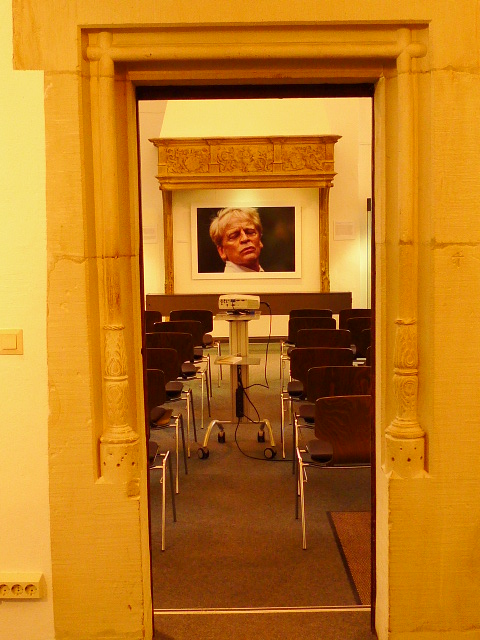
A few weeks ago I was very fortunate to meet up with Volker Helzle, Head of Research & Development at the Institute of Animation at the Filmakademie Baden-Wuerttemberg, and Executive Producer of a project called Kinski Revisited.  He very kindly showed me the short film that he and his team had made to promote a non-existent new Klaus Kinski film and it was very impressive indeed.  I asked Volker Helzle to tell me about the project:

“Our R&D group had a very strong focus on the development of tools for facial animation during 2003-2006. The Kinski Revisited project was initiated to test drive the technology towards its use in a VFX production to see if it could be used to replace a real actor’s face with a digital version. Nowadays digital actors in movies are more common with projects like Benjamin Button and Tron – however, when we started the Kinski Revisited project in fall 2006 this topic was only addressed by a few individuals /companies with extreme caution.

We explicitly chose Kinski because he was a very expressive actor and thus an even more complex character to be created digitally. We realized about one minute of a fictional trailer in which Kinski appears as an 81 year old, gently aged, giving statements about his upcoming movie. The footage we used is based on movies where Kinski was a leading actor, but the performance of his face was completely new, matching the audio recordings we did with a voice actor in a studio. We also worked very closely with a sculptor, Jan Ptassek (http://www.janptassek.com/) who created a plaster cast and silicon version of the aged actor.”

I have to interrupt here and advise you to check out the Gallery page on Jan Ptassek’s website to see a massively impressive close up of his Klaus Kinski sculptures! Now, back to Volker:

“When we started with the project it was uncertain if we could really achieve what we were looking for. This is the main reason why we did not clear any legal aspects with the copyright holder of the footage [Du dummeSau! note: Werner Herzog, of course, and the footage is taken from Woyzeck and Aguirre Wrath of God ] that we integrated our digital actor into. Moreover the main reason for the project was an evaluation of our technologies, not the publication of the result. The current situation is that we have a verbal agreement to show this work in the context of conference presentations. The feedback we have gotten from the Virtual Actor community was quite good. Our intention was also to convince the copyright holder of the original material to develop an idea for a short film in which the digital Kinski could appear. Unfortunately this did not work out. However the project has been a very big success for us. So far this video cannot be found anywhere on the web (can you believe that? it is possible even in 2011!).”

This is very true – it seems to be impossible to find.  However, I have found a couple of photographs of an earlier version of the Klaus Kinski model on the Stern website (http://www.stern.de/digital/computer/computeranimation-klaus-kinskis-auferstehung-588439.html), which were used to illustrate an article about the project back in May 2007.  Of course they don’t do the VFX trailer justice, but it gives you an idea of what Klaus Kinski might look if he were still here today!

It’s such a shame that the Filmakademie team are unable to share the film with us and that the talks with Werner Herzog’s people have not lead anywhere for the Kinski Revisited project.  As Volker Helzle said, it would make sense to have Klaus Kinski reappear.  Yes, especially in this year, the 20th anniversary of his death…

But all is not lost for Volker Helzle and his team as in a few months’ time they will begin working  on a next generation technology test.  They will be working on new production workflows introducing a dedicated sensor technology.  I believe that this means they will be taking the facial movements of an individual and applying them to a CG model on a computer to make virtual actors (or vactors / synthespians), animating in real-time on a games engine, and then building on top of this by working with coding they have written themselves to create a workflow.  Phew! That’s the techy stuff out of the way…  But it’s bound to be very different to the Kinski Revisited project, and, sadly, won’t be featuring Klaus Kinski.  Nonetheless, I feel privileged to have seen Kinski Revisited and hope that the feature film meets with huge success for the Filmakademie R&D Team.  And if it does, who knows, maybe Werner Herzog’s people will reconsider and bring Klaus Kinski back to life for one more collaboration?  After all, surely a CG Kinski would not be as temperamental as the real one?!

I must admit that when I heard about there being a 3d Klaus Kinski, my first thought was: Can I get to interview him?  (I should be so lucky)  But now I’ve seen Kinski Revisited, I’m wondering how I can get my hands on one of Jan Ptassek’s lifelike Kinski models!

And if you think a virtual-Kinski would not do it for you, google Kyoko Date, who was one of the first Virtual Idols to come out in Japan in 1997 complete with a fabricated back-story and discography.  If Kyoko Date can have her own fabricated back-story, so can virtual-Kinski – at the end of Kinski Revisited it states that Klaus Kinski made many more films until the year 2098 when his data was destroyed by a computer virus!

If you are interested to find out more about the software they have developed at the Filmakademie, visit http://research.animationsinstitut.de where you are able to download the software free of charge for educational purposes.

Thanks to Saint John Walker for telling me about the 3d Kinski rumours and many, many thanks to Volker Helzle of the Filmakademie for taking the time and trouble to meet up with Du dumme Sau!, for showing me the Kinski Revisited film “for research purposes” and for telling me about the project in more detail.

Posted in Other Kinski Stuff | Tagged , , , , , , , , | Leave a comment

Happy birthday, Klaus!

Posted in Other Kinski Stuff, Photos | 4 Comments

Some Klaus Kinski posters

Whilst I’m working on a couple of possible interview opportunities and finishing off the Venom review, I thought I’d share these posters:

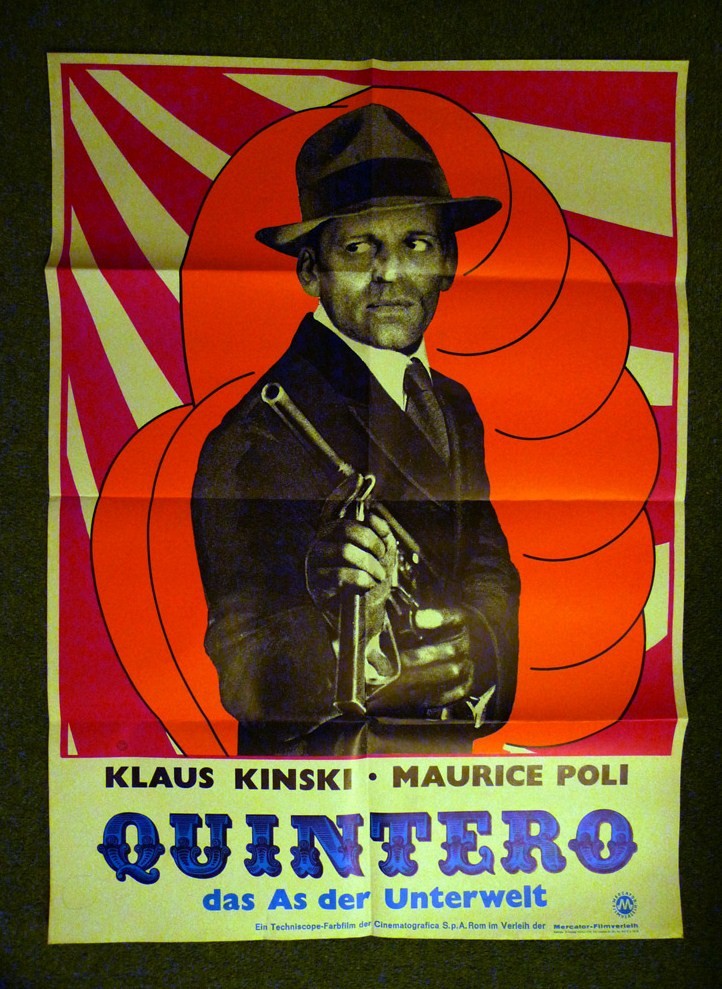
A fabulous German poster for Gangster’s Law (dir Siro Marcellini, 1969).  I’ve seen the film (it’s not as good as this poster makes it look) but need to review it some time. 

I think this is a Belgian poster for Codename: The Soldier (dir James Glickenhaus, 1982), or The Soldier Ken Wahl as I like to think of it.  Not massively interesting with the tiniest mention of Klaus, but then he’s only in the film for about 2 minutes.  See my review here:  https://dudummesau.com/2011/01/07/klaus-kinski-wears-tight-white-ski-pants/ 

More soon…

Posted in Other Kinski Stuff | Tagged , , , , , , , , | 1 Comment

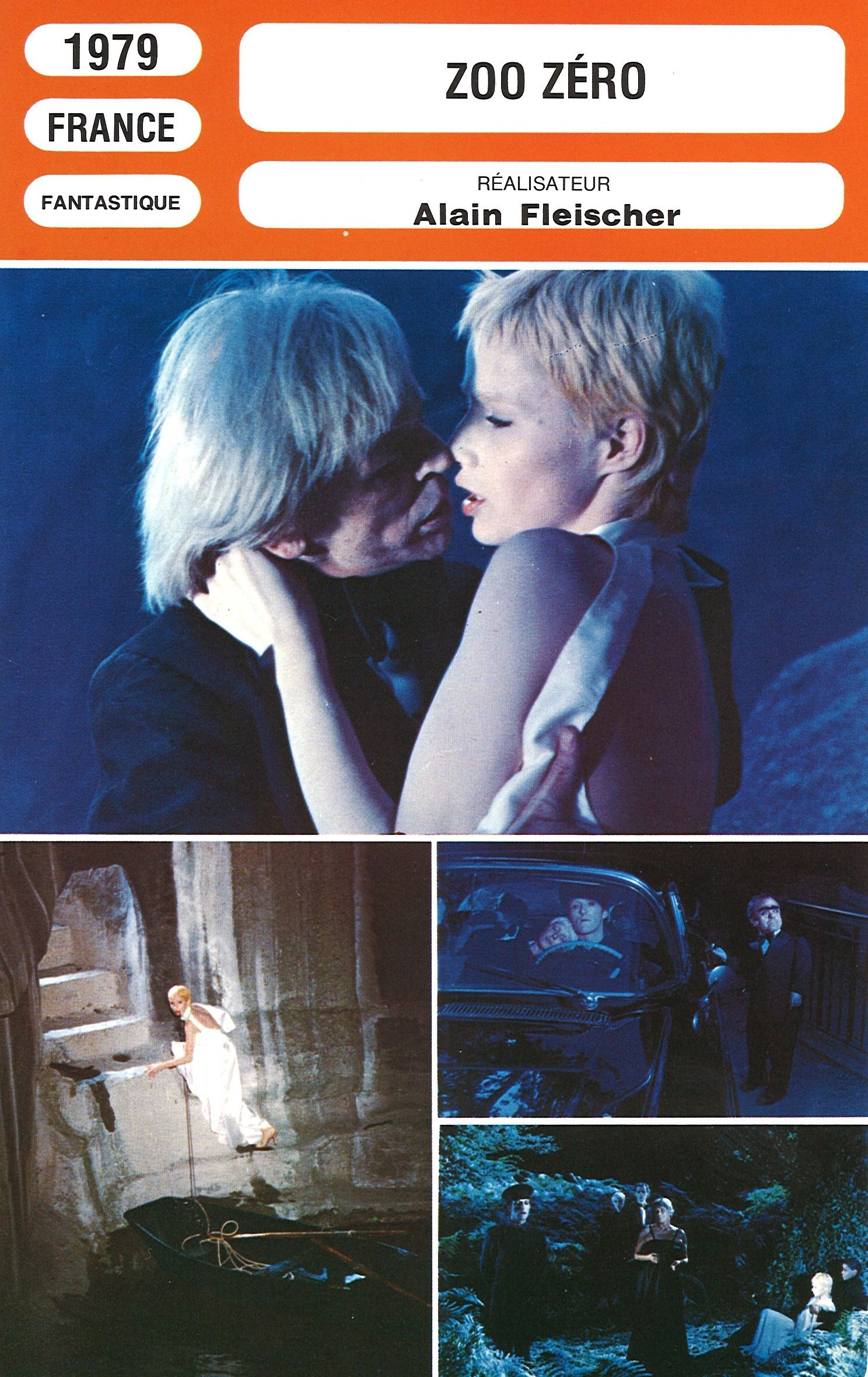
Klaus Kinski Zoo zéro cinema card

Quick update tonight – no film review ready yet but promise to do one shortly.  In the meantime, here’s the Zoo zéro (dir Alain Fleischer, 1979) French cinema card I got this week.  I’ve seen the film and I have to say it’s, erm…interesting? I’m not sure I understood it, but then again I’m not certain that I was meant to.  It will have to go on the list for a review at some point.  Hope you like the cinema card.


Posted in Other Kinski Stuff, Photos | Tagged , , , | Leave a comment

More Klaus Kinski photographs

Before I get around to reviewing Venom I thought I’d share these new photos and film items that I’ve recently acquired.  It’s a mixed bunch this time with portrait shots, film stills, a film trade magazine and a film synopsis:

First up is the film magazine Kine Weekly from 12 May 1966, which features an advertisement for Don Sharp’s 1966 film Our Man in Marrakesh.  Klaus has a smaller role in this film so he doesn’t appear in the drawings in the advert (as far as I can see).  Our Man in Marrakesh is one of the Klaus Kinski-Margaret Lee pairings which are always good for fun though, so I’ll have to get around to reviewing this film some time soon.

I haven’t yet seen or got a copy of Mario Camerini’s 1963 film Kali Yug, la dea della vendetta (Kali Yug, Goddess of Vengeance) but I have seen pictures of Klaus in this film wearing a turban!

Wow! This is a good photograph of Klaus looking absolutely amazing in Alfred Vohrer’s 1961 Edgar Wallace film Die toten Augen von London (The Dead Eyes of London).  I do have this film and I’ve seen this one.  It deserves to be reviewed just for the great screen grabs I’ll get of Klaus looking wonderful in his dark glasses and smart suits; I was very happy to find this Europfilms still…

Finally! A film I’ve already reviewed – Jean Delannoy’s 1970 film Pill of Death aka La peau de torpedo; Children of Mata Hari; and Only the Cool.  See the review at: https://dudummesau.com/2011/01/09/klaus-kinski-wears-a-rubber-suit/ 

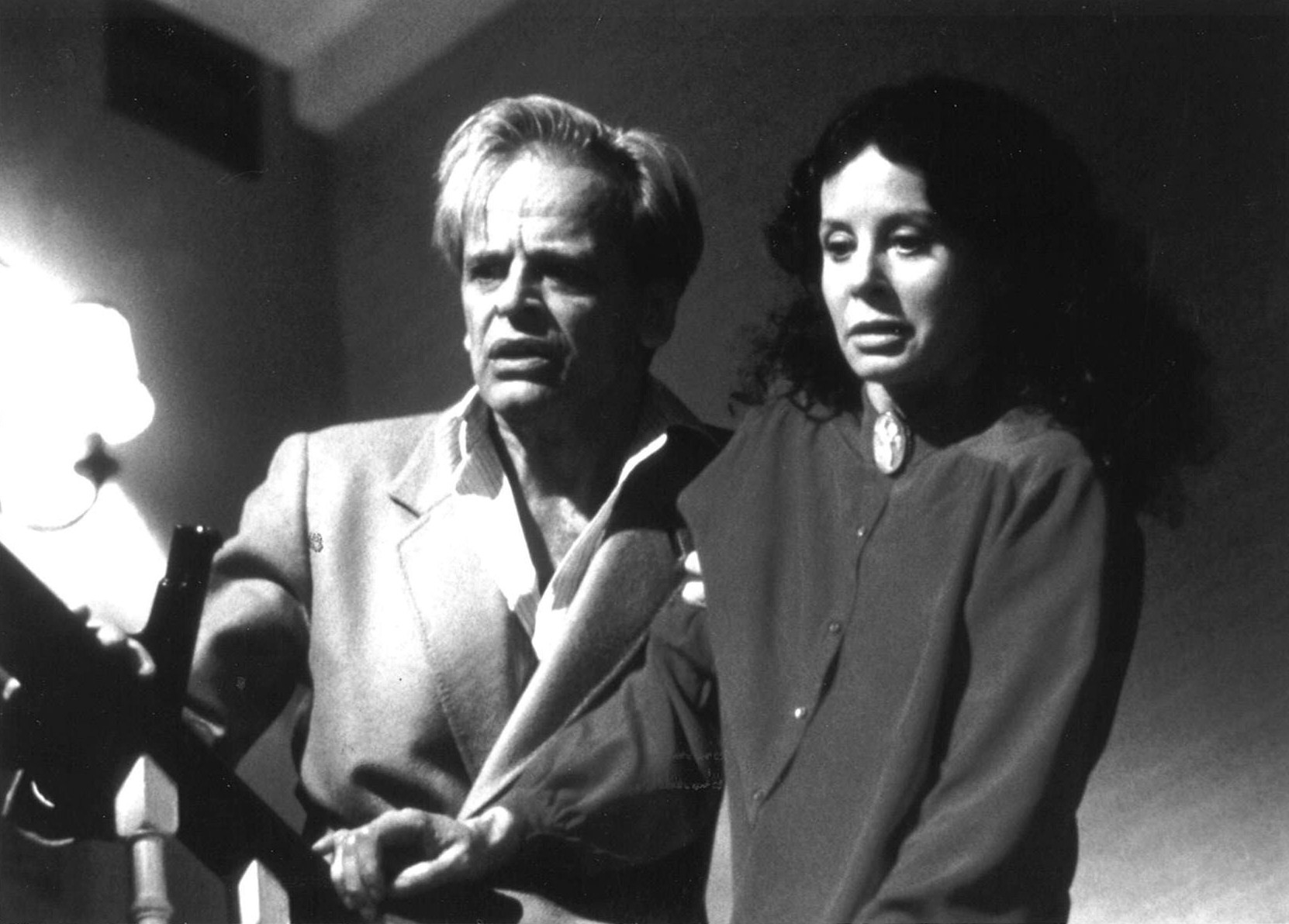
This film, directed by Piers Haggard and Tobe Hooper (apparently), is the next one on my list for reviewing: Venom (1981).  Here’s Klaus with Sarah Miles – I know I’ve posted a very similar still in the past but after looking at both of them several times I’m convinced that Klaus has a slightly different look on his face in this one so here it is.  If it’s the same one as before, well, you have it to look at again and, in any case, it’ll get you in the mood for my Venom review which is coming shortly and which will be a lot of fun – I promise.

I don’t know what or when this photo is from – I’m assuming it’s a portrait shot.  I like it, although it’s after Klaus had had his teeth done by the looks of things…

Well, I’m assuming this is Debora Caprioglio with Klaus here – probably some time in the mid to late 80’s by the looks of Klausy’s rolled up jacket sleeves and spiky hair.  If it is Debora, she looks incredibly young here but probably isn’t quite as young as she looks; the age difference looks quite disturbing nonetheless.  She looks like she adores Klaus.  On IMDB instead of giving a profile of her, it simply says 38DD-22-36, which says a lot I suppose…

I love this shot – not sure where or when it is from but Klaus looks very casual here and I like his check shirt; it’s a good look.

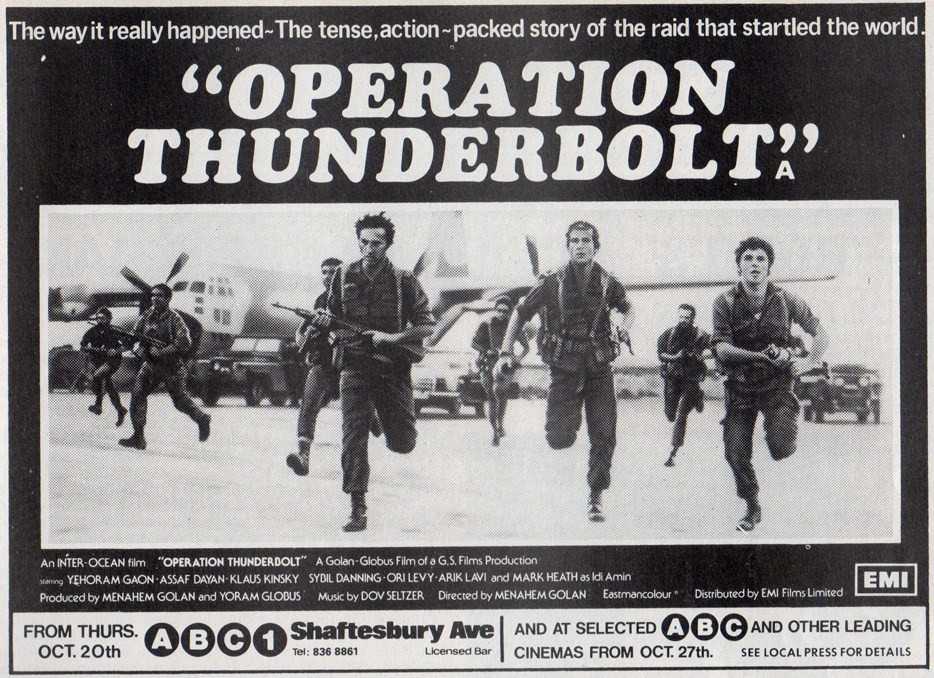
Another film I’ve not yet seen or got – Menahem Golan’s Mivtsa Yonatan (Operation Thunderbolt) from 1977.  Klaus gets to threaten a nun with a gun though, so it’s bound to make good viewing, yay!  Note that Klaus is referred to as Klaus Kinsky in the advert from Photoplay magazine.

And, finally…

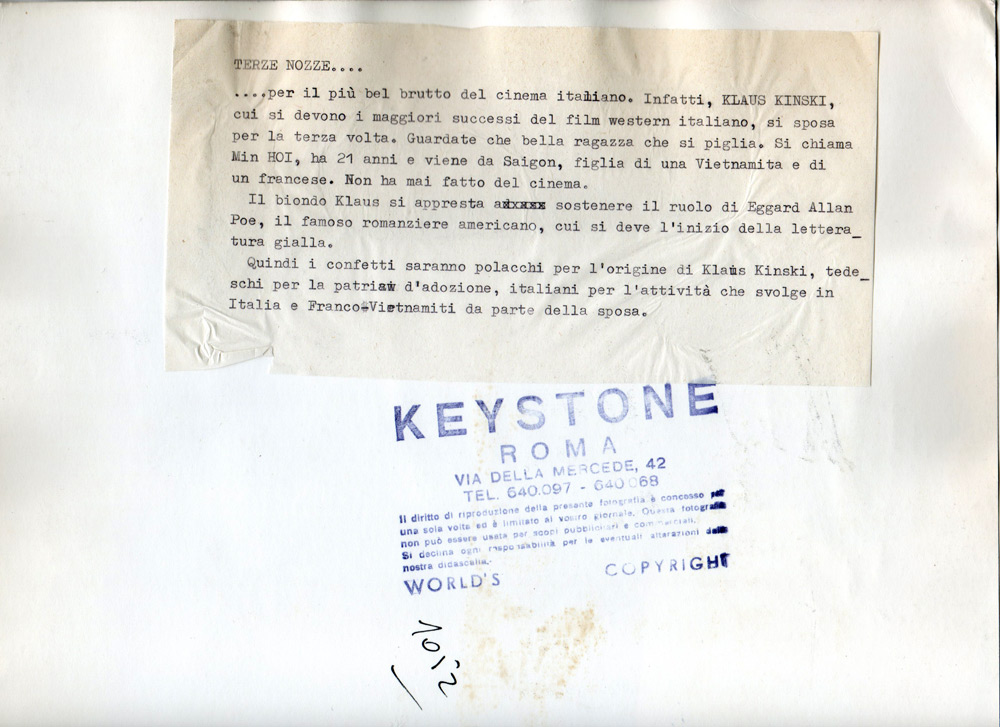
This photo cost me a pretty penny, I don’t mind telling you, but it was worth it – I think.  This is such a lovely portrait of Klaus with Minhoi Loanic and it appears to be from Rome in probably the very early 70’s, as it mentions (I don’t speak Italian but I can guess!) Klaus playing Edgar Allan Poe in Antonio Margheriti’s 1971 film Web of the Spider (Nella stretta morsa del ragno or Dracula im Schloss des Schreckens) – yet another film I haven’t seen but am desperate to get my hands onAnyway, I hope you like this portrait as much as I do.

More in the next week or two with the Venom review and anything else I can rustle up.

Posted in Other Kinski Stuff, Photos | Tagged , , , , , , , , , , , , , , , , , , , , , , , | Leave a comment

Klaus Kinski: Call me Beast

Beauty and the Beast (Shelley Duvall’s Faerie Tale Theatre) (Dir Roger Vadim, 1984)

Basic plot:  Beauty and her two sisters Marguerite and Georgette are living a life of poverty as their father’s merchant ships are lost at sea.  When one of the ships arrives in port they think their lives will be transformed, but things do not go to plan.  Instead of coming home with the family fortune, their father heads back home with bad news – and to make matters worse he somehow wanders onto the grounds of a castle owned by the Beast and meets with further trouble there.  Because he has taken a white rose for Beauty, the Beast tells father that he must die or he must send one of his daughters in his place and then his life will be spared.  Beauty decides to spare her father’s life by going to the Beast in his place.  Will the Beast kill Beauty?

Cast: The Beast / The Handsome Prince – Klaus Kinski; Beauty – Susan Sarandon; Marguerite – Anjelica Huston; Georgette – Nancy Lenehan; Father – Stephen Elliott; Jacques – Stan Wilson

Filming location: Videotaped at ABC Television Center and filmed on location at Chateau des Fleurs, Lake Arrowhead, California

Release date: 13 August 1984

Availability:   Available on Region 1 NTSC DVD for just a few quid.  No extras.

The film in full – *SPOILER ALERT*:

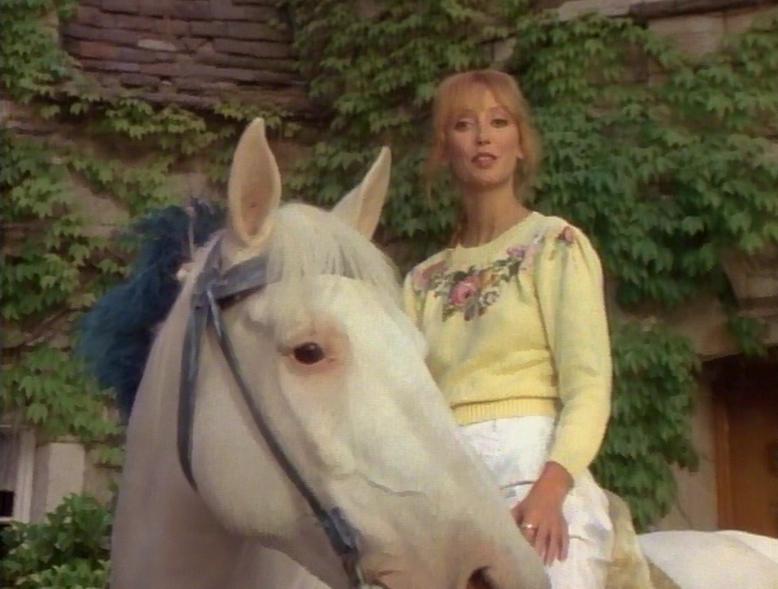
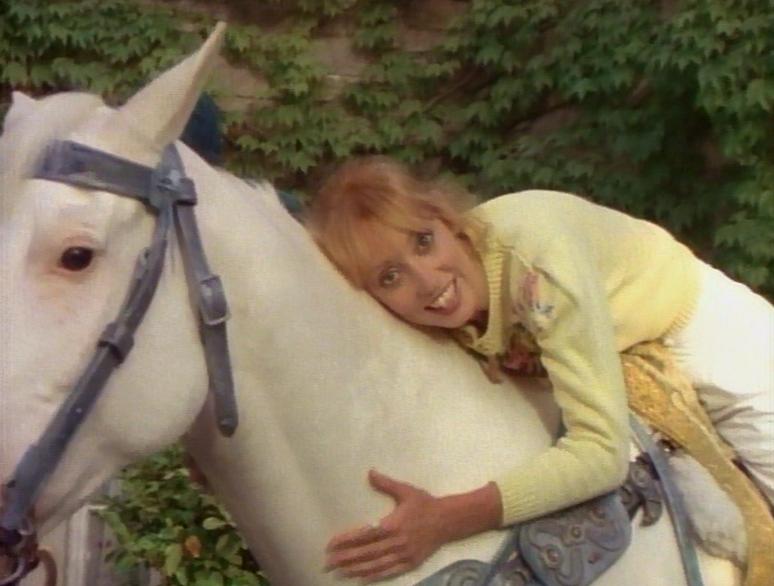
Apparently Shelley Duvall produced and hosted the Faerie Tale Theatre TV show between 1982 and 1987, in a bid to bring high quality entertainment to children.  First off, I’d question the “high quality” bit after seeing this one episode.  And, secondly, if it’s aimed at children, why did she contemplate the idea of getting Klaus Kinski involved and having him dressed up as a hairy beast?!!  Thirdly, the introduction she provides for this film, well, quite frankly it gave me the willies.  She’s probably trying to look like la belle from Jean Cocteau’s La belle et la bête (albeit it in a sensible jumper and trousers) but she just comes off a bit creepy…

Before I get onto reviewing the film, I’ve just got to say something else:

It says a lot, doesn’t it? 

Going back to the Shelley Duvall horse weirdness and how I linked that to Cocteau’s La belle et la bête, well, this version of Beauty and the Beast, directed by Roger Vadim, is a straight remake of Cocteau’s film.  A kind of junkshop version, because like I said the quality aspect is not totally evident.

I’m not sure if Vadim was just being lazy and couldn’t be bothered to do his own version, but then again I have never really rated him as a director.  Essentially he is better known for his romantic liaisons than his films and it could definitely be said he did much better with the ladies than he did with his film making.  However, he did work with the wonderful Julian Maclaren-Ross, Mathieu Carrière and Jane Birkin, so he’s not all bad.  And obviously his ability to direct Klaus (if he did?) definitely raises him in my estimation.

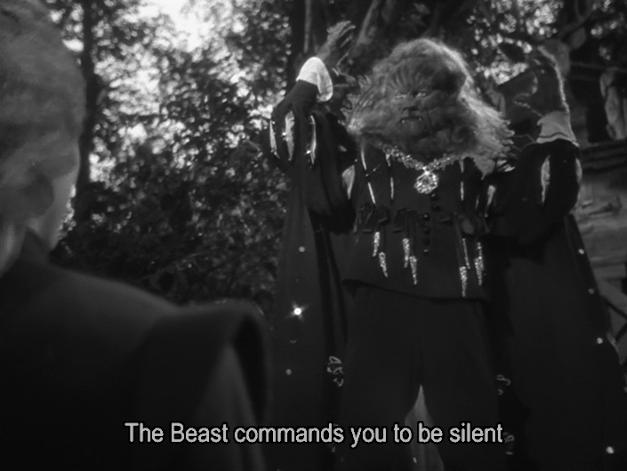
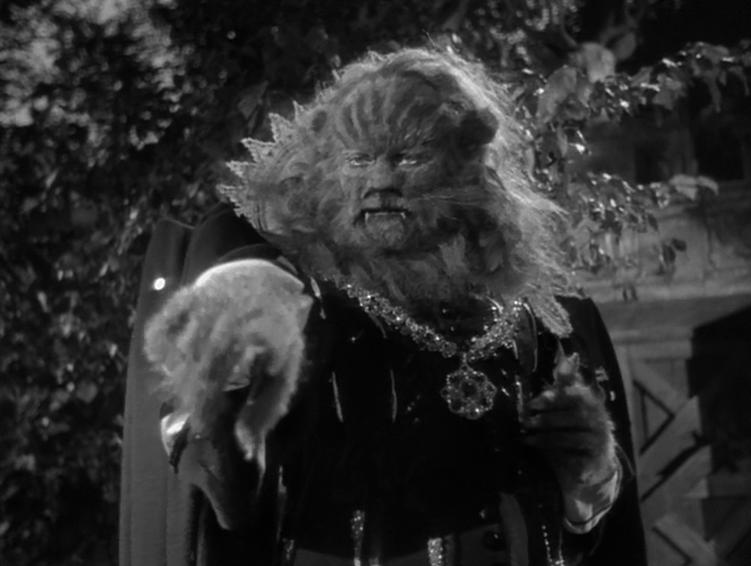
Of course it goes without saying that Klaus is absolutely the best thing about this film.  He did such a great job of recreating Jean Marais’ Beast that he must have seen the film at least once and memorised all the gestures but I will analyse that in more detail later in this review.

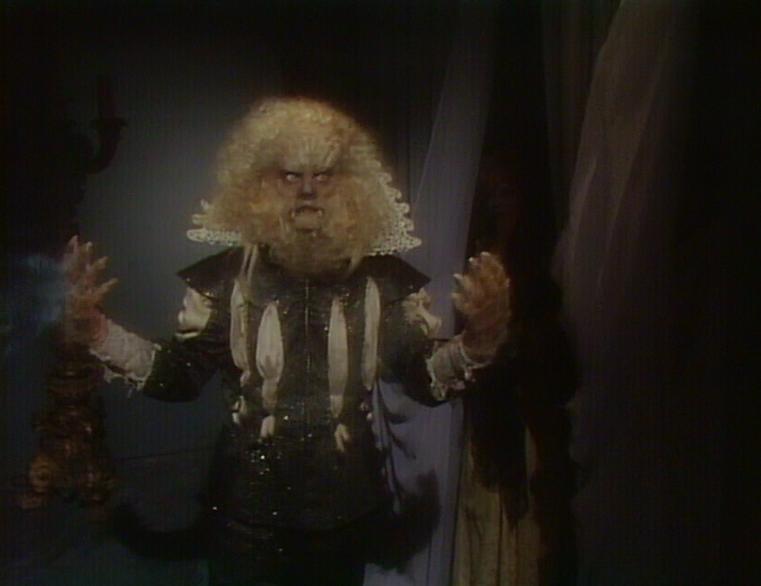
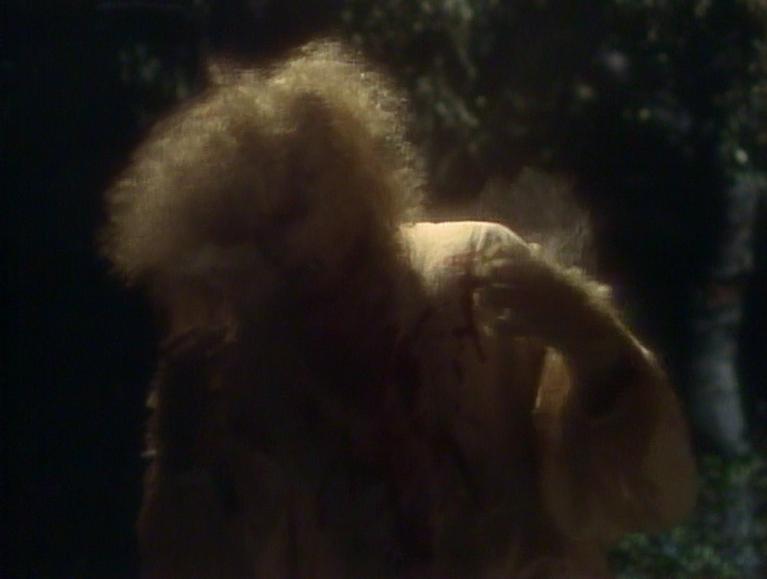
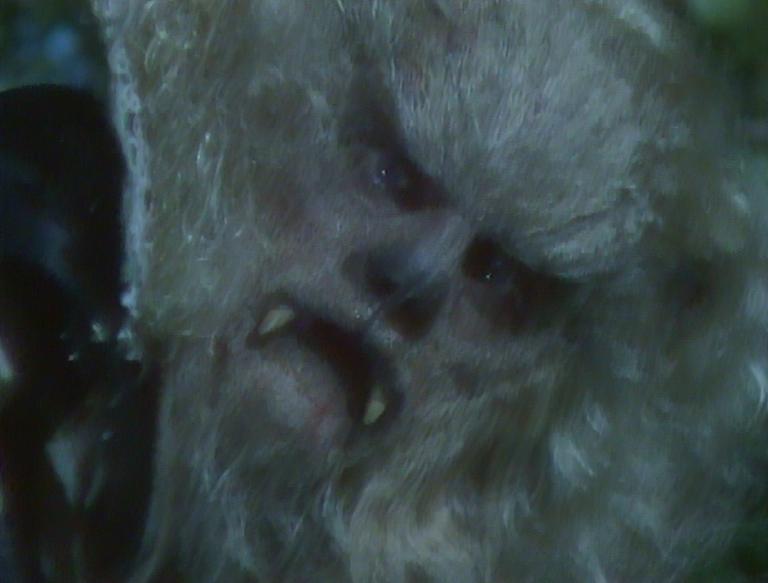
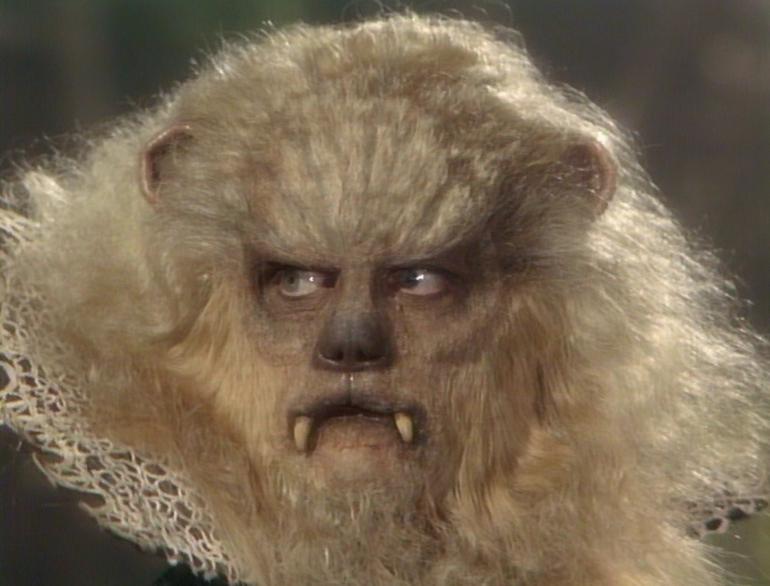
Shot mostly on video and with cheap tinny sounding music piped over the top of sentimental scenes, it doesn’t look or sound terribly good.  But then they were working on a tight budget, I guess, and despite everything the sets are not too bad and Klaus’ Beast get-up is excellent.  I find Klaus incredibly cute as the Beast – they have Klaus Kinski teddy bears now?  I waaaant ooone!

Anyway, the film…

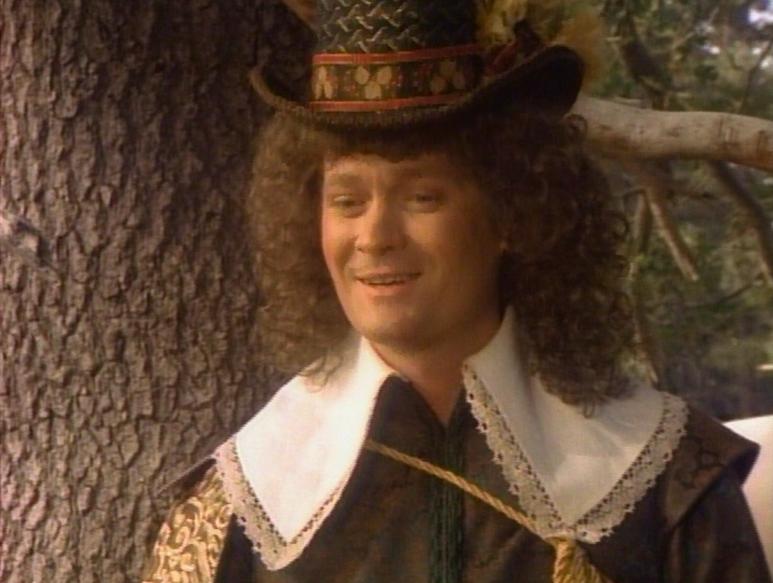
The film starts with some pantomime style silliness from Marguerite and Georgette who are playing on a swing and flirting terribly with an idiot called Jacques.  He’s on horseback and apparently has on a new “splendid” jacket – when he asks, “Do you think it suits me?” he does so in such a way that he is getting into “Suit you, sir?” territory.  Of course, he has no interest in the sisters, even though they are better turned out than their sister Beauty; he only has eyes for Beauty, who is, as the sisters put it, “…on her hands and knees, as usual.”

In what can only be described as embarrassing, a scene follows where the sisters say how much they hate Beauty’s name:  “She should be called Scrubwoman or Scullery.”  “Or Mophandle…Or Broom.”  If that’s funny, I fail to see the funny side.

All Jacques ever seems to do throughout the film is hang around mooning after Beauty – we don’t know anything else about his character, other than he seems to have asked Beauty to marry him before but she refused because she can’t bear to leave her father.  I can think of other reasons not to marry him myself.  Not least because he says things like: “You must realise, I’m agonising for your love.”  Pass me the sick bucket!

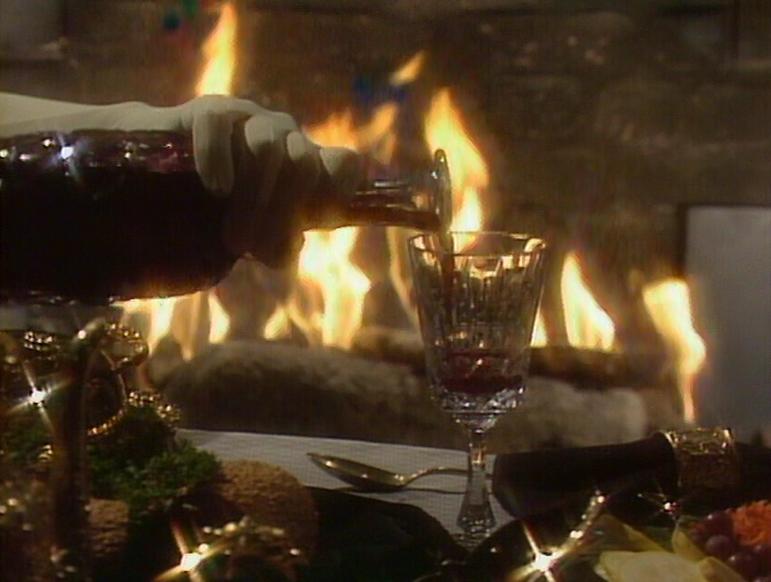
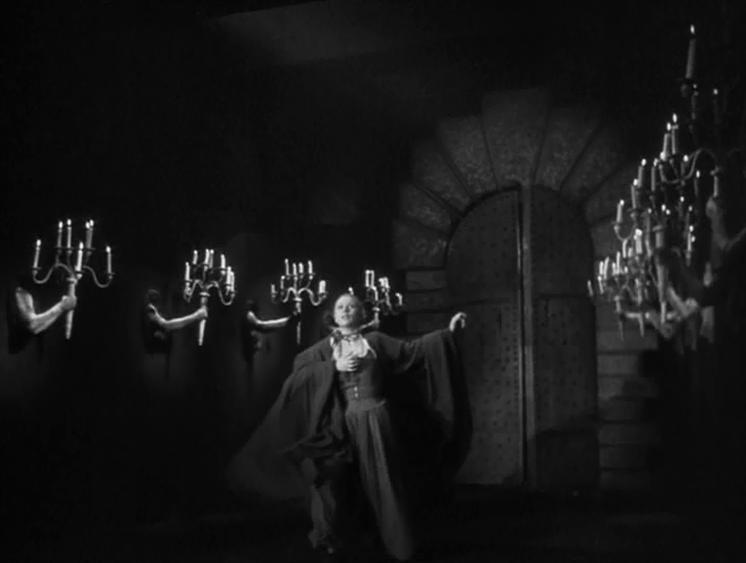
The sisters are all excited because their father has gone off to claim their fortune as one of his ships has arrived in port; they believe he will return with gifts for them and they will be a family of means again.  It is not really explained but somehow “through unfortunate circumstances” the father has been unable to claim the fortune and, to make matters worse, on the way home he gets lost in some crap fog in a forest and winds up on an estate belonging to a character called the Beast.  He calls out to try and find the master of the estate but when the doors of the castle automatically open he wanders in anyway.  Chandeliers held by disembodied arms line the corridor and in the dining room candles light up magically and a fire flares up.  As father sits down, a disembodied hand reaches out for his hat and gloves.  He looks vaguely amused about this but not too surprised.  He says to no one in particular, “I want to thank you for your hospitality, and I am ravenous.”  He begins to eat food without being invited, whilst a disembodied hand pours wine for him.

Having fallen asleep after his meal, he is awoken by the sound of a horse outside.  His hat and gloves are now in his hand and as he gets up to leave he takes some fruit with him.  As he exits the castle, the doors close automatically behind him.

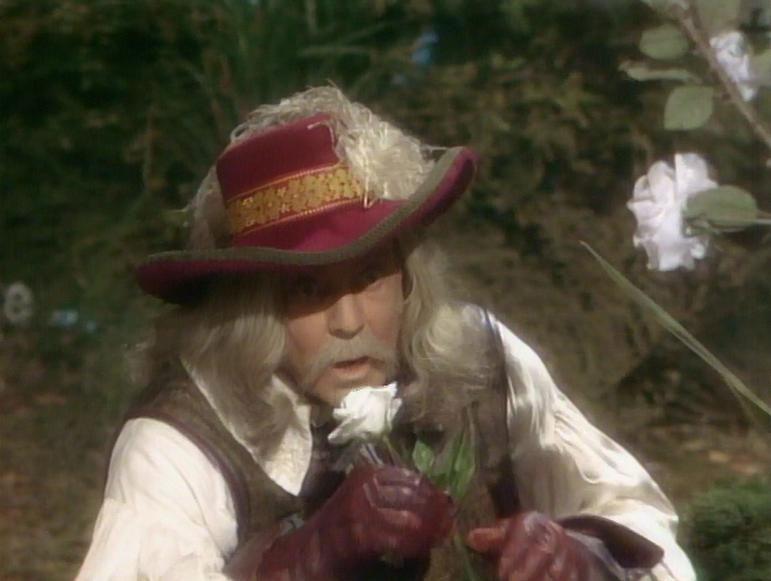
Remembering his promise to his daughters to take back gifts for them, he sees a white rose in the castle grounds and cuts it off to take home for Beauty.  Unfortunately he is caught in the act by… THE BEAST!  And the Beast is played by Klaus Kinski, so you had better lock up your daughters!

And if there’s one thing you shouldn’t do, it’s stealing white roses from the Beast, here’s why:

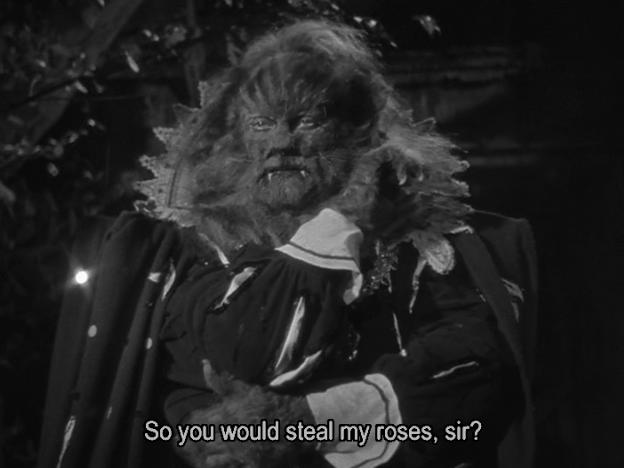
“You, you steal my rose!  The one I love the most.  You could have taken anything except the rose.  For this thoughtless robbery, you deserve to die.”

It’s a bit harsh, but the Beast is played by Klaus Kinski after all and we all know what Klaus is like when he’s in a bad mood.  So he won’t listen to the father’s sob story about how he finds himself unable to take home gifts for his daughters because he doesn’t have the fortune he was expecting to claim and therefore thought it would be alright to take one of the Beast’s roses for Beauty.  Pleading with the Beast, he calls him “My Lord”, and that really gets him angry:

“Don’t call me a lord, call me Beast!  You have fifteen minutes to prepare to die.  Silence!  The Beast commands you.  You have stolen my rose.  And you must die. …Unless one of your daughters will come to my castle in your place.  Then I will spare your life.”

Of course, Klaus – a quick turn around there from fifteen minutes until he dies, to asking him to send one of his daughters instead; I know what your game is!

The Beast tells the father that he must return in seven days or send one of his daughters instead.  The pathetic father slopes off on the Beast’s horse Magic, who will take him home if he says in his ear, “Go where I go, Magic.”

At home he explains to his daughters the predicament he is in, he must either return to the Beast’s castle and face certain death in seven days’ time, or one of his daughters must go in his place to save his life.  Why he tells them about it when, as he says, he wouldn’t ever allow one of his daughters to go in his place, I do not know.  He should have just stayed there and faced his death if that was his intention.

Marguerite and Georgette, already set up as being idiotic, selfish and without morals, suggest that their father should just not go back even if he did promise.  But whilst the father is also idiotic, selfish and without morals himself, somehow he says he feels obliged to keep his word and return the Beast.

Beauty says she wants to go in his place because: “I love you.  I would truly die of grief if I lost you.”  This is just about as sickening as Jacques declaration of love for Beauty – somehow this father-daughter relationship does not seem quite right.  As Beauty knows that her father will not let her go, she sneaks off when no one else is around and takes Magic.  You can tell this is an emotional scene as the cheap, tinny music is piped over the top of it.

Her father looks for her for all of a minute and Jacques is presumably busy agonising for her love so doesn’t even notice she has gone.  The sisters are pleased she has gone until they realise they will have to take on the cooking and cleaning chores and look after their father, who also appears to be agonising for Beauty’s love too.  As soon as she has gone he seems to sink into a dark depression.  The music must now surely be (as my friend Tom puts it) swathed in waves of melancholy pathos – nope, it’s still those cheap and tinny keyboards.

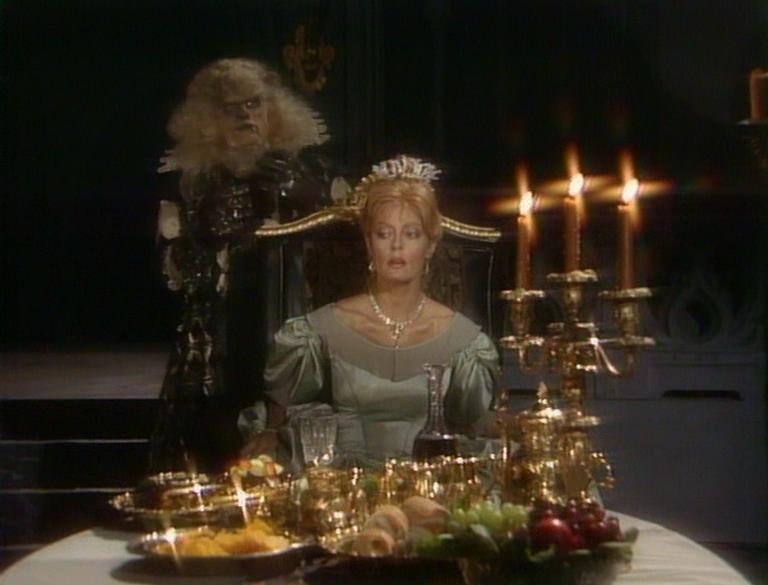
Meanwhile, Beauty has found her way to the Beast’s castle, seen the strange chandeliers in the hallway and then bumped into the Beast himself.  She faints and so the Beast carries her to her room, which has magical powers too.  The door opens for the Beast to take Beauty into the room and as they cross the threshold Beauty’s clothes change from rags to finery.  The Beast places Beauty down on her bed and she awakens with a start.  Yes, it’s Klaus Kinski and he’s in her bedroom!

The Beast warns Beauty not to look into his eyes – he doesn’t like it or something, he doesn’t really explain and she doesn’t ask – and then tells her that she will only see him in the evenings when she dines.

That evening Beauty goes to dine and the chair automatically moves for her to take her seat.  She sits down and hears footsteps behind her as the Beast approaches.  He tells her that she should not be afraid and asks if he may watch her dine.  He tells her that she is the master in his home and then asks her if she finds him repulsive and, of course, she does.  Beauty tells the Beast that she is not used to being served but that she can see that he has done everything he can to help her to forget the way he looks.  The Beast admits that he is a monster but Beauty acknowledges that “there are men much more monstrous than you but they hide it.”  The Beast says that even though he looks so ugly, he has a soul.  He says Beauty may have anything she wishes – her slightest whim – but that he must ask her every time they meet if she will be his wife.  Even though he asks her in his whispery voice, Beauty still says no.

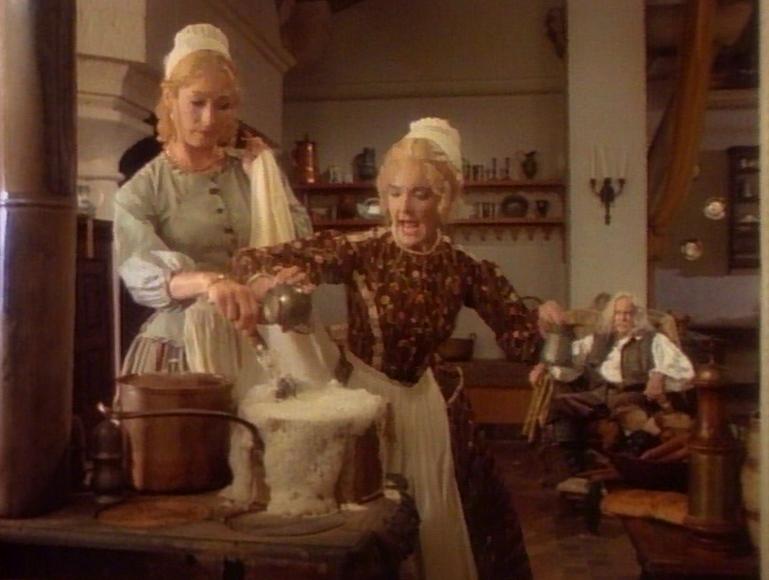
Back at home the sisters are cooking potatoes in the most unorthodox manner.  Somehow this seems important enough to keep in the storyline; it’s not though.

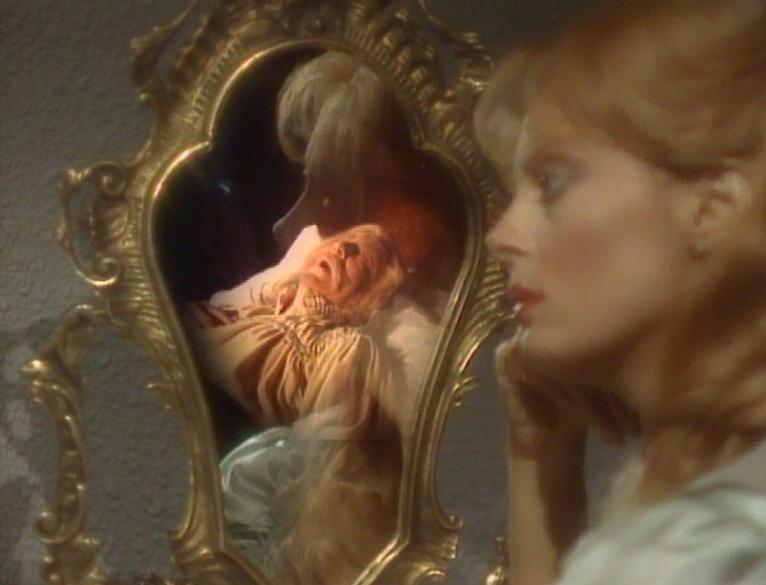
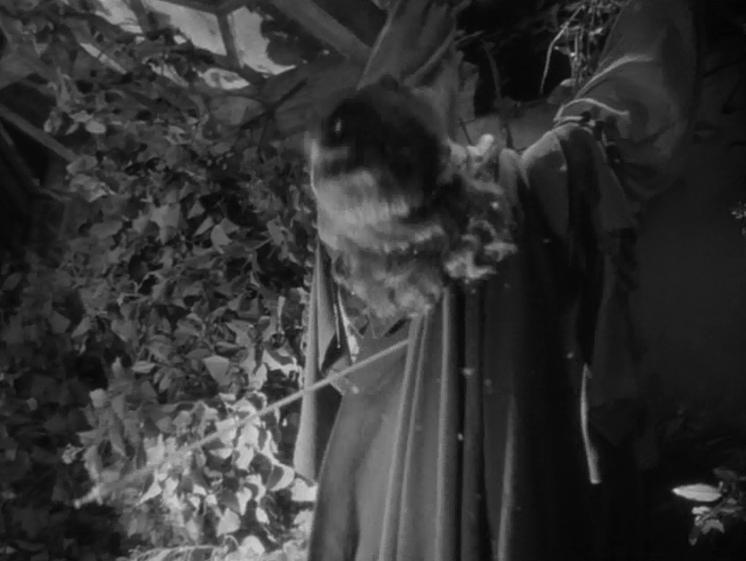
That night Beauty hears screaming and ventures out into the corridor, concealing herself when she sees the Beast coming.  The Beast has been out on the razz, killing animals or some such so his paws are smoking.  He enters Beauty’s bedroom – what he was going to do at such an hour when his hands are smoking with the blood of dead animals, I don’t know.  Finding her bed empty he shouts at the mirror (as you do), “Where is she?  TELL ME WHERE SHE IS!!!”  The mirror, probably fearing a Klaus Kinski style temper tantrum, turns informant and pictures Beauty concealed in the corridor.  In walks Beauty and instead of asking why Beast’s hands are smoking, she asks him why he is in her bed chamber (Bed chamber? Get her!).  Now, this is a question Klaus Kinski would have been asked on a regular basis, I imagine, but the Beast not so much.  So instead of telling her that he wanted to get his smoking hands on her, with quick thinking he tells her that he came to her room to bring her a gift.  Nice save, Beast!  He then reveals that it is a pearl necklace (and he’s not being rude on this occasion…), but even so she still tells him to leave.  The Beast looks a bit sad, but he leaves the gift anyway – and as soon as the door closes Beauty immediately picks up the necklace.

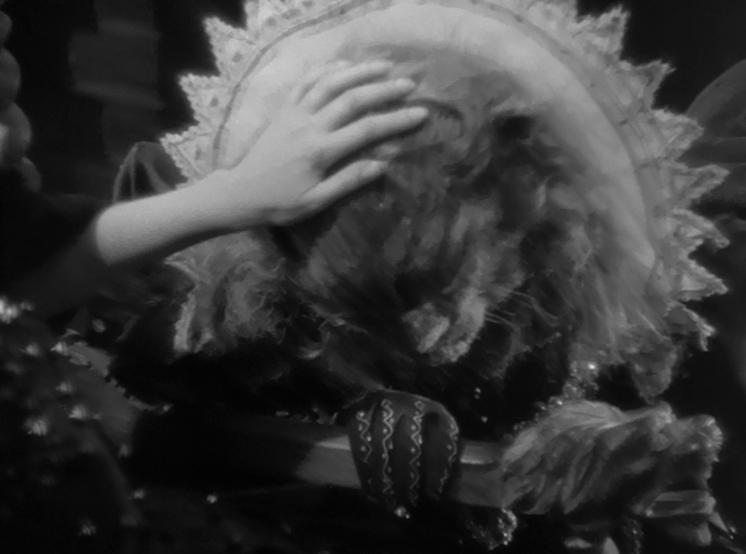
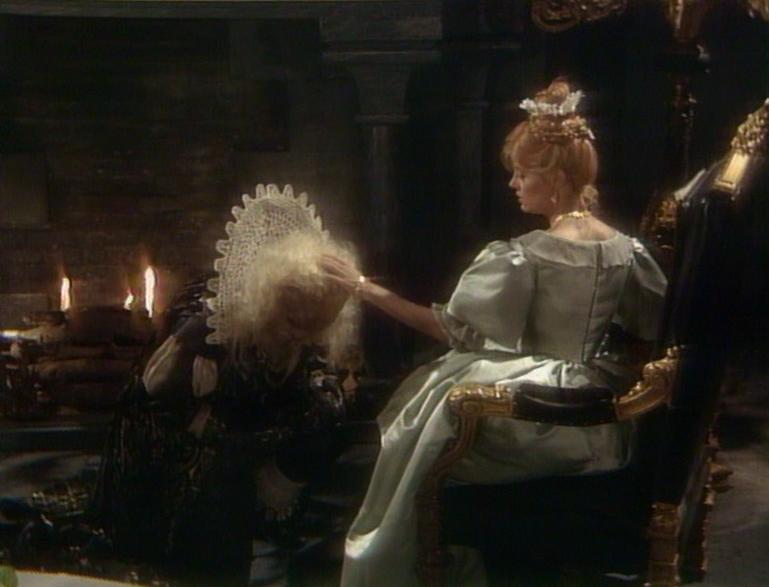
Walking in the garden, Beauty hears noises and sees the Beast drinking from the pond like an animal.  That evening she begs to be able to go home to see her father as she says she cannot live without him.  The Beast tells Beauty that he would die of grief and loneliness if she never came back.  Beauty strokes the Beast’s head to reassure him and tells him that she would never want to cause his death.  The Beast says:  “You pity me, like one has pity for an animal.”  “But you are an animal”, Beauty replies.  The Beast tells Beauty that he will have to consider her request.

In an attempt to curry favour maybe (or am I just cynical?) Beauty tells the Beast that she almost looks forward to seven o’clock when the Beast will present himself for his visit.  She tells him that she thinks his voice is getting softer.  And suddenly he spots a deer foraging in the bushes – naturally his instincts are to attack, but instead with his ears pinned back he controls himself as he is in Beauty’s presence and ashamed of his bestial urges.

Later he succumbs to the urges and appears outside Beauty’s room in the middle of the night, covered in blood with smoking paws.  He asks Beauty for his forgiveness for being a beast.  She dismisses him by telling him to clean himself and go to sleep.  He screams at her to close her curtain because her look hurts him.

Beauty cries when she sees her father in her mirror – he looks ill and is calling for her (again with the “agonising for your love” business).  Beauty tells Beast that she wants to go home as her father is dying.  The Beast says he will let her go home if she promises to return in seven days.  He gives her a ring and says: “When you go to sleep, put it on your fing-a.  Close your eyes, when you open them again, you vill be viz your father.”  Beauty puts the ring on and teleports to her father’s bedroom where he is “being ill”.  As soon as he sees Beauty he is automatically fit as a fiddle again – surprise, surprise.  Beauty tells her father about the ring and how she promised to return in seven days.  He and the sisters all show their selfish natures – the sisters, by plotting to steal the jewellery and the father by saying that it would be good if Beauty did not return to the Beast because he would die and he (father) would like that.  Why Beauty loves her father so much, I don’t know.  He’s a thief and a lazy so-and-so and he wishes death on others.  I don’t see what is so lovable about that.

Meantime, Jacques is back on the scene for about 10 seconds to tell Beauty that she looks “more charming than ever” and to be ignored by her.  I really don’t know why his character is even in this film as there is no real purpose for him; he does nothing whatsoever to drive the narrative.

The Beast is pining for Beauty back at the castle.  He goes into her bedroom, or “bed chamber”, and leaves a white rose on her pillow.   Whilst there he takes the opportunity to bury his face in her dressing robe.  Beauty hears Beast calling her name and sees him reflected in her mirror.  He tells her to remember her promise to him.

Despite telling her father that the Beast treats her very well and that he makes her smile, Beauty’s family have plotted to steal the ring from her and to get Jacques to sell it at the market so Beauty cannot return to the Beast, which would suit everyone; the father because he and Beauty have this weird mutually needy relationship; the sisters because they want Beauty to do all the housework; and Jacques because he will get to be snubbed by Beauty on a more regular basis if she is in the vicinity.  Beauty cannot return to the Beast without the ring – rather short-sightedly she blames everything on her “two selfish sisters”, not realising that it was the father who told them to “sell it to some fool.”

Beauty says:  “The Beast is dying and I wanna be with him.”  In a quick about-turn the father admits he took the ring because he “could not bear to see you in the hands of a monster” but he tells her how she can get the ring back if she must go.  Time for the sick bucket again as Beauty tells her father, “I love you forever.” Yuk.

Jacques gets his final moment with Beauty as she stops him en route and takes a stroll with him to get the ring back – as soon as she has the ring she puts it on and disappears before his very eyes.  Then Jacques disappears before our very eyes as we never see or hear from him again; I don’t know why he bothered appearing in this film, really I don’t.

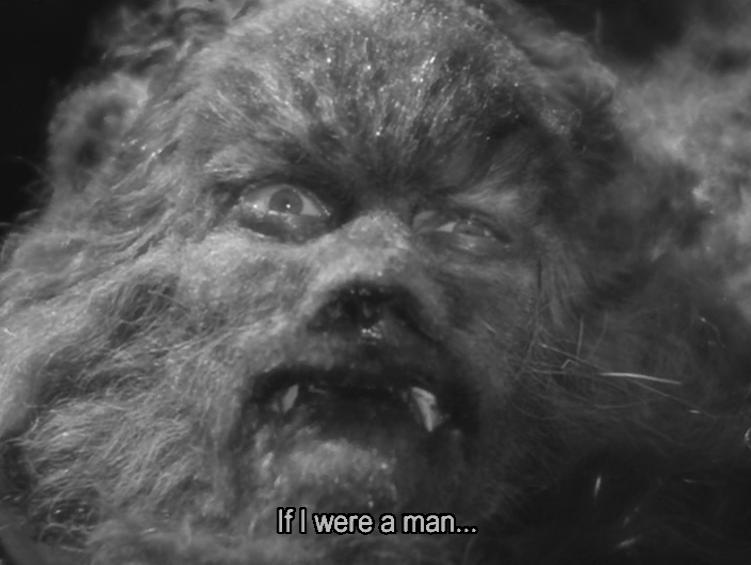
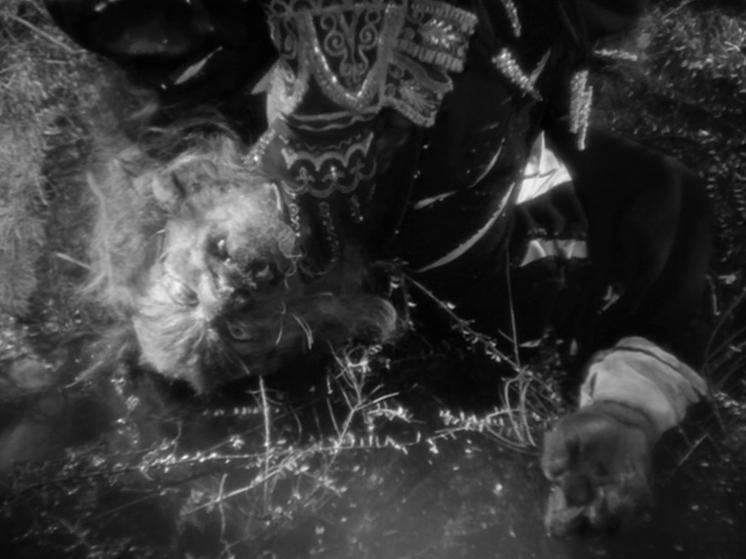
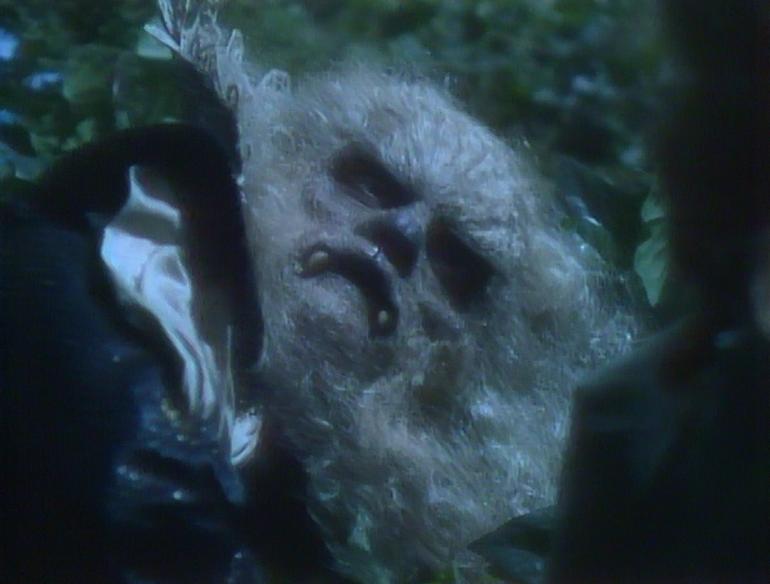
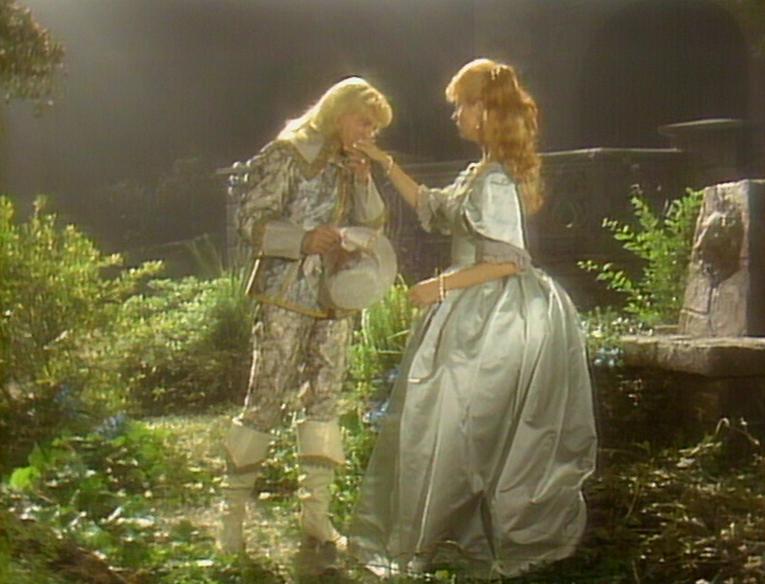
Beauty teleports to the castle and calls out for her Beast – yes, now she calls him “My Beast”.  She finds him half dead in the castle grounds and asks him to forgive her for being a monster; she gives him the ring in order to heal him and tells him to have courage and to fight.  But the Beast says it is too late for him: “If I were a man, I could do as you say.  I am but a poor animal, who has lost his love, who can only crawl away and die.  Goodbye.  Beauty.”  His life appears to fade away as she tells him that she loves him and then, with a puff of smoke, Prince Charming appears!

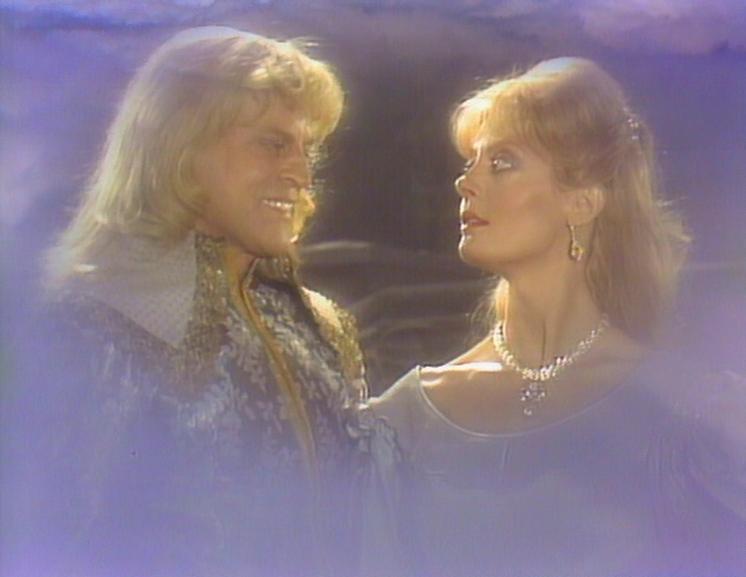
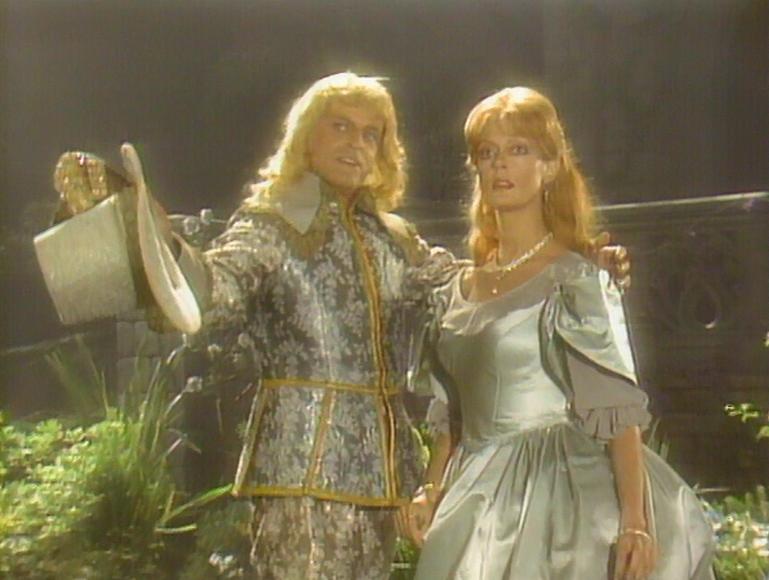
Yes, Klaus dressed as Blue Boy, slathered in make-up.  That’s what Prince Charming looks like! And, good lord, I have to tell you that he looked better as the Beast – it’s not a good look…

So why has the Beast died and been re-born as a rather scary looking Prince Charming?  Well, that’s simple, it’s because his parents would not believe in fairy tales and so the fairies punished his parents by casting a spell on him which meant he was turned into a beast who would only be saved by the love of a woman.  Sounds unlikely to me, but it also sounds like a line Klaus Kinski would spin if he had to.

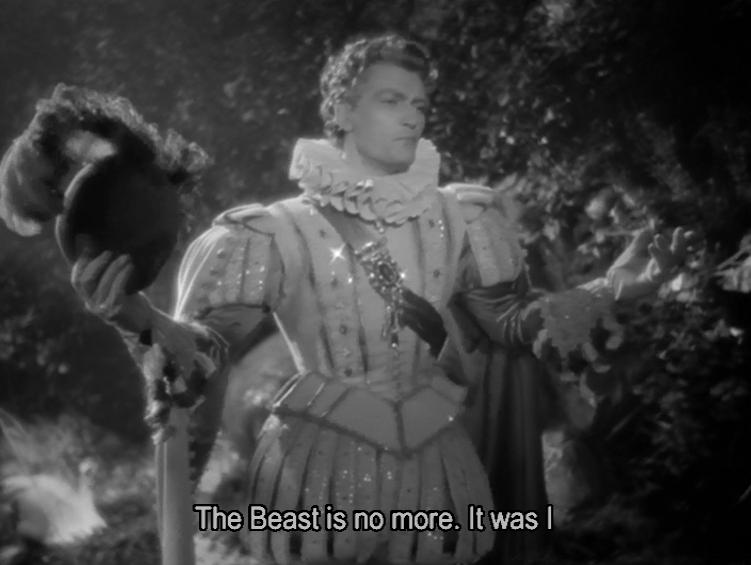
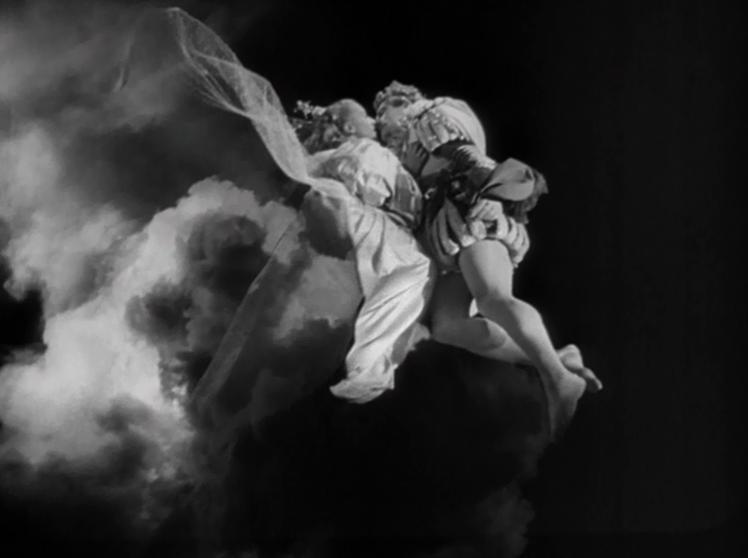
Beauty asks: “Are such miracles possible?”  And the Beast – pardon, Prince Charming, says: “Yes, through love.”  Where is the sick bucket again?  It gets worse: “Love can make a man become a beast, and love can also make an ugly man beautiful.”  Prince Charming asks Beauty if she will marry him and share his kingdom.  She doesn’t exactly say yes, but she accepts his offer to fly away through the clouds to his kingdom which is very far away.  That’s right, Beauty, forget about the father and your selfish sisters – and Jacques, if you can even remember who he is.  I’m not sure that I can…

What’s his name again?

I’m being mean – I really enjoyed this film, for all its faults.  But then I do quite like a bit of badly made film from time to time.  It’s just that this is not really a patch on Cocteau’s 1946 version La belle et la bête

Having seen La belle et la bête and Beauty and the Beast a few times each now, I can tell you that what Klaus says in the Other information about the film section below is not 100% true.  He is not the only one to use Cocteau’s words from La belle et la bête verbatim, as Susan Sarandon also uses some of the verbatim text throughout Beauty and the Beast.  But the text is not the only aspect of the film that has been lifted directly.  Below I will attempt to compare and contrast the two films:

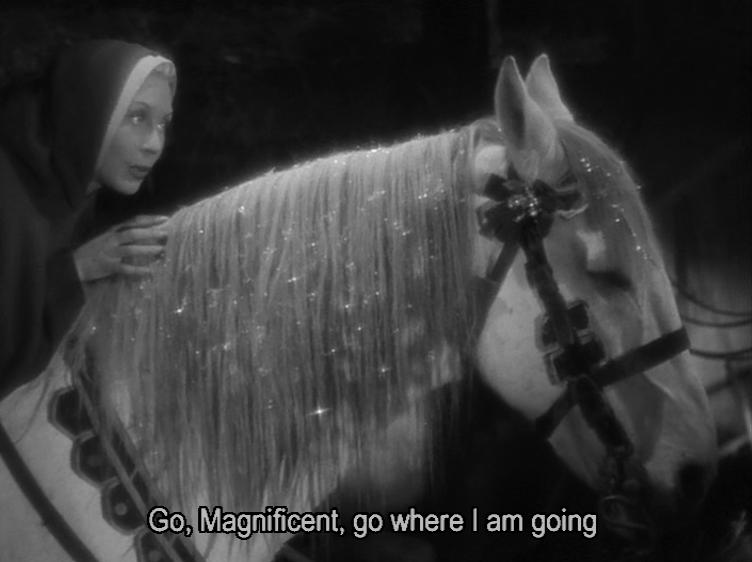
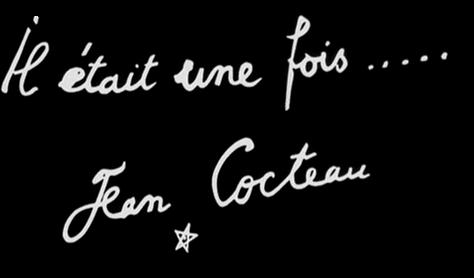
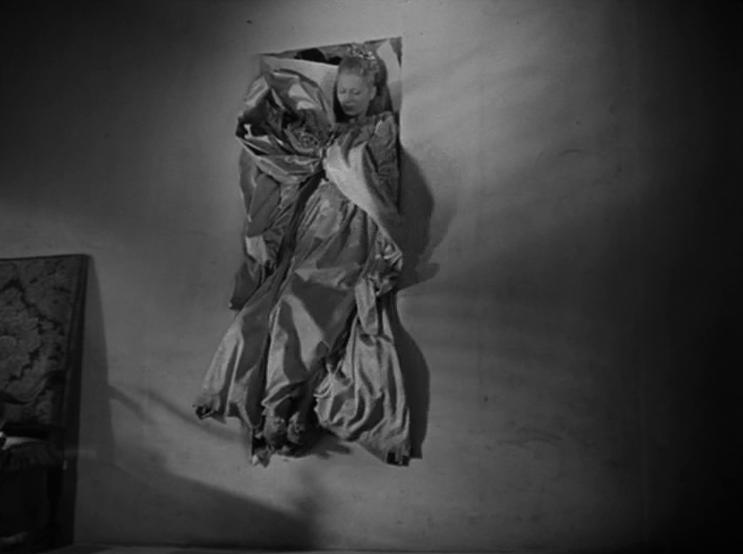
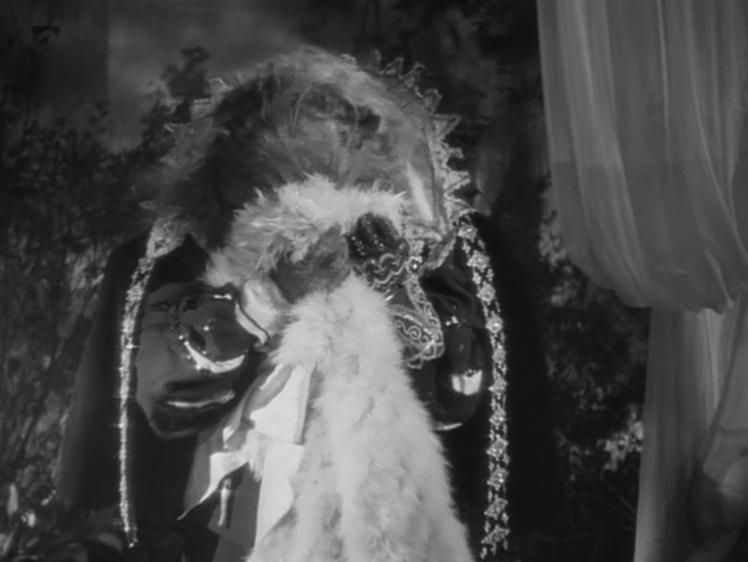
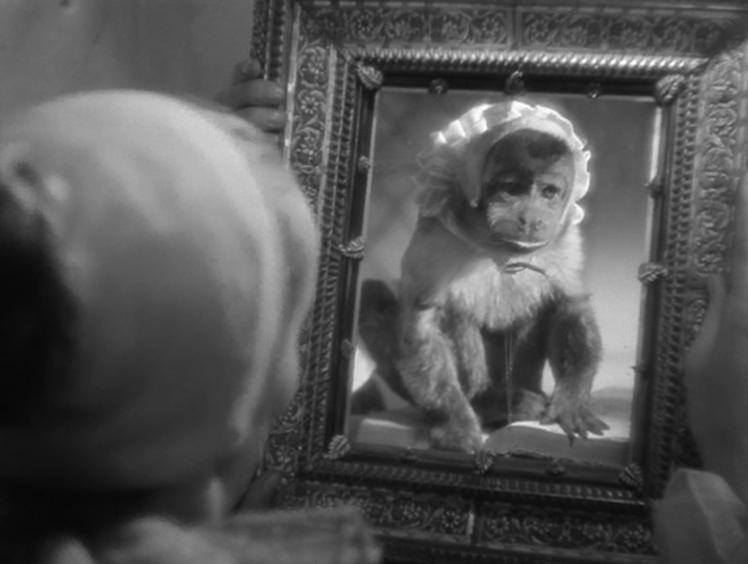
Well, let’s just say that stylistically there is no competition between the two films – naturally, Cocteau’s film is head and shoulders above the Vadim remake.  Even from the introduction, where instead of having scary Shelley on horseback, you have Jean Cocteau who makes writing on a chalkboard for the credits look like a major work of art; everything he does, he does with style.

However, the aspect of Beauty and the Beast that I most detested – the stupid pantomime style slapstick sections involving the sisters and the suitor – is also present in La belle et la bête.  But to add to this, Belle (played by Josette Day) also has an idiotic brother in La belle et la bête.  And the main difference is that whilst Jacques, the suitor in Beauty and the Beast, was a bit of a non-entity, his counterpart in La belle et la bête, Avenant (played by Jean Marais), does actually serve to drive the narrative forward.

Whilst in Beauty and the Beast the suitor is unimportant and his love is not reciprocated by Beauty, Belle claims that she does love Avenant in La belle et la bête and when Bête (also played by Jean Marais) dies at the end of the film, Avenant also dies.  Whilst Avenant transforms into Bête, Bête transforms into a Prince Charming version of Avenant (you guessed it, played by Jean Marais); a kind of hybrid version with the good side of Bête combined with the looks of Avenant.

Whilst Avenant is a very quick tempered character (he slaps one of Belle’s sisters and also punches her brother Ludovic when they get into an argument), he at least reacts and is determined to go and see Bête to kill him when Belle says she must return to him.  Avenant is not a nice or a good character but Belle sees something in him which she finds attractive – probably something to do with his chiselled jaw and his body, rather than his mullet hairdo:

Belle’s brother Ludovic is one of the causes of the family’s financial difficulties.  Unlike in Beauty and the Beast the difficulties in getting the ship back are explained in that the creditors have impounded the ship and its cargo, which means that their father cannot get to it.  However, to make matters worse, Ludovic who has huge gambling debts had signed a document to say that the moneylenders could claim their money from his father if he was unable to pay the debt; he had done this on Avenant’s advice as they believed that the father was bound to return with great wealth, which would enable them to pay off the debts with no problems.  With the moneylenders taking their furniture and belongings, the family are poverty-stricken.

On his way back from the ship, the father (like the father in Beauty and the Beast) gets lost on his journey through the forest and finds his way accidentally onto the grounds of Bête’s castle, where the castle doors open and he enters.  Unlike Beauty and the Beast, the camera lingers long enough over the human statues and chandeliers to enable the viewer to understand that these usually inanimate objects are animated; more time is taken to show the chandeliers being lit up and moving one by one to point the way.  Unlike the father in Beauty and the Beast, the father in La belle et la bête is amazed and thrown by what he sees before his eyes; when the disembodied hand pours him a drink, he looks under the table cloth to see if there is someone hiding there and he sniffs his drink before taking it.  There is no real sense of amazement in Beauty and the Beast and therefore I wonder how Vadim expected the audience to react to that; if the characters in the film are not amazed, would we even notice that anything magical had happened?

The scene where the father is confronted by Bête for stealing the rose is played almost exactly the same in Beauty and the Beast:

Compare this text with the text I gave above for Beauty and the Beast and even with a French-English translation, you can tell that what Klaus says about using Cocteau’s text verbatim is right:

“So you would steal my roses, sir?  The roses I love above all else.  Your misfortune, sir.  You may steal anything but my roses.  Merely for this theft the reward is death… Do not say “My Lord”, I am “The Beast”.  I dislike compliments.  Do not seek to understand.  You have fifteen minutes to prepare for death.  The Beast commands you to be silent.  You have stolen my rose and you shall die.  Unless… one of your daughters… Unless one of your daughters is willing to die in your place…”

From thereon in, the following scenes play out similarly with the father leaving on Bête’s horse who, rather than being called Magic as in Beauty and the Beast, is called Magnifique or Magnificent.  However, the horse requires the same order to take father home: “Go, Magnificent, go where I am going.”

The main difference when Belle enters the castle is a stylistic one – everything Josette Day does, she does with a sense of gracefulness and drama and it has to be said, unlike Susan Sarandon (who is not bad looking, don’t get me wrong), she is absolutely stunning as Belle.  Everything looks utterly perfect.  Josette Day often appears in slow motion or in gliding motions towards the camera or in dramatic poses; this version is far more theatrical than Beauty and the Beast.  Just a guess here, but even if the budget and art direction allowed it I doubt there would have been enough time to include such beautiful scenes in Beauty and the Beast, which is about half the length of La belle et la bête.

Another aspect of Cocteau’s film which is not so present in Vadim’s is the importance of the magical items – whilst the mirror in Beauty and the Beast enables Beauty (and Beast) to see who and what they want to see (for example, Beauty seeing her father or the Beast; Beast seeing Beauty), it’s magical powers are not explained.  In Cocteau’s version, the mirror speaks to Belle and explains:  “I am your mirror, Beauty.  Reflect on me, and I shall reflect for you.”  Later, she will be given the other secrets to Bête’s power:  a special golden key, a glove which will transport her where she wants to go, and Magnifique the special horse (who will also take her where she wants to go).  The other magical item is, of course, the rose, which as Bête will later say, “has played its part”.

When Belle first encounters Bête, she is as shocked and frightened as you would expect someone to be, unlike Beauty in Beauty and the Beast.  Okay, Beauty faints too when she first encounters the Beast, but compare these images below and see which one looks most convincing:

Again, the scene where Bête first joins Belle whilst she is dining has almost been lifted entirely by Vadim for Beauty and the Beast.  The text is almost exactly the same and the way Bête rests on the back of Belle’s chair is repeated almost exactly the same by Klaus Kinski as the Beast:

For the scene where Bête / Beast comes in with smoking hands from attacking animals, aside from the fact that Josette Day conceals herself behind an impressive looking statue in La belle et la bête and Susan Sarandon has to make do with just a curtain in Beauty and the Beast, again the scenes are very similar.  Both Bête and the Beast consult the mirror to find out where Belle / Beauty is and then sweep their hands (paws?) over the mirror to make the image disappear:

Unlike the scene in La belle et la bête, in Beauty and the Beast when Beast presents Beauty with the pearl necklace there is no magic to the moment.  In La belle et la bête, the pearls fly one by one into Bête’s paw until they make up an entire necklace for him to offer to Belle.

The scene with Bête drinking water from the pond like an animal is reproduced exactly the same in Beauty and the Beast, but the scene where Bête sees the deer and resists attacking it is played out to better effect in La belle et la bête as there is more of a sense of Bête having to fight his urges.  And at the end of this sequence Belle takes Bête’s hand as they walk away together, which does not happen in the Kinski-Sarandon version.  Furthermore, Belle allows Bête to drink water from her hands in this sequence, which also does not take place in Beauty and the Beast.

The sequence where Belle asks to leave to see her father and Bête says he would die of grief if she did not return, again, is almost exactly the same in Beauty and the Beast, with Belle stroking Bête’s head.  But in La belle et la bête, as Bête considers Belle’s request he asks her to take a walk with him and questions her on the subject of whether or not she has been asked in marriage and who the young man is who has proposed marriage to her.  This scene, of course, would not take place in Beauty and the Beast as Jacques is never considered by Beauty as a marriage prospect and is not important to the narrative in the way that Avenant is; Belle has to tell Bête about Avenant as Bête’s and Avenant’s destinies are tied in the ending where Belle meets her amalgam Prince Charming.

This scene is followed by Bête going off and killing animals, arriving at Belle’s room with smoking hands and covered in blood.  His anger at Belle’s love of another explains his behaviour in La belle et la bête, whereas this scene in Beauty and the Beast is not so clear; the Beast had resisted attacking the deer in Beauty’s presence but there seems to be no motivation for his subsequent attack, other than perhaps his urge to act like a beast?

The way Belle deals with Bête’s animalistic behaviour, however, is almost exactly the same in Beauty and the Beast with the dismissal and the order for Bête to go away and clean himself up and go to sleep.

But when Belle asks to go home again because she believes her father is dying, Bête introduces another aspect to the story which does not appear in Beauty and the Beast and this is the Pavilion of Diana, which he says is the only place in his domain where none may enter.  Bête tells Belle that all he possesses is his by magic, but that in the Pavilion are real riches which can only be accessed with the golden key.  Bête gives the key to Belle as a symbol of his trust in her.  In Beauty and the Beast it is clear to Beauty that if she does not return that the Beast will die and I guess this is enough.  But in La belle et la bête, Bête tells Belle that not only will he die if she does not return but that all of his riches will be hers as she has the golden key.  This is a double temptation for Belle.

When Bête says that Belle can go home to see her father he explains to her that: “You shall be home this very morning.  My night is not yours.  It is night with me, but morning for you.”  In Beauty and the Beast this is not explained so clearly, what the Beast says to Beauty in this version is:  “Tomorrow morning you will be with him.  The night you spend here.  The day you will be home.”  It doesn’t make total sense in this way.  In La belle et la bête the sense is that Bête lives in a different world, where Belle’s day is his night.

Belle is told that the magic glove will take her where she wants to be, in the same way that the ring will take Beauty to where she wants to be in Beauty and the Beast.  However, Beauty merely teleports herself into her father’s room, whereas Belle is seen physically flying through the wall in slow motion in La belle et la bête.  This is not the only difference in this scene, and whereas the conversation with Belle’s father plays out largely the same as the one between Beauty and her father in Beauty and the Beast, there are some aspects of Belle’s conversation that are not adopted.  Furthermore during the conversation when she begins to cry, her tears fall as diamonds on her cheeks; this does not appear in Beauty and the Beast.  Belle sees these diamonds as a gift from Bête but her father considers them to be the devil’s diamonds.

Belle takes a walk with her miraculously cured father in the garden.  Seeing Belle in her fine clothes and jewellery, naturally the two sisters are incredibly jealous.  But Belle in a demonstration of her generosity of spirit offers her pearl necklace to her sister Félicie – as her sister takes it, it turns into a piece of rope in her hands.  Belle’s father tells her:  “The Beast gave it to you, so you cannot give it away.”  This may serve as a reminder of what Bête said about owning things by magic; only the treasures in the Pavilion of Diana are real.  This scene does not appear in Beauty and the Beast.

Likewise, the scene where Avenant questions Belle about whether or not she loves Bête does not appear in Beauty and the Beast for reasons previously discussed; the fact that Jacques is not a serious love interest.

This scene is the key to the film’s closure – Avenant is jealous that Belle will return to Bête and therefore he wishes to kill him so she can stay at home and he can court her there; Ludovic wants to know how he can get his hands on Bête’s treasures, as do the sisters Félicie and Adélaïde.  The sisters go and see Belle and, in one of the film’s silliest sequences, use onions to make themselves cry so they can make Belle believe they have changed their ways and are sad she is going to leave.  Whilst Belle is consoling them, Félicie steals the golden key.  The sisters then have to rely on the boys to “worm” the information out of Belle so they can find Bête and kill him and steal the treasures; they tell Avenant that they will give him the key if he goes.

Another scene with Avenant follows where he tells her that he will free her from her nightmare and that Bête cannot be suffering as he does, because if he did he would come and take Belle away; Avenant is convinced that Bête has forgotten Belle.

This is not true, however, as in a scene similar to the one in Beauty and the Beast Bête goes to Belle’s room and puts Belle’s bedcovers to his face.  Unlike the Beast, however, he is shown wearing one glove (a little like Michael Jackson, I guess) because he has given Belle the other one so she can transport herself.

From hereon in, the two films separate slightly due to Avenant’s and also (to a lesser extent) Ludovic’s involvement in the events that follow.  A riderless white horses appears – Magnifique – and the sisters recognise this as a sign that Bête is sending for Belle but suggest that Ludovic and Avenant can go instead of Belle; they give them the golden key and send them off.

Immediately they start to panic that they may have sent the boys to their deaths.  And upon spotting the mirror, the sisters catch their reflections and see something they would not expect to see:

The image of the monkey is amusing in that one of the sisters had earlier asked their father to bring a monkey back for them.

Outraged at what they have seen, the sisters give the mirror to Belle and upon reflecting in the mirror she sees Bête suffering and knows she must return.  Unlike in Beauty and the Beast the means of transportation has not been stolen from Belle – the glove – however, she has not yet remembered the golden key.  So she at first puts on the glove and transports herself to her bed at the castle and then remembers the golden key and returns home for it.  She cannot find it anywhere but does not even have time to find out who has stolen it as her mirror shatters and she knows she must return immediately, with or without the key.

Belle goes looking for Bête in much the same way that Beauty searches for the Beast and puts the glove on his hand to revive him, like Beauty puts the ring on the Beast’s finger (or fing-a as Klaus says).  Bête tells Belle that she is too late and as Ludovic and Avenant debate about whether or not to use the golden key or whether the key is a ruse, Belle and Bête have the same conversation that Beauty has with Beast about fighting to live:  “If I were a man… no doubt I would do as you say.  But poor beasts who wish to prove their love can do no more than lie down and die.”

As Bête finishes his speech, Avenant smashes the glass roof on the Pavilion of Diana and tries to jump down into the pavilion to get the treasures.  Suddenly the statue of Diana (the huntress) comes to life and shoots him in the back with an arrow.  Ludovic looks on as Avenant dies and his face transforms into that of Bête.

Belle asks where Bête has disappeared – his body has vanished in front of her eyes – and suddenly the Prince Charming Bête-Avenant amalgam appears in his place all spruced up and with a nice haircut as well.  His explanation as to what happened is as unrealistic as Klaus Kinski looking like a young prince at that time in his life:  “The Beast is no more.  It was I.  My parents did not believe in magic.  Through me they were punished.  Only when looked on with love could I be free again.”

Aside from the fact that Belle tells the Prince Charming that he reminds her of someone she knew – a friend of her brother – the rest of the film plays out as in Beauty and the Beast.  One final difference is that the Prince says that Belle’s father can come and join them in their kingdom and that the sisters shall bear her train when they marry.  Ludovic is not mentioned at all; nor Avenant.

And they all lived happily ever after &c.

Watching the Cocteau version with the audio commentary by Christopher Frayling (it’s full of very interesting information), I was struck by the talk of all the influences on Cocteau’s version: Vermeer lighting; Rembrandt’s anatomy lesson; Comédie Française; Méliès, etc.  The only influence you pick up on in the Vadim version is Cocteau.  Although it is interesting to note that some of the speeches are said to have been used verbatim from the original fairy tale by Gabrielle-Suzanne Barbot de Villeneuve, the visual aspects were all down to Cocteau.  The funniest story I garnered from the audio commentary was about how René Clément – the technical advisor on the film – had to stand behind Jean Marais and poke his beast ears with a forked stick to make his ears appear to twitch when he saw the deer!

Anyway, as Klaus fans of course we have to see Klaus playing the Beast, but I am sure most will agree that the images from Cocteau’s La belle et la bête are evidence enough that the 1946 version as well as being the original, is also the best version of Beauty and the Beast; Vadim’s 1984 version just isn’t a patch on it.  Other than the rather cuddly looking Klaus Kinski-Beast, of course!

Other information about the film:  In an interview with Marisa Meltzer for Babble, Bridget Terry (who produced the TV series with Shelley Duvall) tells this great story:

“In Beauty and the Beast, we had a hard time with Klaus Kinski. Susan Sarandon played Beauty, and at one point, he was walking down the hallway carrying her for a scene, and Roger Vadim, our director, yelled “cut,” and he just dropped her. It was really tense between them. Later, when he turns into a prince, he brought in Thomas Gainsborough’s painting “Blue Boy,” and said he wanted to look exactly like that. We brought in rubber bands to pull his skin back to make him look . . . more princely. We’re filming and we do this effect where he turns from the beast into the prince and Susan Sarandon’s line is, “Are such miracles possible?” She couldn’t say the line without cracking up. He was getting angrier and angrier and the bands holding his skin back started popping.”

See the full interview here:  http://www.babble.com/kid/kid-activities/faerie-tale-theater-bridget-terry-classic-childrens-fairy-tales/index2.aspx

In Christian David’s Kinski Die Biographie (Aufbau Verlag, Berlin, 2008) it says that filming took place between 7-9 July 1983 and that Klaus later said very negative things about this project.  It seems that Klaus had originally been told that Jessica Lange would be Beauty to his Beast and so he was obviously a little annoyed when he had to make do with Susan Sarandon instead, I think it says something along these lines:  “Instead, they want to palm me off with a playhouse tart from New York.”  In any case, whatever it says, it’s certainly not complimentary!

In Kinski Uncut (Bloomsbury Publishing, London, 1997, pp309-310) he has the following to say:

“Beauty and the Beast for ABC in Hollywood.  I think of Cocteau’s magical film.  I can’t think of anything else, not even when I read the hair-raising script, which degrades the most beautiful of all fairy tales to banal Hollywood trash. 

They promised to get Jessica Lange to costar.  Instead they want to force some New York actress on me.  They do give me the right to translate Cocteau’s words verbatim, from French into English – but all the other characters speak the unimaginative, proletarian, idiotic dialogue of the American TV version.  The shooting is indescribable.

I do the flick in five days.  In the middle of the close-up of the death scene, the prince who’s been transformed into a beast is saying, “A poor animal that’s lost its love can only creep away and die.”  Then some creep yells through the loudspeakers: “Quitting time!”

It’s about six in the afternoon.  The working day set by the union is over!”

Klaus can’t have been paid a lot for his work in Beauty and the Beast as Bridget Terry says in the Babble interview that despite the calibre of the stars involved in the series, nobody got paid more than $7,500 even though they often worked 14 hour days.  This could have been another reason that Klaus was not totally enamoured of this project, I suspect!

However, I imagine it was working on a Cocteau re-make that piqued Kinski’s interest in the first place.  After all, Klaus had appeared in stage versions of Cocteau’s La machine à écrire and La voix humaine.  Kinski met Cocteau, and in Kinski Uncut (p92) he says that Cocteau kissed him and said:  “Your face is as young as a child’s and yet your eyes are utterly mature.  They switch from one instance to the next.  I’ve never seen such a face.”   He also says when living a rough life, hard-up in Marseilles he wrote to Cocteau to ask for money and got the following response (Kinski Uncut, p119):  “My dear friend,  I would share everything with you… Unfortunately I own nothing.  I live off the generosity of others.  I am ill and already have one foot in the grave.  I am sending you this drawing; perhaps you can sell it.  Your friend, Jean Cocteau”  Kinski says, “The envelope contains one of his typical drawings, my portrait from memory.  He’s given me the mouth of a black man and eyes like stars.  The miners [in Marseilles] will hardly buy the drawing from me.”

I wish I could see that drawing!


Click the image to purchase from Amazon

Click the image to purchase from Amazon

Posted in Film Review | Tagged , , , , , , , , , , , , , , | 4 Comments

Interview with photographer Beat Presser

Never let it be said that I don’t take my work on Du dumme Sau! seriously.  On 21 July, I travelled all the way from London to Münster especially to catch the Klaus Kinski-Beat Presser exhibition at the Westpreußisches Landesmuseum.  Because I’m organised (kind of!) I’d already pre-arranged to meet Beat Presser for an interview.  When we arrived at the museum, which is in a lovely location on the outskirts of Münster, Beat Presser was busy being interviewed for German TV, so we (Dave and I) took the opportunity to look around the exhibition before anyone else arrived.  We also met Dr. Martin Steinkühler, who was responsible for bringing the exhibition to the museum and who was incredibly welcoming to us.   We got to see everything in peace and quiet before anyone else arrived: the many beautiful photographs and portraits Beat Presser had taken of Klaus Kinski and Werner Herzog (some impressively blown up to massive proportions); Klaus’ outfits from Fitzcarraldo and Cobra Verde; the selection of magazines with Kinski-Herzog movies on their covers; other items from the films… I particularly liked the “portrait” of Klaus and Claudia Cardinale from Fitzcarraldo.

It was a wonderful exhibition and you really need to go and see it for yourself to appreciate that, although I have included throughout this article a few photographs Dave took of the exhibition to give you an idea of what you’re missing out on if you’ve not seen it yet.

After the German TV interview was finished, Beat Presser came over to say hallo and gave us 40% proof Goldwasser to drink and a mini-tour of his exhibition.  With time tight before the Kinski-Abend our interview was postponed until later.  The Kinski-Abend was very informative and entertaining – or at least I think it was, with my grasp of German not being what it should be I caught only snippets and had to ask Beat Presser to verify certain things during the interview, which is good for those of you reading this as you get to read it here.  The event was sold out on the evening and the audience who came to see the exhibition and Beat Presser in conversation was a very mixed bunch of all ages.  Subtitles would have helped me and Dave to enjoy it as much as the rest of the audience did, but we enjoyed it nonetheless and afterwards we headed back into town with Beat Presser and Martin Steinkühler to a restaurant where, finally, the interview began…

DDS:  How did the Klaus Kinski-Beat Presser exhibition at the Westpreußisches Landesmuseum in Münster come about?

Dr. Martin Steinkühler:  Last year I worked on a project about prominent people from West Prussia and one of these people is Klaus Kinski.  And I found one photo – I think it was the picture where Klaus Kinski is attacking Werner Herzog with his big knife – and I found that Beat was the source of this and I asked him, “Can we get this picture from you and the rights to publish it and use it in the exhibition?”  And he answered, “O great! Great idea, I have a whole exhibition… I have the right thing for you… a complete exhibition.  I can give you what you want…”  And I talked with my boss and said it would be a nice exhibition to get new visitors because the classical visitors of our museum are really old and we must generate new sources [of visitors] and diversify.  We wrote a little bit and he said, “I’m in Münster in a few weeks, let’s meet and talk about it,” and we met and talked about it and then he worked up a very professional design for the exhibition on the computer and, yes, that’s the story of this exhibition.  And we see that this idea of getting new visitors succeeded after all.  Not only this evening but over the however many months – three and a half months – it’s been very successful.

DDS:  The exhibition is still running until 3 October as well so there’s time to get even more visitors… and there are still places left for the final Kinski Abend mit Beat Presser, which takes place on 8 September 2011(see the website for more details: http://www.westpreussisches-landesmuseum.de/images/stories/ausstellungen/Fotografie%20im%20Ausnahmezustand.pdf)    

DDS:  Beat Presser, did you say during your talk that you were 15 when you first started taking photographs?

Beat Presser:  No, that was when I was first exposed to photography.  A friend of mine at school, Bernard Burckhardt, took me to his parent’s house. In their cellar he had his laboratory; a darkroom. When I saw how a white paper turned into a photograph, when the picture appeared, I knew instantly I would be a photographer.  I really enjoyed that moment – it was so… impressive that I decided to become a photographer, even though I had wanted to become a theatre director before that. But that moment in the dark changed my whole direction in life.

DDS:  When did you start taking photographs?

Beat Presser:  In the beginning I didn’t have a camera. If I needed one, I borrowed one.  But I had a darkroom where I could work and experiment; a darkroom in my bedroom.

DDS:  You were half way there!

Beat Presser:  No, I was nowhere yet.  I was interested in printing photographs, but it was not until 5 years later that I had my own camera. I was more interested in the film processing and the printing of the photographs than taking pictures. That changed later on, after the initial start up… that’s why I still enjoy printing.  Two days ago I was making prints in my darkroom from my new book Dhau – Beatus Piratus auf Sindbads Spuren.   I like to say I really enjoy that very much; just being there by myself in the dark, listening to good music, having time to reflect and time to work for myself and to come up with beautiful results.  For me, that’s much more interesting than working on a computer all day long like everybody else does. When you turn off the computer, it’s all gone. There is nothing physical to it. If you print a photograph in the darkroom, by the end of the day, you hold a beautiful result in your hands.

DDS:  I know you met Klaus Kinski through the film maker and photographer Just Jaeckin and that as a result of that meeting you ended up taking the Madame Claude photos of Klaus, but how did you get to work with Klaus on the Werner Herzog films?  Did this come about because you already knew Klaus?  When did you meet Werner Herzog?

Beat Presser:  Werner Herzog, I met him in the airport.  [Laughter]

DDS:  Really? By accident?! [jokingly]

Beat Presser:  No-oo, I guess not.  I was already contracted to take the stills…

DDS:  And that was before Klaus was involved?

Beat Presser:  It was five years after I had met Klaus in Paris for the first time, and it was two weeks before Klaus came to the film set of Fitzcarraldo in Camisea in the middle of the Peruvian jungle.  Werner Herzog and I met at the airport in Miami. Werner said: “Guten Tag, ich bin der Werner Herzog.” That was all; after that he did not say a word. “Strange,” I thought, “why doesn’t he talk to me?” The plane was delayed and we went to the VIP lounge and there we sat in silence. Four years earlier I had seen Aguirre by Werner Herzog, starring Klaus Kinski as Aguirre. When I saw that film, I thought to myself, it would be great one day to work together with the both of them. So I was very happy that I got the job as a still photographer and as an assistant cameraman on Fitzcarraldo. But Werner did not know that then. Finally, about two hours later we were boarding on a plane from Faucett Air that would bring us straight down to Iquitos on the Amazon River. Immediately after we were airborne Werner started to talk to me and said:   “I don’t think we shall ever finish this film.  But I did not want to tell you, because I was afraid that you wouldn’t come along.” Werner asked me a few questions since he wanted to know about my photography work in the past. I showed him my magazine, The Village Cry, with the black and white photograph of Klaus Kinski. He was more than pleased, put the magazine away and slept all the way to Iquitos.

[long interruption including directions for us all to get back to our hotels after we’ve finished up our dinner and the interview, and the waitress informing Beat that she used to live in Guatemala and asking us if we were participating in the Münster Arts Festival – we tell her we’re there to attend a Klaus Kinski exhibition she says “Klaus Kinski… a little crazy! A very interesting man.”]

Back to the interview…

DDS:  It seems like Fitzcarraldo was a difficult film to make for a variety of reasons – just because of the nature of the film, dragging a boat up a mountain, possibly because of Klaus – but was it really difficult?

Beat Presser:  Well, you see, difficult doesn’t mean it was difficult for everyone the same.  Also, things look different from the perspective of time. We from the technical staff, we had the privilege to be there to do our job.  We did not have to pull a boat over a mountain. For myself, it was difficult because I had two jobs at the same time – assistant cameraman and set photographer. Cameras and material were difficult to take care of; the film material, exposed or not, had to be handled properly and carefully, because of the rains, the humidity, the sun, the heat, long transports etc. But that was nothing compared to the logistics like building a camp in the jungle, to move a heavy boat of 250 tons in the Amazon over a steep hill from one river to another.  To get hundreds and hundreds of Indians to take part in a movie. A movie; something they had never ever seen before. And we were filming in an area of the Amazon that nobody knew and where nobody lived, far away from their own habitat in some other jungles. To shoot Fitzcarraldo was mainly difficult for Werner Herzog, the director and producer of the film, and for Walter Saxer, the production manager who was responsible for all the logistics. That was difficult. For them it was. For me I only had to take care of the material and to take good photographs. And that wasn’t that difficult.

DDS:  Sometimes it is!  Didn’t you get injured at some point?

Beat Presser:  Well, only a little.  We shot the scene when the boat Molly Aïda gets loose and drifts down the rapids on the wild river.  I was operating the fourth camera and was thrown against the camera when Molly Aïda hit a big rock. There I was injured and had a black eye for a week or so. But that was it. Thomas Mauch, the cameraman, he really got injured and cut open the palm of his hand and could not operate the camera properly for a few days. But all that one can see in the film The Burden of Dreams by Les Blank.

DDS:  Yes, but it’s not normal, is it?  Other films don’t have those difficulties.  When you think of Werner Herzog, you tend to think of difficult situations and that he puts other people in difficult situations too.  That he’s a bit driven and obsessed with certain things.

Beat Presser:  What is normal anyway? You must be driven and obsessed if you wish to do films the way Werner Herzog does. But for myself that is alright, no objection. I have often lived a dangerous life anyway, I am used to that. And I like it. The last work I did I lived and worked for six months on sailing boats called Dhows in the Indian Ocean; that’s also very dangerous.  Dangerous because of storms, possible pirate attacks and other unexpected turbulences on board nobody had expected.

DDS:  Other people might see Herzog as driven to want to do that though… to do that for a film; I think most people thought that what happened in Fitzcarraldo wasn’t real.

Beat Presser:  But it was. But if you were not there yourself it is hard to believe that this was for real. That we really pulled a boat over a hill. Under such conditions. But it does not really matter what people think. The woman that was standing here just a minute ago [the waitress], said, “Oh, Klaus Kinski! A very interesting man but maybe a little crazy…”  That is her observation, but based on what?  What does this woman know that makes her to come to such a conclusion? For an outsider, it’s different than if you are involved in it. If I tell someone that I just came back from the Indian Ocean and about the pirates out there and all that, I often get the following response: “Wow, that is dangerous! You must be crazy!” Why do people think that is crazy or dangerous? Or why do they say, that cannot be real? It is an assumption, based on their own experience and existence. That is why it doesn’t matter what other people think or if they think it is real or not.
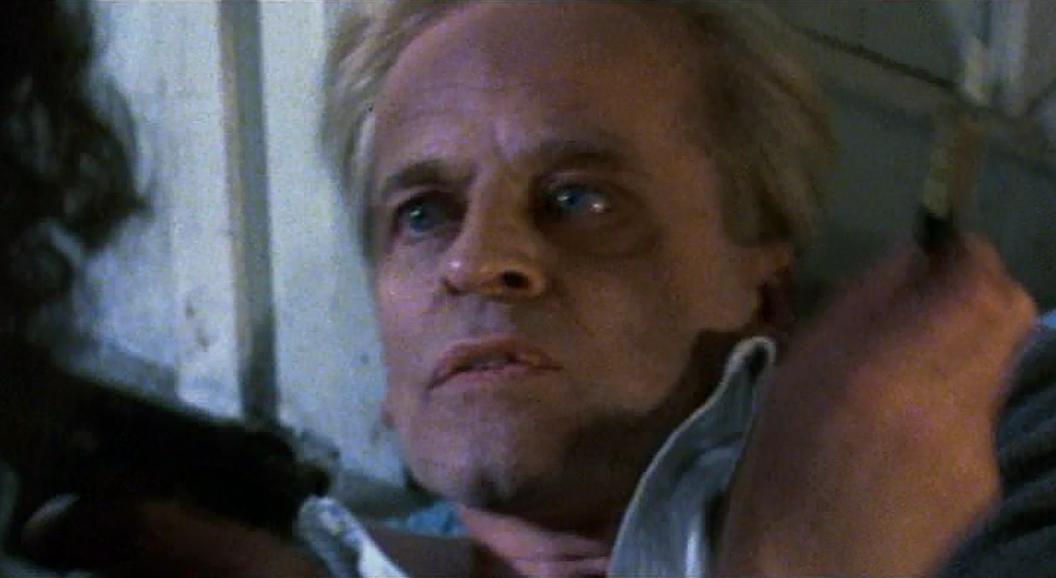
DDS:  But I do think it’s interesting that the films Werner Herzog did with Klaus Kinski were pretty much about somebody who is obsessed or who behaves in a crazed manner – like with Woyzeck, he’s going crazy and he behaves in an obsessive way; and Fitzcarraldo and Aguirre…
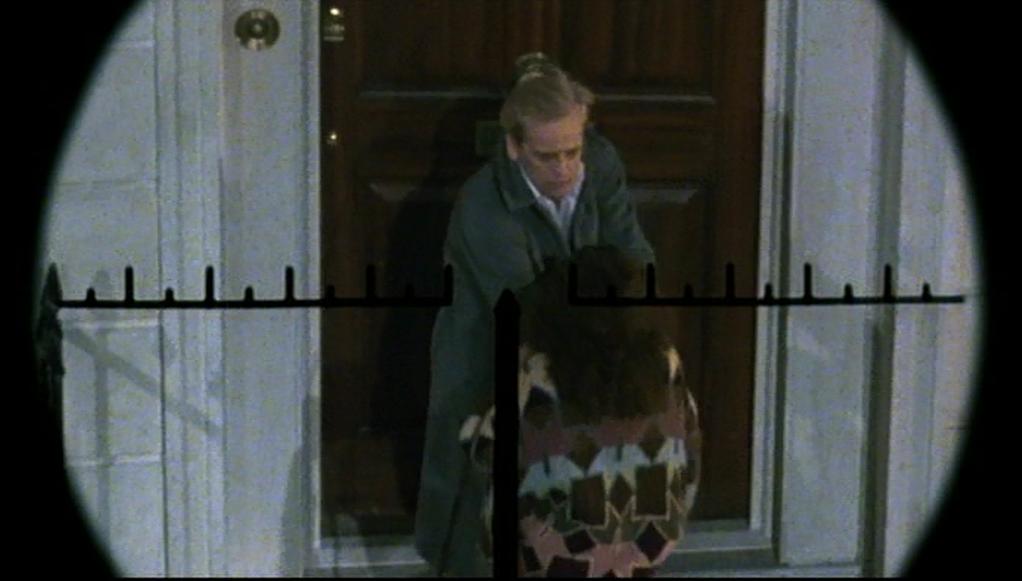
Beat Presser:  This was the role he had and he wanted to play!  If you play Woyzeck you have to go around the bend.
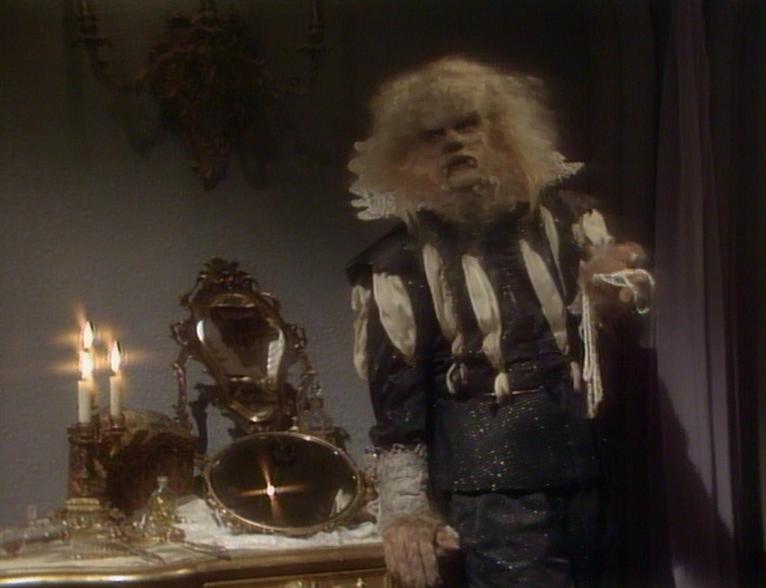
DDS:  It’s interesting though that he always wanted him to play those kinds of roles…

Beat Presser: Klaus hated to be called an actor! When Klaus impersonated someone, he was the person he played. That made him a great actor. When he played Paganini he was Paganini, when he played Fitzcarraldo he was Fitzcarraldo.  When he was Cobra Verde he was wild and dangerous like Cobra Verde. He was really participating in the role. Klaus had a great sense for the characters he impersonated.

DDS:  Talking of wild and dangerous, that’s what I wanted to ask you… Did you say during the Kinski-Abend session that the photograph of Klaus with the knife was banned from being published by Werner?  But he did end up using it in the My Best Fiend film in the end anyway…?

Beat Presser: When Werner first saw this photograph in 1987 he put a stamp on it:  “Private Photograph”. If a photograph has that stamp “Private Photograph” you’re not allowed to publish it; that was the deal between us. One day, Werner called me from Los Angeles, saying “I am planning a film on Klaus, would you like to be part of it?” When we shot the scenes with me in his film My Best Fiend in Prague, Werner asked me if I had a photograph of him and Klaus that would be suitable to promote his film. I sent him 2 or 3 photographs of them together where both look nice and friendly. After he had received them he called me and said, “These photographs you sent, they are all nice and everything but it is not what I want, there was this one photograph with the machete, do you remember?”  “But is has a stamp “Private Photograph”, I said, “Do you want to publish it now, it was banned by you?!” So he said, “Well, I think it fits the film, never mind if it was banned or not.”

DDS:  In the documentary there’s a scene where the two of you are walking around the gallery looking at the photographs and Werner says to you, “…that happened because he must have sensed the presence of your camera…”, and you said, “He also just wanted to let you have it, didn’t he?!”

Beat Presser:  Well, we all knew that the photographer was there! It was probably true that Klaus did this unique performance because I was there with my cameras ready; otherwise nobody would have known or would have seen that moment when Klaus goes with a machete after Werner’s throat. Somehow it looks so intense that we think it is for real. This photograph is part of a series of six.  It follows the process of how it came to that instant that is shown on the picture. For me it is like a symbol of their relationship that was starting to break up. And it was incredibly hot and dry up North in Ghana, in the middle of the African savannah. This photograph was born in the heat. We were about 20 crew members out there for the making of Cobra Verde. But not all of them could manage the heat and the climate up there in Tamale in Ghana. Some of them collapsed; others had to go to hospital. Not all of us could continue the second part of the filming in South America. For some, it was just too much.

DDS:  Again, extreme circumstances!

Beat Presser:  Yeah, but for myself it was not really extreme because before I came to the film set of Cobra Verde I had been travelling around the world for about 9 months. I was photographing surfers and windsurfers out in the Pacific Ocean in very high waves in Maui; I was taking long walks in the Burmese jungle with rebels all around; and I was trying out new cameras and new films.  I was really fit when I started work in Ghana as a set photographer. It was Klaus that wanted me to be the still photographer of the film. So that was great. Extreme? I couldn’t care less! As long as I would take good photographs, everything was fine.  

DDS:  Yes, and sometimes, at the other end of the spectrum, Klaus picked some banal films – he mostly put his all into his performance, whatever the film, but sometimes on those films you can tell that his heart wasn’t in it, or he wasn’t interested…

Beat Presser:  But he was interested in the money…

DDS:  Yes, but with Werner he couldn’t have got that much money for his work, in terms of how much time he had to spend working on them, so he must have wanted to do them…

Beat Presser: I guess so.

DDS:  Compared to some of the other films he worked in where he would maybe work 2 days and get paid a lot of money…

Beat Presser:  So I have heard. I guess Klaus and Werner had a deep understanding and respect for each other; together they could do great films. And they both knew that. I don’t think money was a big issue between the two of them. Werner and Klaus did five films together; they are all very special and they knew from the beginning that together they would create something unique – despite all problems and difficulties. And we, the technicians, were only the supporting act; Klaus and Werner were the ones that made it happen. Klaus loved being out there in the jungle, the nature under extreme conditions – even if he was romanticising his time in the jungle, he enjoyed it a lot. I don’t know, have you ever been in the Amazon…?

DDS:  Amazon, the website – someone bought one of your Kinski books from my link on this blog and I got £1.05p for that!

[Laughter]

Beat Presser:  I am just back from the Amazon; from Leticia, where Peru, Brazil and Colombia meet. It is absolutely amazing… The Amazon, life along the river, the people, their attitude, the nature, the animal life, the dolphins in the river.  I really like the jungle, to be there. And if you have the chance to do something like Fitzcarraldo, it is even more fascinating.  I think the jungle was also why Klaus got involved; I don’t think he was in it for the money.

DDS:  Yes, Klaus would say that he would select films on the basis of the least number of days’ work for the most amount of pay.  But it’s not necessarily true – other directors have said they did not pay him massive amounts of money to work with them and yet he still took the work anyway.

Beat Presser:  Maybe so, but the two of them had a deep understanding for each other.  I had the impression that even when things went wrong with Fitzcarraldo, they still went right somehow. Both, Werner and Klaus knew that they would have to go through all these difficulties – that they had to do that, even though there were fights and everything – but somehow instinctively they knew that they would do something great together, and they did.

DDS:  Which is why they would both do it again… but it’s interesting because Werner said after Cobra Verde he would not work with Klaus again…

Beat Presser:  That was for sure.

DDS:  Was it really bad?

Beat Presser:  Well, it was a little bit bad.  Especially for the two of them; it was clear that this would be their last film together. Also you have to see Klaus wanted to do this Paganini film. I remember one day during the making of Fitzcarraldo, we were sitting in hammocks at Werner’s house, and Klaus came along with this enormous script. After Klaus had left, Werner told me, “It’s impossible to make a film out of that…”

DDS:  He did though and it’s really not a bad film at all.

Beat Presser:  Yes, he did.  I went to visit Klaus on the film set of Paganini in Venice. That’s also where I met his son Nikolai for the first time. Also that is where I saw Klaus for the last time.

DDS: Nikolai is a good looking young man!

Beat Presser:  Yes, and he is nice and talented as well.  So, what did I want to say… yes, Klaus wanted Werner to direct Paganini

DDS:  But, in any case, Klaus just really wanted to get the film made.  He spent years and years trying to get it off the ground.

Beat Presser:  When Klaus came to shoot Cobra Verde he already knew that Paganini would go into production soon. Klaus had never worked as a film director before; he wanted the experience of directing, so he tried to dictate how Werner and the camera department had to do the filming.

DDS:  Oh, was he interfering with the direction?  There’s the picture of him covered head to toe with mud and he’s looking through the camera…

Beat Presser:  Yes, he sure did. That photograph with Klaus on camera in the goldmines of the Serra Pelada in Brazil tells a lot of stories about the making of Cobra Verde.

DDS:  He would also say that instinctively he knew when something would not look good – that he could tell that the lighting was not good, or the way another actor was moving into the frame was wrong, etc.

Beat Presser:  Have you watched on my website the little film with Klaus? (http://www.klaus-kinski.com/filmclip/index_.htm)

DDS:  The one where he’s going crazy about the way the guys are running across the bridge?

Beat Presser:  If you look at those three minutes carefully you know who is directing the film, or trying to direct the film.

DDS:  Was Klaus right in what he was saying though?  There was something very similar in Commando Leopard where he was going crazy at another actor for moving into the screen space incorrectly and grabbing him from the wrong angle or something along those lines.

Beat Presser:  But he was always right, definitely. I remember when Fitzcarraldo buys the boat Molly Aïda, a scene that was shot in the Post Office of Iquitos with Klaus, Claudia Cardinale and Bill Rose as the notary.  Just before filming, Klaus stops and says: “The light in my eyes is not right.”  Twenty people standing around, light people, camera people, make-up people, trying to convince and calm him down: “No, Klaus! Everything is fine! What are you talking about? It looks perfect! No, no, no!” So Klaus says: “Bring me a mirror.”  He looked in the mirror and he was right, the light in his eyes was not perfect! Something told him if something was wrong, he could feel and see the light on his face without seeing it. His instinct told him.

DDS:  He did the same thing with David Schmoeller on Crawlspace, maybe he was trying to direct that one too – there are behind the scenes shots of him arguing about the light with the lighting man and the camera man.  Maybe they wouldn’t accept his advice because he never gave it calmly, he would always get wound up…­­­­­­­­­­­

Beat Presser:  For some people it’s better if you speak up loud, clear, direct and distinct!

DDS:  Yeah, maybe he wasn’t an angry man, he was just a frustrated director all along!

Beat Presser: I don’t know if he was frustrated, but I think Klaus was not a happy person… And also, he was a little bit greedy for money.

DDS:  Well, he acknowledged that…

Beat Presser:  He did?  If you’re greedy for money, you miss out on a lot of things in life.

DDS:  Yes, people say he could have had a much better career if he had chosen his films and work more wisely and not on the basis of the money.

Beat Presser:  I can imagine.

DDS:  But he did work so hard!

Beat Presser:  Like you writing all these things for your blog!

DDS:  Yes, but there are so many films to write about!

Beat Presser:  I’m sure!

DDS:  Were there two Klaus Kinskis – Klaus Kinski the showman and a different Klaus Kinski in private?  As he didn’t see himself as “acting” but saw himself as “being”, what was he like when he was not “being” someone else?

Beat Presser:  After filming Klaus was a rather quiet man. Mostly he went to his hut, house or hotel and did not come back for the evening. He did not socialise very much; he stayed home and did his own thing. If one is so intense all day long like he was, one probably needs the quiet in order to stay in balance.

DDS:  I think that’s why Kinski gets such a bad deal as so many people say bad things about him, relating his characters back to him…

Beat Presser:  Yeah, but what do the “many people” know?  Who cares?

DDS:  But a lot of it seems to be based on the Werner Herzog stories, I guess.  The famous story about the gun etc.

Beat Presser:  I was not there when the famous story with the gun apparently took place. That was during the filming of Aguirre. I guess some stories are more true than others. But I like the myth that Werner is creating around Klaus and other people that he has worked with. It’s like the salt and pepper in the soup.

DDS:  Werner said sometimes he would send Klaus off to be photographed by you when he was misbehaving, maybe because he was no longer the centre of attention…

Beat Presser:  Possible!  Klaus and I, we both enjoyed taking photographs. He was the model; I was his photographer. When we were sent off to somewhere, the jungle or elsewhere, where it was calm and peaceful, Klaus found his balance again. Away from the busy and nervous film set. And while taking photographs we were both directors; the symbiosis between Klaus and myself worked very well. There was this mutual understanding what, where and how to photograph him. One does not get great photographs by saying: “Look to the left, look to the right, look up, look down”, it is your presence that does it. And when Klaus and I took photographs together it was like electricity in the air. That is why the photographs came out the way they are and that is why they will last.

DDS:  Werner also said about Klaus that he didn’t really go into the jungle and that he was more preoccupied with his designer army fatigues and appearing to be nature’s child and being at one with nature, than actually being out there in nature because he was quite frightened of it and that he’d be scared of the simplest thing like ants…

Beat Presser:  Aunts and uncles?

[Laughter]

Beat Presser:  No, you’d better ask Werner about that… we lived in the jungle; it was the jungle everywhere so why does he say that Klaus didn’t go into the jungle? The jungle was everywhere.

DDS:  Werner said Klaus would say how sexy the jungle was, but he, Werner, did not find it at all “erotical”, to use his words.  He said you took photographs of Klaus making love to a tree!

Beat Presser:  That’s correct!

DDS:  Shame, I didn’t see that one in the exhibition tonight!

Beat Presser: In Camisea, when we pulled the boat over the mountain, we lived in the middle of the jungle – jungle everywhere! Designer clothes?  That I cannot recall. Klaus had two Fitzcarraldo outfits for the film, a pair of jeans, some T-shirts and a green overall if I remember well. But who designed it I do not know. But if you live under such extreme conditions like we did, you forget about your designer.

DDS:  Anyway, it’s difficult to work out what’s true and what’s not…

Beat Presser:  There’s no truth, my dear.  The truth doesn’t exist.

DDS:  Well, I think that Werner and Klaus used to do the same thing – develop stories to grab people’s interest and work on them and hone them until they’re perfect, but no longer necessarily “true”.  They had a strange relationship…

Beat Presser: I had a different relationship myself; with both of them.  Their relationship doesn’t really concern me, because I’m someone else and I can’t describe their relationship.  I’m not a Robert Murdoch journalist!

DDS:  Okay.  You took some photographs of Klaus when he was working on Crawlspace in Rome?  There was one photograph from that time in the exhibition…

Beat Presser:  Yes, but I was just visiting and this was a private photograph anyway.  That’s the only photograph that has Klaus and me in the same photograph.  You can’t see me because I cropped it; the photograph was taken in a mirror, so I’m standing next to him but I cut that out.

DDS:  Because you didn’t like your picture…!

[Laughter]

DDS:  What kind of mood was he in then, because there are really bad stories from the director David Schmoeller about Klaus’ behaviour on-set…

Beat Presser:  Klaus was very nice to me. We met at his house at the Via Appia in Rome. He showed me his new Ferrari or whatever it was, then we went for lunch with some producer who offered Klaus three films. The Italian producer offered him an amount of money and a Maserati. But Klaus argued: “If you want me to do three films, I want three Maseratis”. Then we were picked up by the driver who brought us to Dino Di Laurentiis’ studio where Crawlspace was shot. There I met Jay Miracle and Jay asked me if I could introduce him to Klaus.

DDS:  Yes, maybe this is where the different relationships come in – Werner and David Schmoeller had expectations of Klaus, in terms of him being involved in their projects and them wanting to get a certain something out of him; whereas with Jay Miracle he was just doing something on his own terms… Jay said he didn’t have much of a chance to get a word in because Klaus just talked and he was ready to go and he just went on until the film ran out!

Beat Presser: Yes, Klaus liked that for sure. When he was interviewed in private and under such circumstances he just talked.

DDS:  Yeah, but he didn’t like to do interviews very much, so it was almost as if he was talking to a friend or something.  He was just letting off steam instead of being interviewed.

Beat Presser:  Yeah, yeah, yeah.

DDS:  He didn’t like to be interviewed – I’ve seen some of the Kinski Talks interviews and he’s quite awful in them!

Beat Presser:  Most interviewers that talked to Klaus asked stupid questions. That made Klaus aggressive and he started to talk in a way that got everybody irritated. The viewers, the audience, the interviewer, who then asks even more stupid questions. And that is why the whole thing got so absurd and out of hand. And Klaus knew that and played with it. When I first met and photographed Klaus in 1977 on the film set of Madame Claude in Paris I interviewed him. It was a one hour interview, but there was no aggression or irritation, he told me about him being Aguirre, how he was fed up with civilisation and that he wanted to leave. He wanted to live on the sea, on a sailing boat. For Klaus the sea was the last freedom.

DDS:  Probably because he knew you, he would have felt comfortable with you?

Beat Presser:  He didn’t know me then, it was the same day I met him first. But I agree with Klaus, it does not make sense to answer idiotic questions.

DDS:  But aren’t you expected to “play the game” a little bit?  To promote your work etc?

Beat Presser: Regardless how Klaus appeared on TV or in a film, he always promoted himself or the films he was starring in. These TV interviews with Klaus, even if they were chaotic, they were great promotion for him. And great fun too. That is why so many people still watch these interviews.

DDS:  Yes, but of course it would get you a bad reputation…

Beat Presser:  So?  So what? As long as you have a reputation. It did not matter for Klaus what people think about him. He did not care. And he was right. I myself was long considered as the Enfant terrible! Now, not so much anymore but in my earlier days I had a terrible reputation.  If you do something that is not within the norm, people already find you strange and it’s easy to get a bad reputation.  A few rumours, some badly retold stories and your reputation is established. And once you have a bad reputation, it sticks to you.

DDS:  But has that affected your career?

Beat Presser:  My career?  What do you mean, my “career”?  I just take photographs; that’s all.

[Laughter]

DDS:  Well, I think the people from The Idler – a magazine in the UK – would like you as they campaign against the work ethic.  The fact that you, as you say, do as little as possible work-wise and do what you enjoy to do and nothing more than that…

Beat Presser:  That would be very wise, but unfortunately there is still too much work to do!

DDS:  You enjoy doing what you do though…?

Beat Presser:  Of course, but I would like more time to do nothing – to sit on my sofa and read. Or to go sailing. There I agree with Klaus: The sea is the last real freedom.

DDS:  But you like your travelling too – like when you were in Colombia…?

Beat Presser:  Oh, that was lovely!

DDS:  Your eyes were twinkling just then!

[Laughter]

DDS:  But you went there to do work though…

Beat Presser:  Yes, that’s true. I was invited to do a Klaus Kinski show at the Mambo, the Museo de Arte Moderno de Bogotá.  And apart from that I was teaching photography at the Universidad Nacional de Colombia and at LaBloom, a private photography school in Bogota. But after a month of hard work, we went to the Amazon, took a boat and Manuel, the Indian boatsman, brought us deep into the Amazon jungles.

DDS:  You’ll find somewhere else to go for the next project?

Beat Presser:  It looks like that for the moment, yes.  We’ll see.  Anything goes.  First I’m going to Bremerhaven tomorrow morning.  I will have a speech there at the National German Schiffahrtsmuseum in Bremerhaven. I am exhibiting the photographs that I took on different Dhows along the Tansanian Coast in the Indian Ocean; I’m gonna talk about my experiences, adventures and my life as a photographer on different Dhows. In the afternoon I’ll be talking to children – a pirate workshop.  We shall talk about pirates and everybody has to be dressed as a pirate.  I can show you a photograph…

DDS:  You dressed as a pirate?

Beat Presser:  I’m not dressed; I am!

DDS:  What happened on your adventures on the Indian Ocean? [Dhau-Beatus Piratus auf Sindbads Spuren is available now from Moser Verlag]

Beat Presser: I have lived and worked together with the British born graphic and book designer Vera Pechel in Madagascar from 1988 till 1992 to do a story with the title “From Fire to Religion” – a photography story that tells us more about the evolution of human culture. When you work out there, you wonder, how did the people get here in the first place?  Since the island was populated already around 500AD, they must have come by boat. By Dhow. I wanted to find out how it is to live on a Dhow and I wanted to find out if life on sea has changed much since the first settlers came all the way from Indonesia and other places across the Indian Ocean to populate the big island of Madagascar. So I have lived on different Dhows for three month. In those three months I exposed 200 black and white Ilford films and two Moleskine books full of my writing. One year later I went back with a waterproof photography exhibit; the Goethe Institut in Dar es Salaam rented a Dhow and organised a travelling exhibition. So we sailed from place to place and presented my photographs to the people and their families that I had photographed the year before. It was a marvellous experience.  That was the last work I did. And I am very happy with the outcome. A beautiful book, published by Horst Moser, and many more exhibits to come in many different parts of the world.

DDS:  How did that come about?

Beat Presser: Some friends of mine that work for the British High Commission – I’ve know them for 30 years or more – John and his wife Doris, were appointed in Dar es Salaam in Tanzania and they invited me to come see them. I remembered my unanswered question that troubled me since Madagascar and so I went to Tanzania, trying to get afoot a Dhow. And after a year of hard work, when all the photographs were scanned, printed, laid out and an exhibition and a book was put together, it all fell into place.

[There was a break here as Beat showed us the photograph of him dressed as a pirate…]

DDS: Has this photograph been published?

Beat Presser: No it has not been published as yet, but it’s a great photograph, isn’t it?  So tomorrow I’m going to show up like that.

DDS:  You’ll scare all the kids!

And with that, we closed the interview.  Many thanks to Beat Presser for giving Du dumme Sau! the opportunity and for taking the time and trouble to produce such a good interview (and such a wonderful exhibition!).  Thanks also to Dr. Martin Steinkühler for the great welcome he gave us.

The exhibition continues at the Westpreußisches Landesmuseum until 3 October and if you hurry there’s still time to get over for the final Kinski Abend mit Beat Presser, which takes place on 8 September 2011  http://www.westpreussisches-landesmuseum.de/index.php/kinski

If you can’t make it over there, the Kinski-Presser catalogue is available to purchase from Amazon and other good stores as is the Dhau – Beatus Piratus auf Sindbads Spuren book, which Beat Presser mentions throughout the interview.


Click the image to purchase from Amazon


Click the image to purchase from Amazon


Click the image to purchase from Amazon

Thanks to David Tinkham for the photographs of the Kinski-Beat Presser exhibition.   All other photographs used with the permission of Beat Presser. 

Posted in Interview | Tagged , , , , , , , , , , | Leave a comment