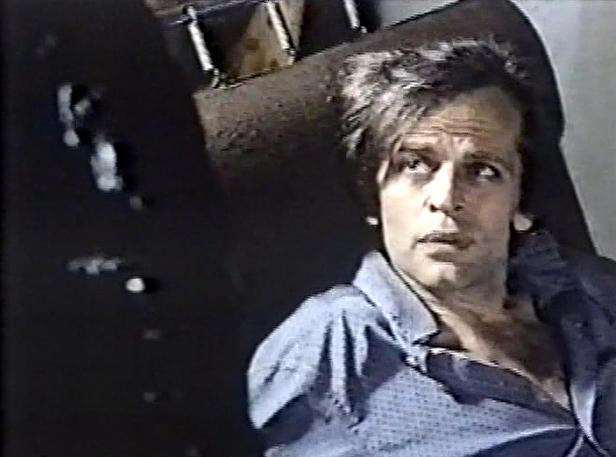
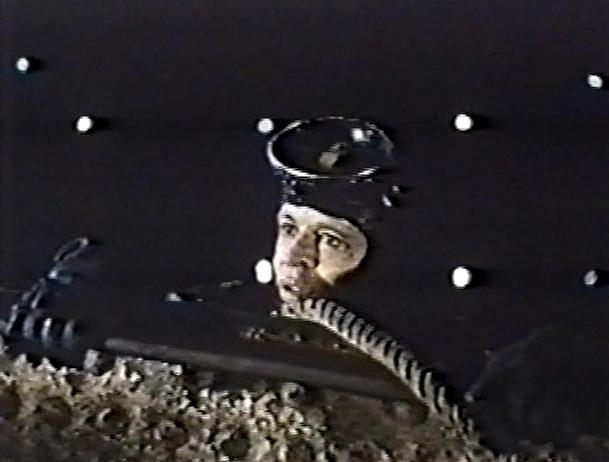
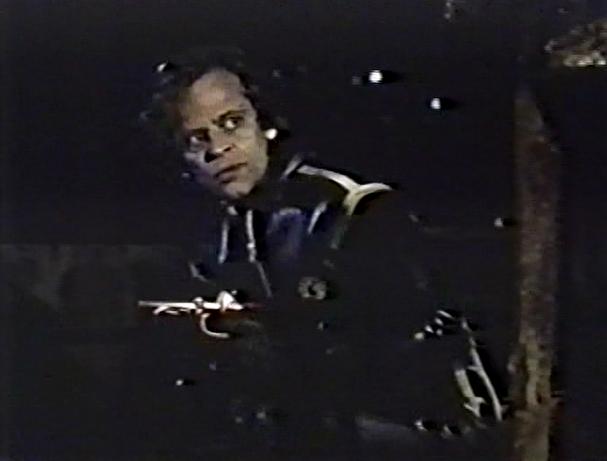
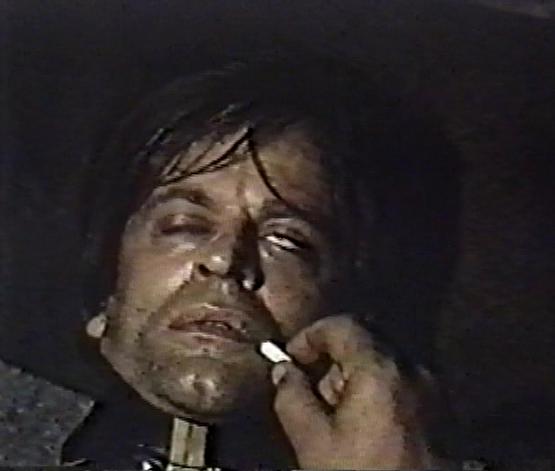
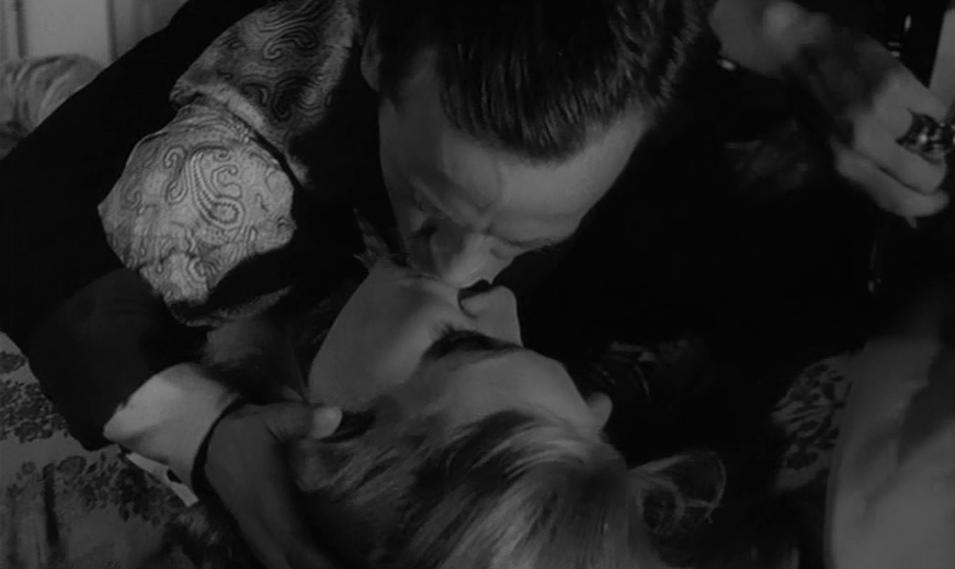
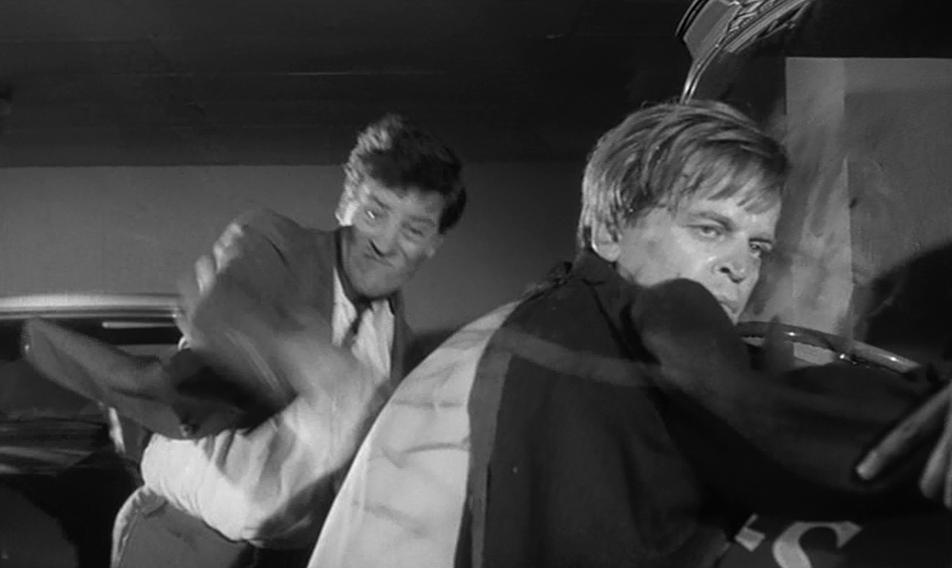
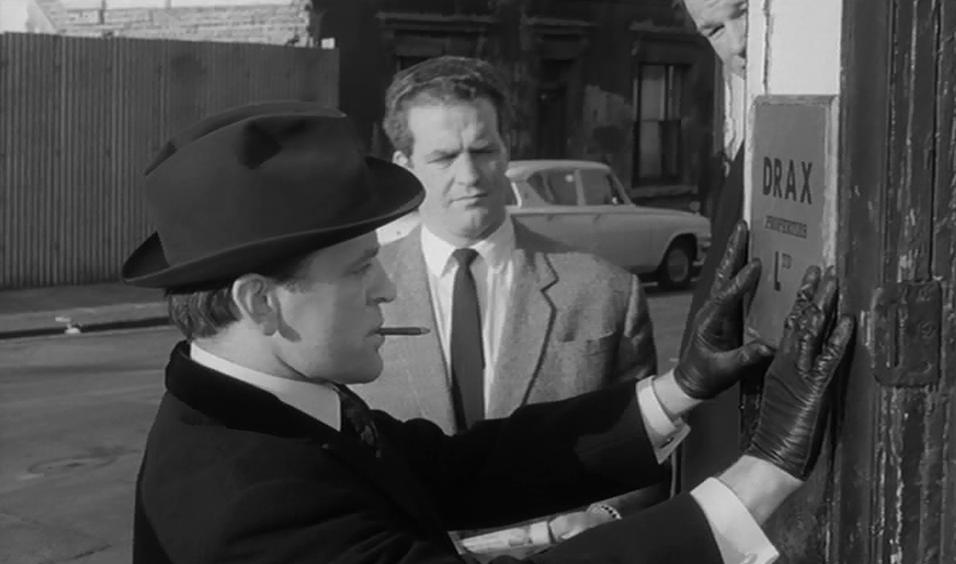
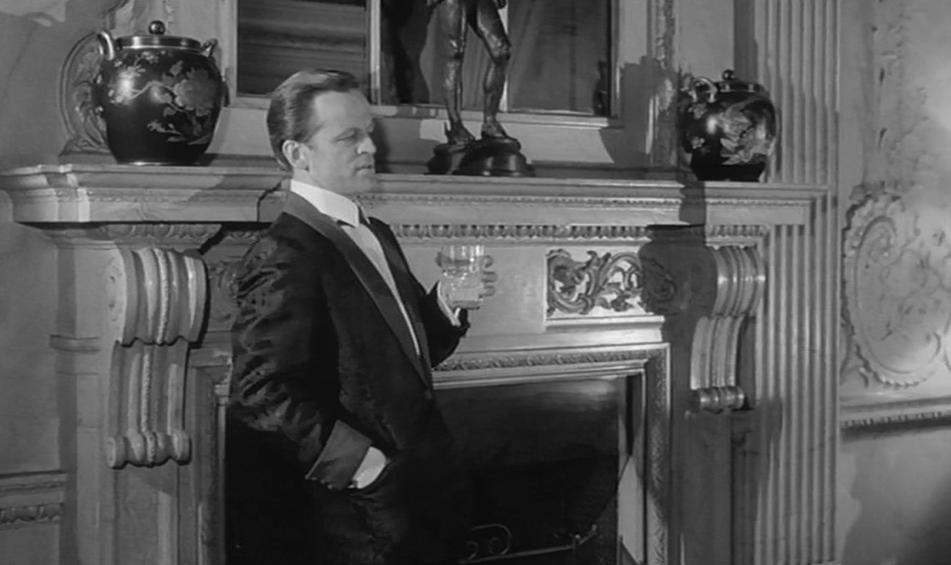
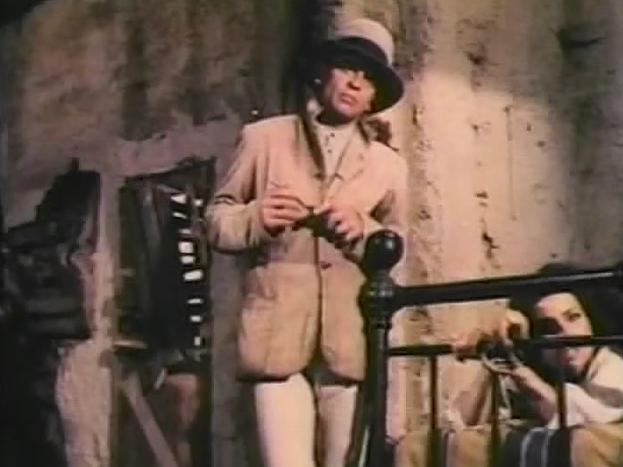
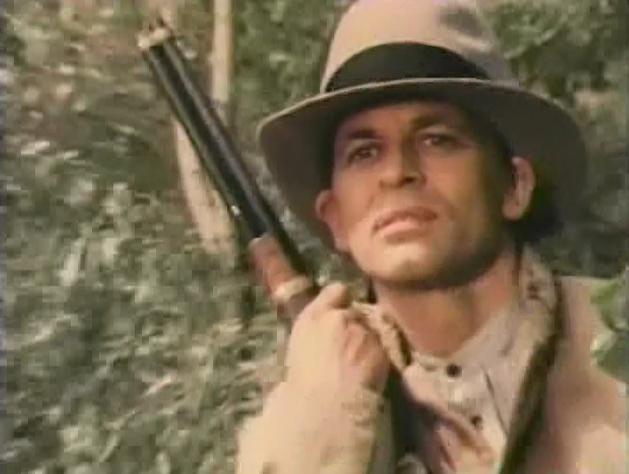
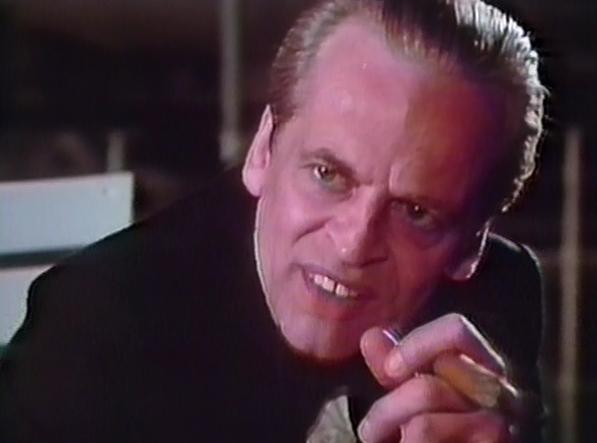
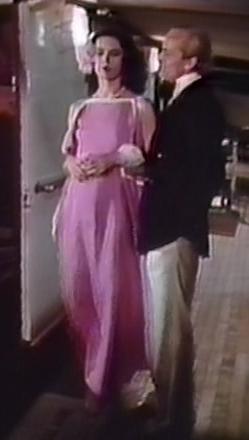
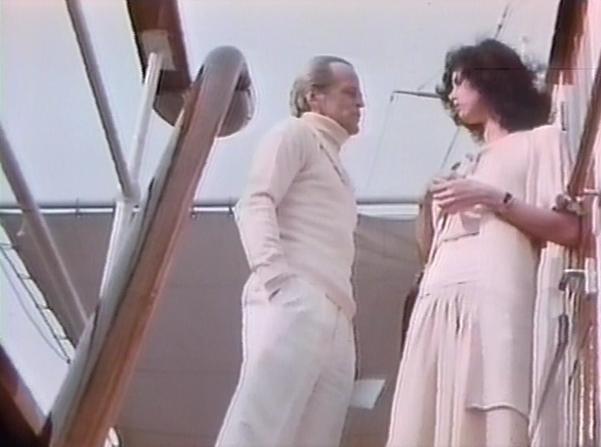
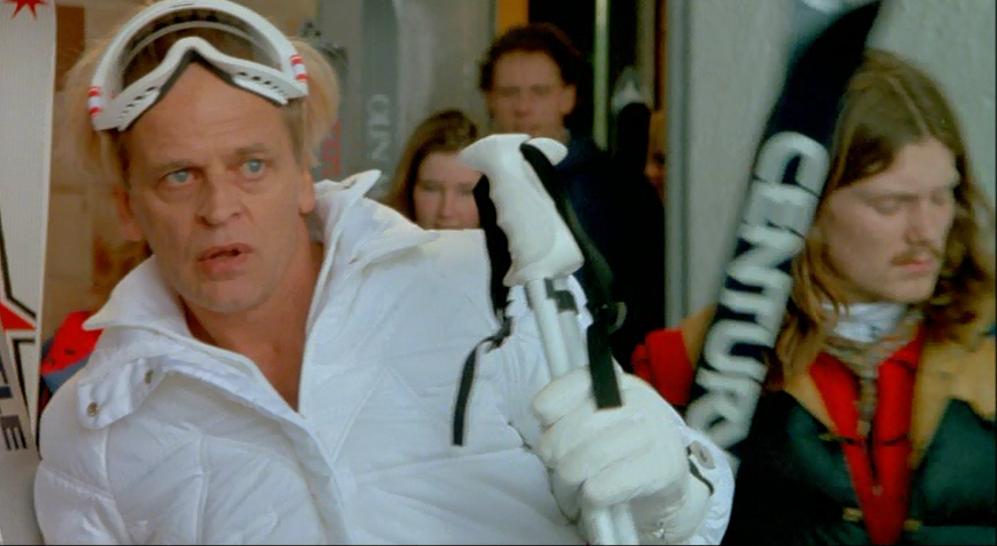
The Berlin Guide to Klaus Kinski Pt 1 (2010)

In summer 2010 I visited Berlin for the first time.  My boyfriend had lived there in the past for a few years and knew the place well, but since I’d not been there before he let me dictate where we went (pretty much).  Guess where I wanted to go?  That’s right – anywhere Klaus Kinski ever went when he lived in Berlin.  We were only there for a week though so I couldn’t make it to all the venues I’d marked off on my map, but I made a start and fully intend to go back there so I can tick a few more places off the list.  Here’s my Berlin Guide to Klaus Kinski (Pt 1) including my photographs taken with my Lomography Diana F+ camera:

* Warning for those who are easily offended – some of the anecdotes related below include offensive language and details of a sexual nature *

Klaus Kinski’s family moved over to Berlin from Danzig in 1931 when Klaus would have been 4 or 5 years old. They briefly lived in Pallasstrasse (see further down) and then eventually found an apartment at Wartburgstrasse 3 on the 4th floor – it’s at the top of this picture and looks quite classy really. Klaus lived there until about 1944 or 1945. He went back there after he was released from a prisoner of war camp in Colchester, Essex. But his parents were both killed during the war and he drifted between the family home and other temporary homes for some time before eventually getting his own apartment when he started getting professional paid acting work.

Young Klaus would have walked in and out of that door – sigh!

This way to Klaus haus!

This is 161 Uhlandstrasse, where Klaus rented an unfurnished 6 room apartment. As soon as word got out that Klaus had an apartment, the bailiffs arrived. He only had one chair and he hurled it at the bailiffs. As Klaus said, “Yorka [his girlfriend] was right when she told me to buy the chair. It’s stable, and I can use it again.” The place became, as Klaus put it, “a real bordello.” Yorka caught Klaus shagging an usherette from the Gloria Palast there.  I guess that put the end to their relationship… Eventually Biggi moved in and made it into “a romantic love nest”.
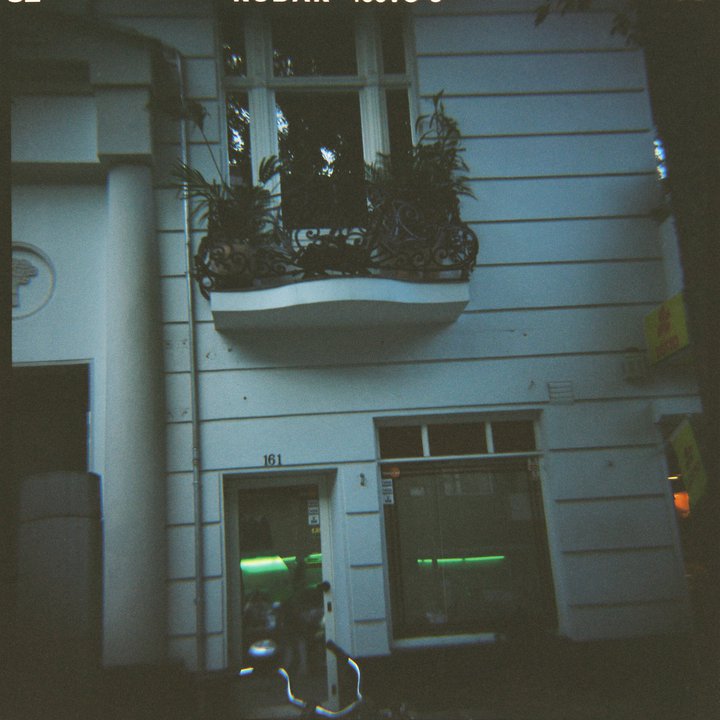
161 Uhlandstrasse again – Klaus practiced here with the guitarist Ingo Insterburg in the late 1950s. They performed the songs of Brecht together in May 1959 at the Titania Palast.

213 Kurfürstendamm, on the corner of Uhlandstrasse – above what used to be the Café Möhring. Klaus used to visit his gay Russian gangster pal, a certain Prince Sasha Kropotkin, here. His apartment ran around the entire street corner and it was a “meeting place for black marketeers, aristocrats, high-fashion designers, thieves, whores, hustlers, artists, murderers, and top-ranking French, British, American, and even Soviet occupation officers.” An average get-together, then?

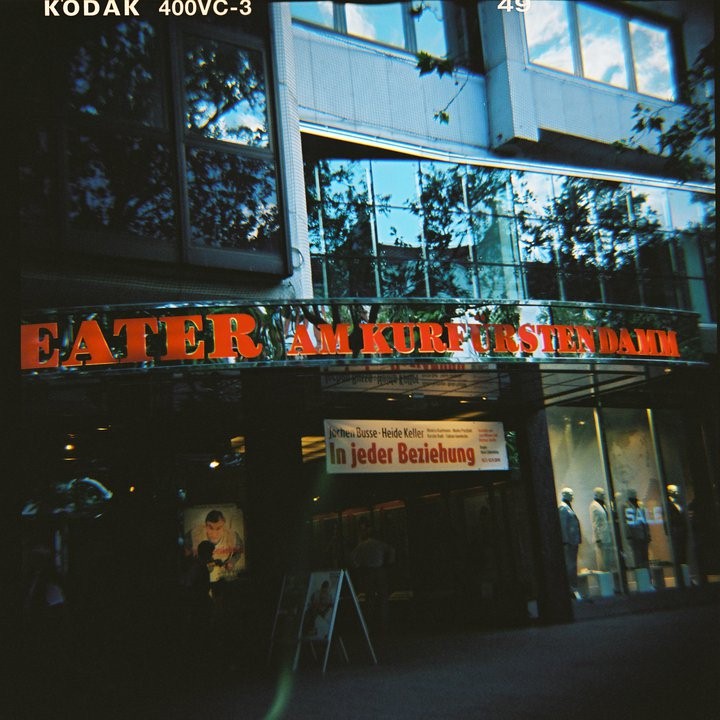
Theater am Kurfürstendamm, which is at Kurfürstendamm 206-209. Klaus appeared at a charity event hosted here on 11 January 1948 and recited Die Rast by Rainer Maria Rilke; he also appeared in Arthur Schnitzler’s Der grüne Kakadu here on 16 November 1959.
On 23 March 1952 Pola Kinski, Klaus’ first daughter, was born in the Klinik Schlüterstraße. Pola’s mother was Gislinde Kühbeck, who Klaus “knocked up” at the Art Academy Festival in Munich – the same night as he also knocked up her friend Therese. Therese had an abortion but Gislinde carried her baby to term. Klaus married her on 11 June 1952; they were divorced in 1955.

Paris-Bar, at Kantstrasse 152 – Klaus went here with Prince Sasha Kropotkin: “I dance with a Polish cu*t. She works as a stripper at a nearby club and lives in a rooming house on the corner. I reach into Sasha’s pocket and fish out whatever I need for the Pole. The Polish cu*t must have a magic technique. My dick stays hard nonstop even after I’ve shot a couple of times. After every f*** she pushes out my boner, rolls over, and dozes off. There’s no way I can sleep; I wait with my trigger-happy cock until her big ass squeezes toward me – that’s the signal. She’s gotta have it six or seven times a night. She barely talks, only when it’s absolutely necessary. Besides, I don’t understand her gobbledygook.” Charmer, eh?

Fasanenstrasse. When Klaus’ brother Achim needed a lawyer after being locked up in the Moabit remand prison, Klaus headed off to Fasanenstrasse but got himself into some trouble by intervening in an altercation between a policewoman and a woman who was selling stuff on the black market. Klaus was called an “agitator” and a “dangerous element”. He was taken off to a cell and told that he was being charged with insulting the policewoman’s uniform (uh?) and “resisting the authority of the state.” O dearie me…

Olympische Strasse (possibly number 6) – this is where Yorka (one of Klaus’ many girlfriends – the one who caught him with the usherette from the Gloria Palast) lived with her mother. Klaus used to sleep on the couch there and baby sat for Yorka’s children when she went to work. Klaus knocked Yorka up but she knew he wouldn’t stay with her so as Klaus simply put it, “I can’t prevent her from having an abortion.”

Theodor-Heuss-Platz, which used to be known as Reichskanzlerplatz. Klaus went home with a newspaperwoman who came to see him requesting an interview: “Forty minutes later we’re alone in her apartment on Reichskanzlerplatz… By the time we’re naked, we’re both crouching like two beasts about to pounce on each other. Then we do pounce, we dig our teeth into each other. We hit each other on the body. The face. The breasts. The genitals. Attack each other more and more violently. Sink our teeth in more and more painfully… Sixteen hours later, when I leave her apartment at seven AM, there’s nothing we haven’t done. A short time afterward I read in the papers that she and her husband have committed suicide.”

The Hebbel Theater at Stresemannstrasse 29. Klaus was called in to audition by Jürgen Fehling and he kept him there for seven hours straight: “Fehling has a young usherette to do the death scene in Othello with me. “Just keep your trap shut,” he tells the flabbergasted girl, “no matter what Kinski does to you, you just stay as motionless as a bump on a log, don’t let out a peep. I want to hear nothing but his voice.” What does he mean, “No matter was Kinski does to you”? What can I do to her here anyway? I hate this guy. I’d rather f*** the usherette, whose panties smell so intoxicating that my nuts aches. Seven hours aren’t enough for him! He must be a wacko!”

The Hebbel Theater again. Klaus played here: 16 February 1952 in Julien Luchaire’s Die Zwanzigjährigen (Altitude 3200) and 1 September 1952 in Dostoevsky’s The Idiot.
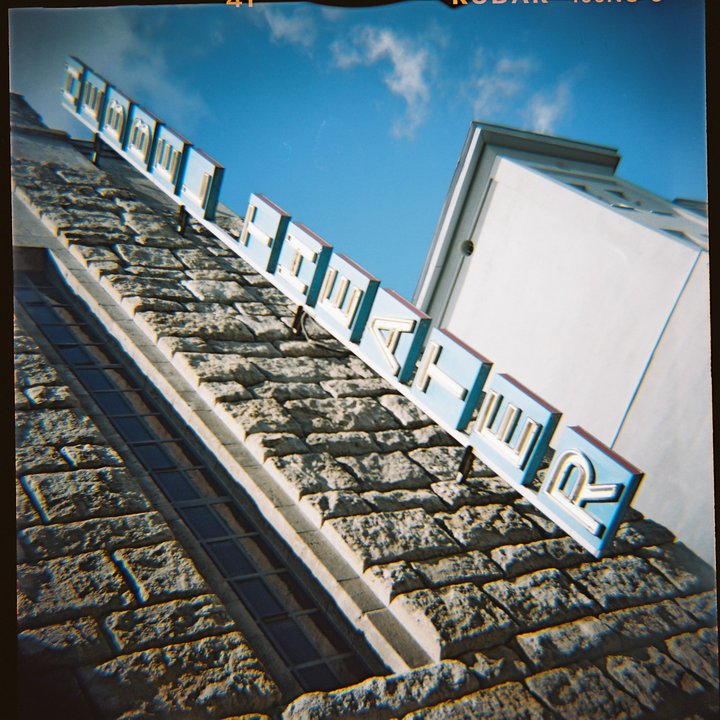
Klixstrasse. In 1936 Klaus attended the Prinz-Heinrich Gymnasium, Klixstrasse 7. This is the site of what is now known as the Friedrich-List-Schule but there was building work taking place all down the street. Klaus skipped school for 7 months because he preferred to hang around the streets. He was eventually expelled. I bet Hans Fallada was not expelled when he went there in 1899…

Badensche strasse. In 1946 Klaus briefly attended the Schauspielschule Marlise Ludwig on Badensche strasse: “I’ve learnt that there’s such a thing as acting schools. I use them to steal books, and normally I also steal a girl into the bargain. Besides, the acting schools are always heated, and the girls always have sandwiches or an apple or a hardboiled egg… These girls are very young. The youngest is thirteen. The oldest sixteen and a half. She’s a slut, but she’s hard at work studying acting, and she gets food and whole cartons of cigarettes from the Yanks. She’s had syphilis, but she says she’s been cured. She’s very sweet, but a boring beanpole. I f*** her just the once, on a steep slope over the railroad tracks near Halensee Station.” I love the fact that this guy is trying to get into my photograph!

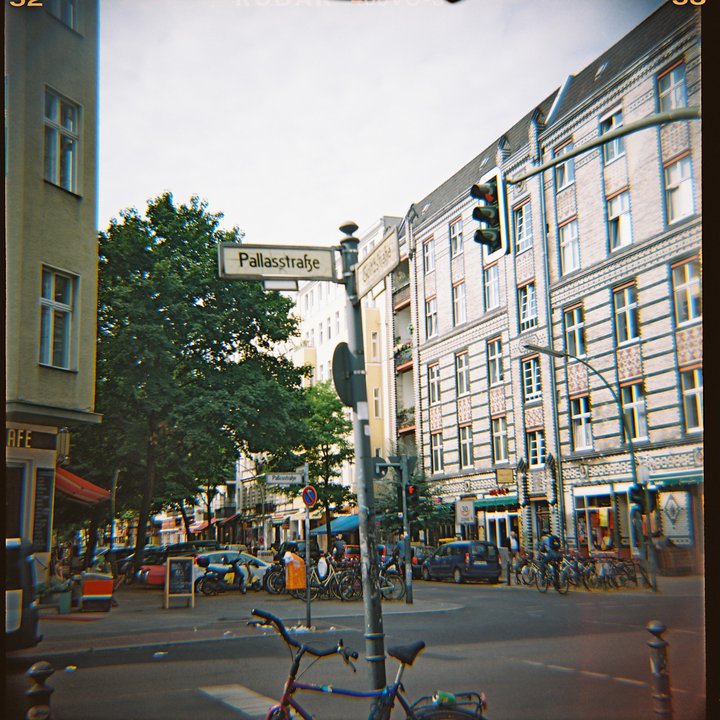
Pallasstrasse. Klaus’ family moved to Berlin in 1930 – they stay in a hotel at first and then eventually move into an apartment here: “My father’s got a job! So we lose no time getting out of the hotel! Pallasstrasse, third rear court. The apartment is a fluke. The previous tenant committed suicide. For us it’s paradise. One room. Three feet of corridor. It’s got a kitchen, and we share a latrine with the other tenants on the landing. We also have a Dutch stove and a gas range. The range works through a coin meter. You insert a dime and you can start cooking on the spot. The sealed meters are opened every month by the gas man, the coins are removed, and the apparatus is resealed. Our predecessor took over the gas man’s work. He broke the meter open himself, confiscated the coins, and reinserted them. Then he gassed himself. Now he’s lying in the morgue, and we’re in his apartment!” Hooray for the Nakszynski family!
Gloria Palast – bit dark, isn’t it? Take a word of advice, even with a flash a Lomography camera cannot handle the dark… Anyroad, back in something like 1959 Klaus was dating a woman called Yorka but she caught him with an usherette from the Gloria Palast in the apartment on Uhlandstrasse: “There’s an usherette at the Gloria Palace who kneels down next to my seat during a screening and brings me best regards from her friend, whom I’ve never even met. I have to take her to my brothel [he means the Uhlandstrasse apartment]. Unfortunately Yorka comes back from shopping with overflowing bags – and catches the usherette and me with my pants down in the middle of the room. We’re wedged into one another… After dropping her bags, [Yorka] dashes from the apartment.” Naughty Klaus!

In Kinski Uncut Klaus talks about his recitals in one breath and then the Fritz Kortner film Sarajevo the next moment – the film was released in 1955 so I guess he’s indicating he did some Wilde, Mayakovsky, Rimbaud, etc recitals in either 1954 or early 1955 but he only did the Villon recitals during that period and they were in 1952 in Berlin and 1954 in Munich. He’s got his dates wrong somehow. He also says he rented the Volksbühne (pictured below) to hold the recitals there (amongst other theatres) but I can’t find any reference to this anywhere. It’s possible he’s wrong, but what a lovely theatre anyway

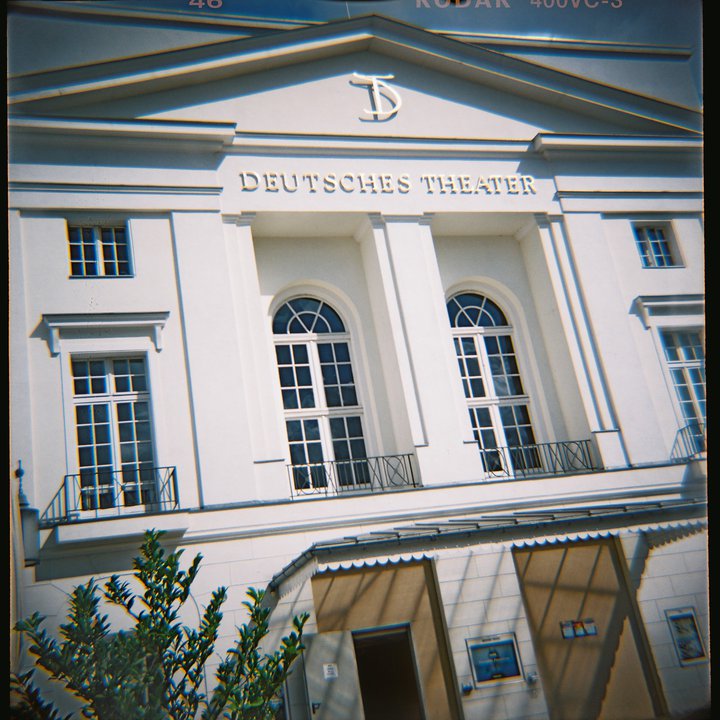
Kammerspiele des Deutschen Theaters, Schumannstrasse 13a – Klaus did Shakespeare’s Measure for Measure here on 15 October 1948, directed by Wolfgang Langhoff. Klaus had to play Claudio who was, as Klaus put it, “sentenced to death for deflowering a young girl without first marrying her. (Me, of all guys!)”

Eventually Klaus got himself into trouble for eating two meals in one day at the Deutsches Theater Club (which he wasn’t allowed to do) and then the manager refused to give him an advance on his salary, so he did his nut: “…I grab the shithead’s necktie and slap him until his bleating attracts other office employees. Now Langhoff appears, too, and orders me to take off my costume, firing me on the spot… “If you want your costume back, here it is!” I rip bits of the costume off my body. I chew it up into bits and pieces. “This is for you! And for you! Here! Eat it up if you like! No one else’ll ever wear it after me!” …There’s no way they can stop me. I stand with my back to the wall, and if anyone tries to get at me I’ll kick them in the head! Then I’m naked! The barkeep throws a coat over me and tries to calm me down, for I’m shrieking with fury and disgust at this rabble.”  Klaus!
And, with that, we leave Klaus in Berlin for now!  Hope you enjoyed the brief Kinski-Berlin tour.  If you’re ever in Berlin, check out the Kinski Club at Friedelstraße 28 (b+w photograph below courtesy of my boyfriend) http://www.kinskiclub.de/.  We went along but it didn’t open until 9pm and we couldn’t be bothered to hang around for a few hours until it opened.  Still, it looked good, if a bit rough and ready.  The shop next door had a sign in the window warning something along the following lines: This is not Kinski Club – do not ask here!

Acknowledgements:  The majority of the information included above was gleaned from Kinski Uncut, which is a valuable resource for any Kinski fan.  I’d recommend buying it if you don’t have it already.  Some of the dates for the plays / performances etc were taken from www.klaus-kinski.de, a great little website with masses of detail.

Posted in Other Kinski Stuff | Tagged , , , , , , , , , , , , , , , , , , , , , , , , , , , , , , , , , , , , , , , , , , , | 2 Comments

More Klaus photos etc

It never rains, but it pours, eh?  I scanned a few bits and pieces today as I just got these lovely French film trade cards and thought I should share them, then I remembered a few other things I acquired recently so I scanned those too.  Here you go:

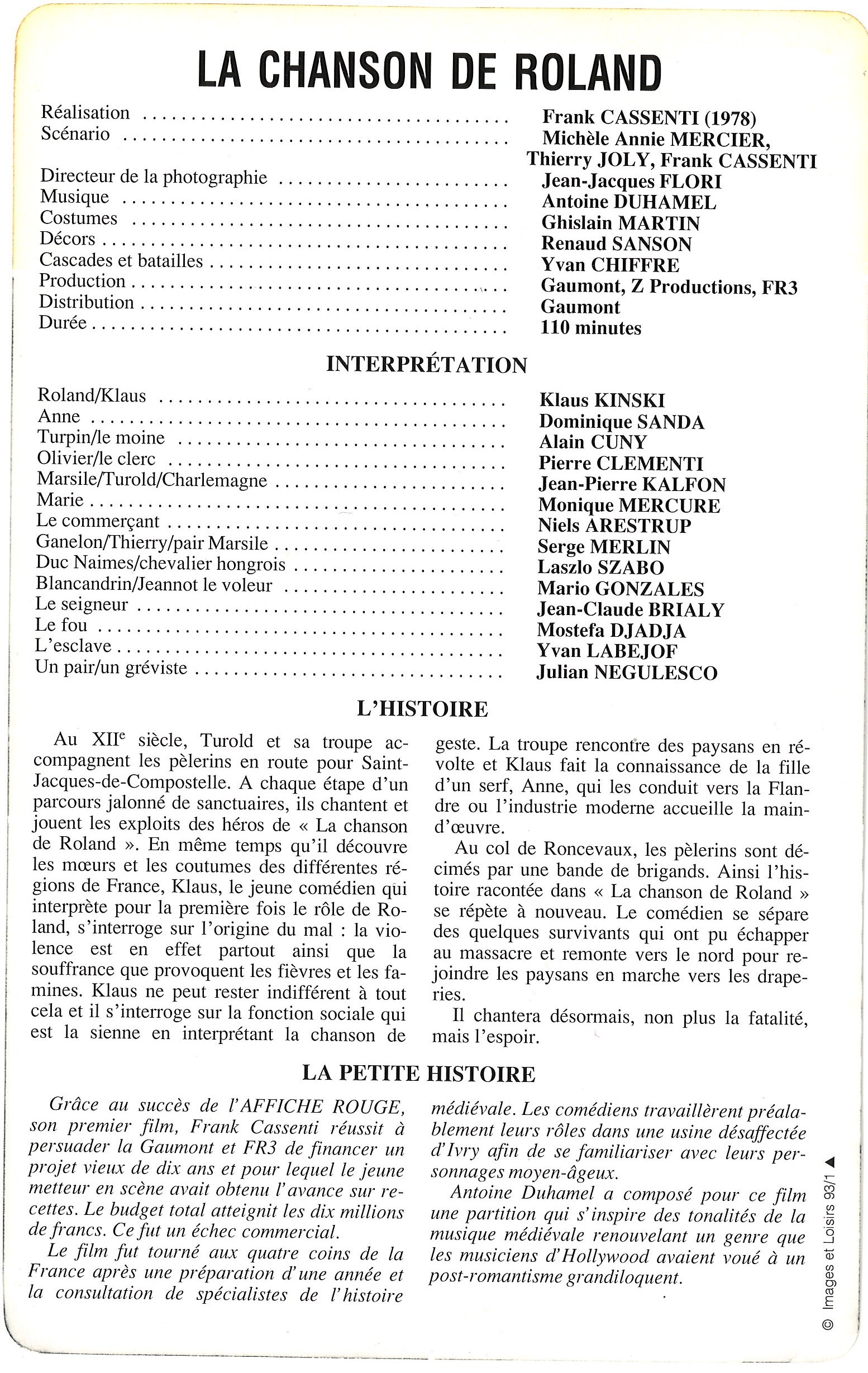
La Chanson de Roland, Dir Frank Cassenti, 1978

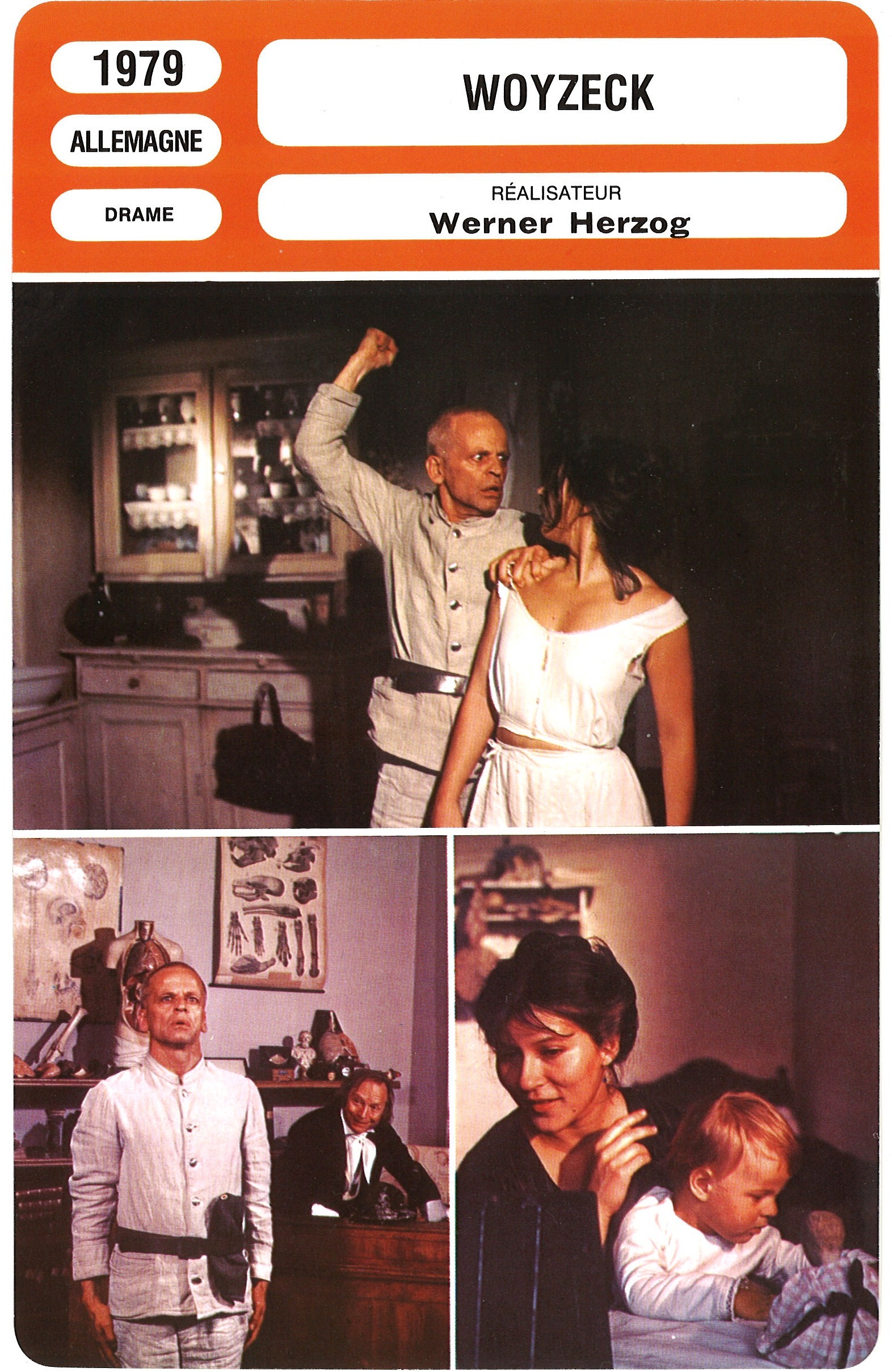
Woyzeck, Dir Werner Herzog, 1979

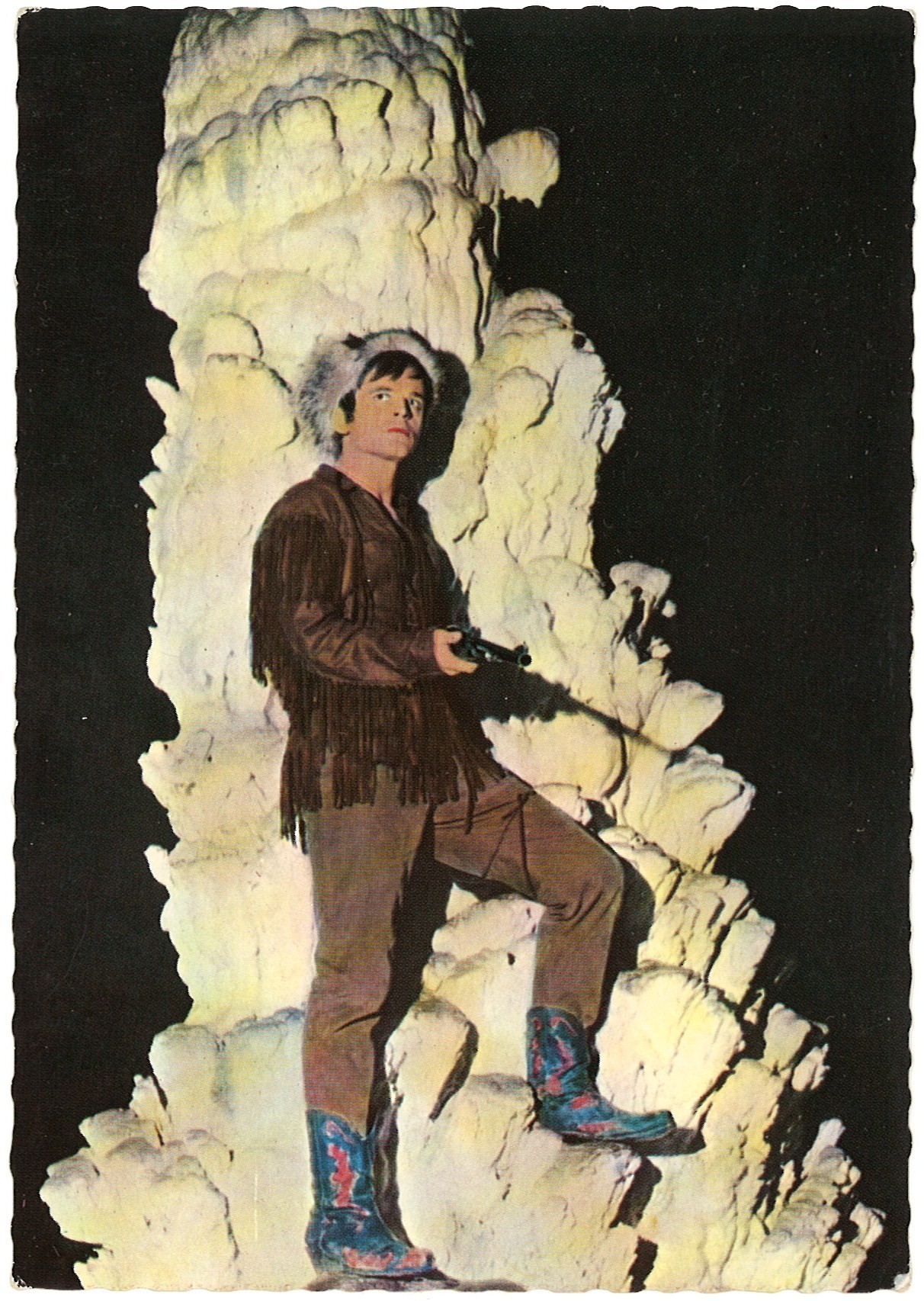
Winnetou II, Dir Harald Reinl, 1964

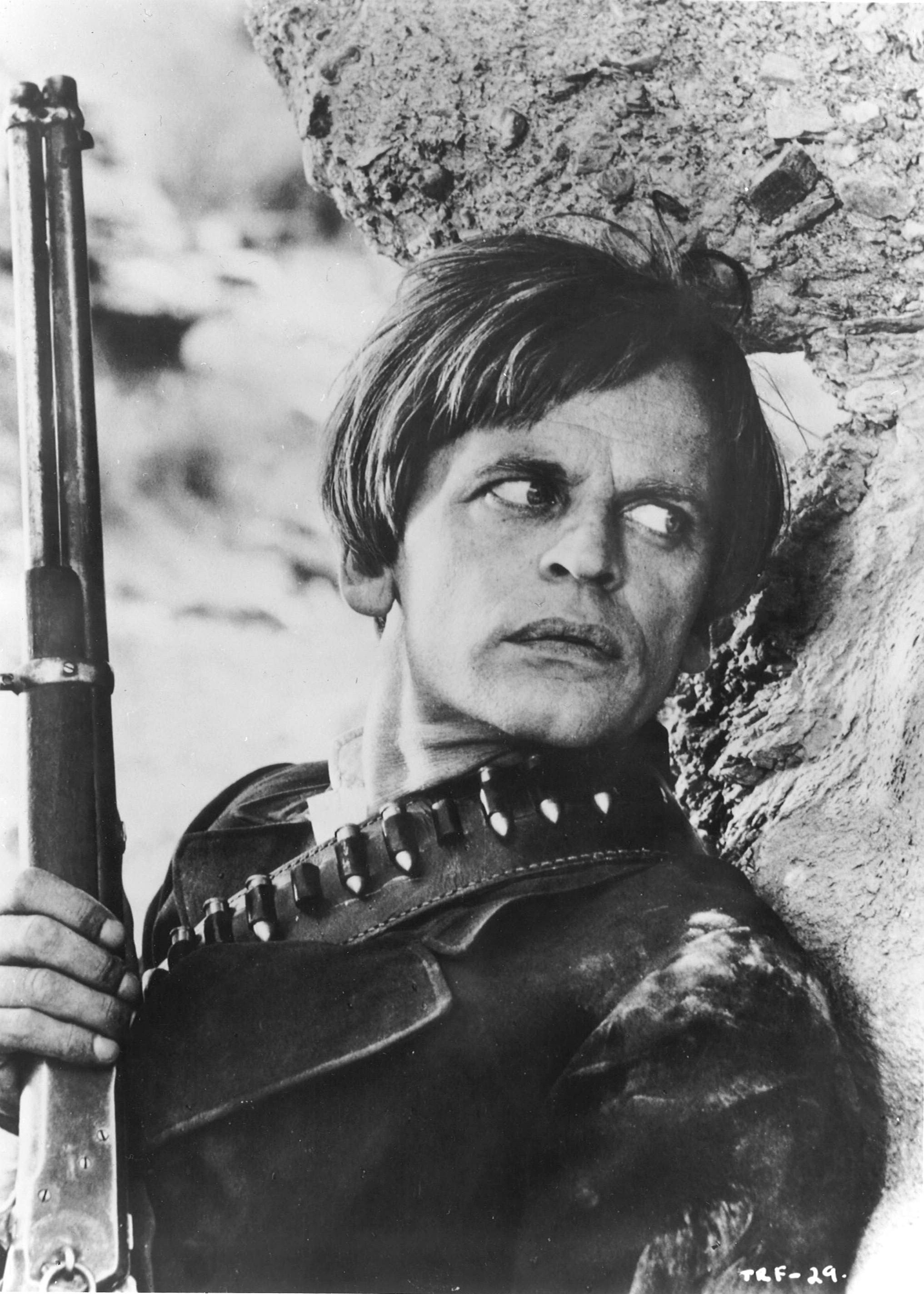
Unidentified, if you know which film this is from, please let me know.  If not, I’ll work it out sooner or later when I watch and review more films.  [Du dumme Sau! note: This is from Das Gold von Sam Cooper aka Every Man for Himself, dir Giorgio Capitani, 1968 – thanks to Konrad Kuklinsky for identifying this and also pointing out that the picture is a promotional still and that the scene does not actually feature in the film].

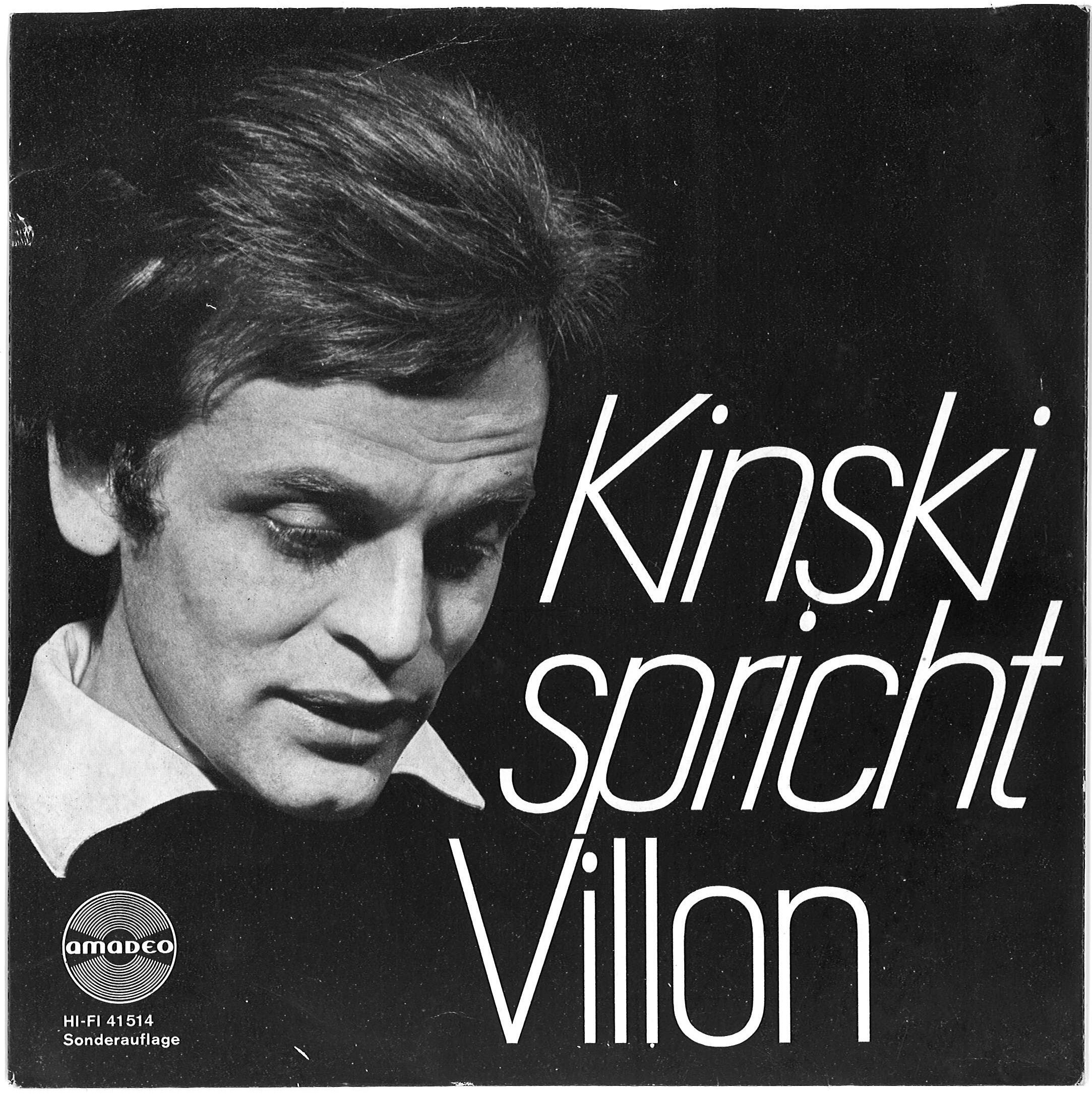
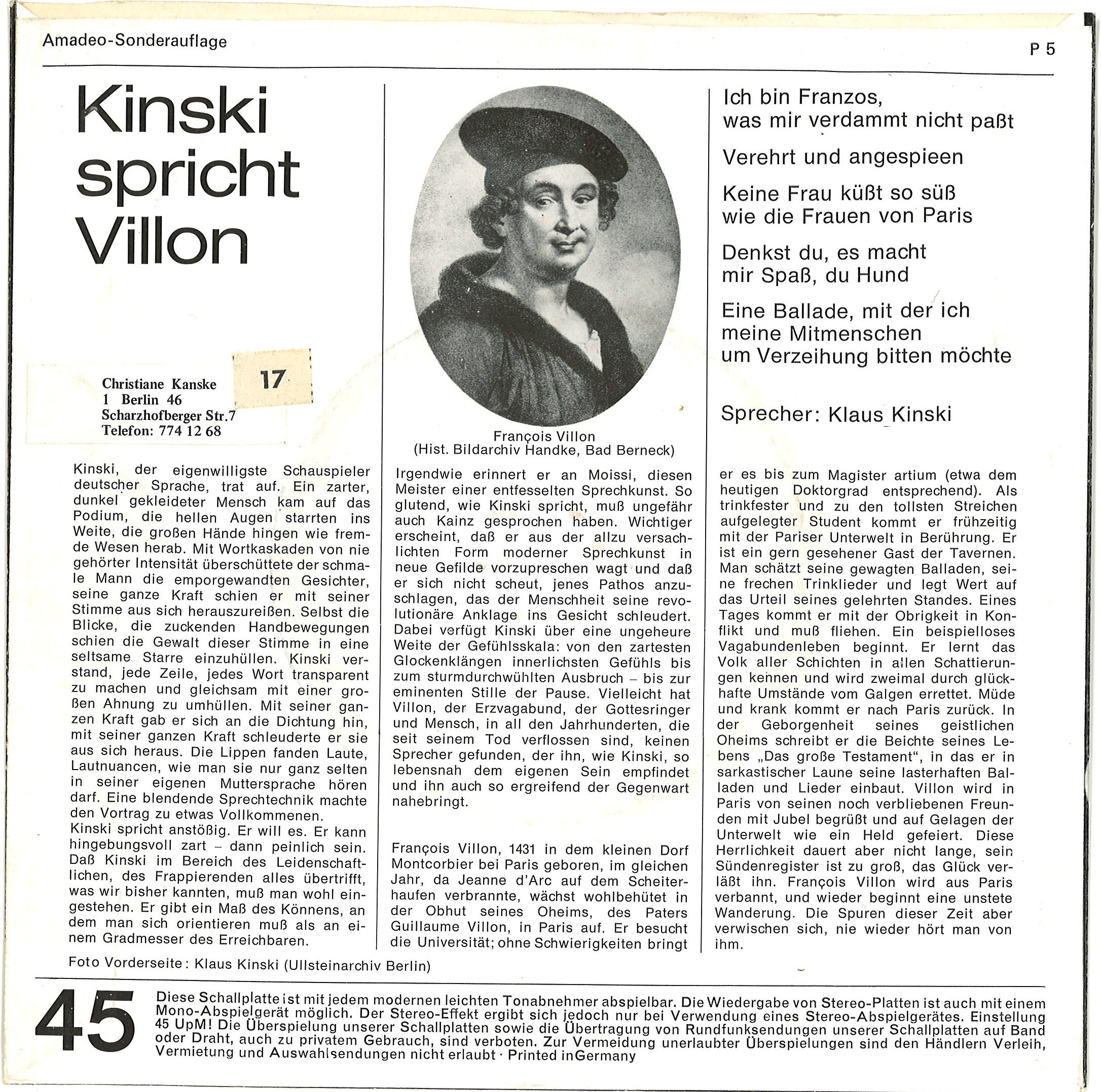
And, finally, when I went to Berlin for the first time last year, I went on a bit of a Kinski pilgrimage – photos and stories on that to follow.  Whilst there I went record shopping – it’s the law, I just HAVE to – and I was so happy to find this lovely Kinski spricht Villon EP:


Posted in Photos | Tagged , , , , , , , , , , | 1 Comment

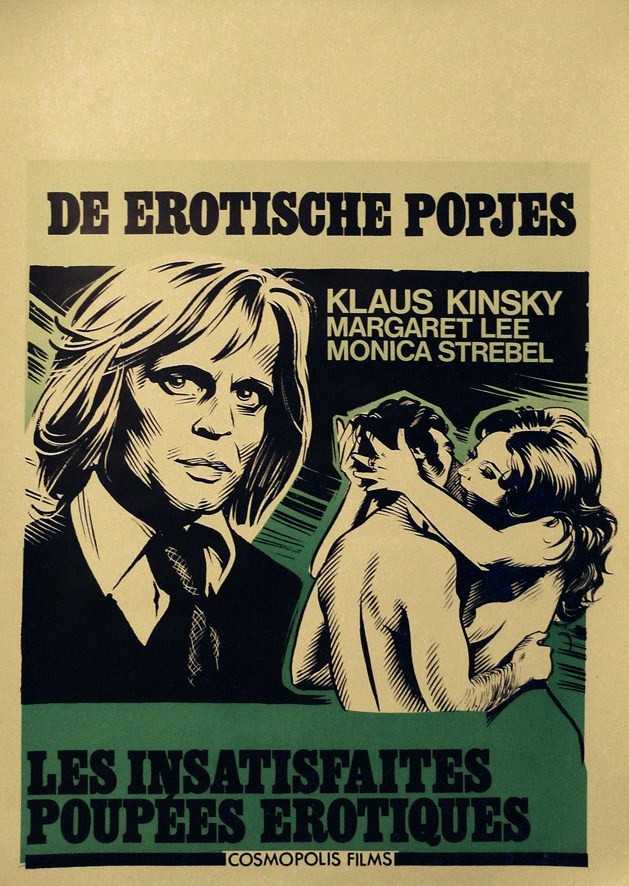
Some Klaus Kinski posters

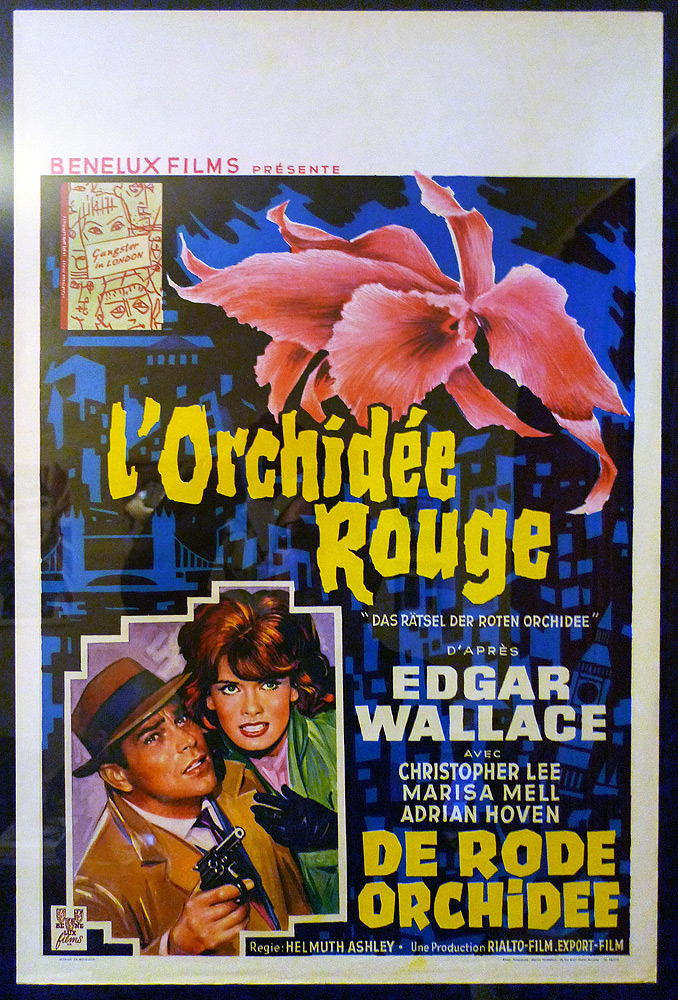
Here’s some Klaus Kinski posters recently found at the film fairs I go to:

This one is for Asylum Erotica (Dir Fernando Di Leo, 1971), which I’ll get around to reviewing some time soon.  I like the artwork.

Excuse the books holding the poster flat – this one’s for Fruits of Passion (Dir Shuji Terayama, 1981).  I must admit when I saw this film for the first time I thought it was terrible, but I’ve seen it several times now as I’ve been working on writing it up and I’d say it has a lot to offer.  It’s incredibly stylish and has beautiful cinematography.  And you do get to see Klaus Kinski’s hot old man body in its full glory – believe me, it’s worth a look! Anyway, I must get that review finished.

And, finally, this one’s for The Secret of the Red Orchid (Dir Helmut Ashley, 1962).  Another one of the films I have on my ‘to review’ list.

Hope you like them.

Posted in Photos | Tagged , , , , , , , | Leave a comment

Klaus Kinski wears a rubber suit

Only The Cool aka Pill of Death; La peau de torpedo; Children of Mata Hari; Der Mann mit der Torpedohaut (Dir Jean Delannoy, 1970)

Basic plot: Dominique’s antique dealer husband, Nicolas, goes off on mysterious trips without her and does not let her in on the details of his secret life.  She believes he may be having an affair and tracks him down to a woman’s apartment in Paris.  By accident Dominique shoots her husband and the unknown woman, with her husband’s gun, and then flees the scene.  What she doesn’t realise is that he was part of a spy organisation.  Her little accident has massive repercussions, not only for Dominique, but for many others who want to know just how much Dominique knew about her husband’s covert activities…

Cast: Pavel Richko / Torpedo I – Klaus Kinski; Dominique Krestowicz – Stéphane Audran; Helen – Lilli Palmer; Coster – Michel Constantin; Gianni – Angelo Infanti; La filature – Jean Claudio; Nicolas Balsier – Frédéric de Pasquale

Filming location: Paris and the Studios of Boulogne

Release date: 3 June 1970

Availability:  This film does not appear to be currently available anywhere – if anyone reading this finds an official issue anywhere, please let me know as I only have a dodgy copy (with something like Greek subtitles and a couple of bad quality bits at the beginning; I gather it must have been a video to DVD conversion) that I picked up at a film fair.  My copy is only 98 minutes long and IMDB says that the film is 110 minutes, so I seem to have some footage missing from mine, although the story appears to be intact. 

The film in full – *SPOILER ALERT*:

Okay, first things first – don’t expect Klaus to rock up until 74 minutes into the film.  In the meantime, enjoy the incredibly stylish opening credits and the wonderful soundtrack by the very talented François de Roubaix (he who provided Harry Kümel with the Daughters of Darkness soundtrack, which is just about one of the best soundtracks ever).

The story – it’s a very basic spy incident gone wrong plot.  You’ll never get to the bottom of what all the spying was actually about, so don’t bother trying to work it out.  Anyway, the story starts at New Jimmy’s Club (which coincidentally was also the club where Klaus was partying in Madame Claude) where Dominique (played by Claude Chabrol’s glamorous wife, Stéphane Audran) is getting drunk and picking up a playboy.  She takes him home with her but comes to her senses before getting into anything with him; she’s only rebelling because her husband Nicolas, reputedly an antiques expert, has gone away on one of his extended, mysterious trips away without her.  She’s at the end of her tether but not quite ready to cheat on him just yet.

When Dominique discovers from her friend that Nicolas is in a Paris apartment with another woman, she heads off there in search of answers.  Unfortunately the encounter goes terribly wrong and Dominique accidently manages to shoot both her husband and the woman, without even getting any answers as to what her husband has been up to for the past few days.  Nicolas is dead but the woman, Françoise, has sustained injuries and is in a critical condition.  Dominique has already fled the scene and escaped on a fruit truck with a couple of hippies and a kitten.  A kitten on a lead.  Strange but true.

A woman called Helen is rather concerned that Nicolas and Françoise do not answer the telephone when she calls – she sends a man over to check the apartment as she’s not sure where they are.  The man tells Helen that it seems the incident was a crime of passion but that Françoise is still alive, just about, in hospital.  Helen sends her flowers and a bottle of expensive perfume – but rather than being something to cheer up Françoise, the gift is Helen’s way of killing off an infirm agent by perfume osmosis inhalation (or something ridiculous like that).  The death of captured agents is a recurring theme in the film; no one must talk!

In the meantime, the police are uncovering some of Nicolas’ work and finding that there is more than meets the eye to the death of a man who variously claims to be an antiques expert and also, I gather from some passing comment, an insurance salesman.  They now have 64 pages of microfilm to study – and a gun; the one Dominique used to shoot Nicolas has been found by the truck driver and handed in to the police, so they know now roughly where she has fled.  The plot thickens…

In the meantime, Dominique has semi-reluctantly boarded a trawler boat with a guy called Gianni who was earlier trying to chat her up at the harbour – she has very little choice as she has nowhere else to go.  He turns out to be a fairly decent sort except that his wooing extends to serenading her with a song he composed himself called something like J’aime.  It seems to be working on Dominique, she’s definitely warming to him, and then he goes and spoils it all by doing a verse where he whistles.  Nice try, Gianni.

Back in Paris, hatchet-faced Helen has contacted yet another of the men she has at her beck and call and asked him to take on a mission where the results are bound to be practically zero – he cannot refuse, for whatever reason, and because the job is risky she gives him a parting gift of a pill of death: a capsule which when bitten open poisons the user instantly with potassium cyanide or some such.  You can keep the capsule in your mouth as it’s insoluble, even in gastric juices – and you simply bite it open if / when you need to self-destruct.

Helen believes it’s possible that Dominique was in on Nicolas’ plans and / or that she was working for another organisation.  She wants her eliminated before she’s arrested and talks.  She also wants the microfilm; even though this guy has slim to no chance of finding it without getting caught, which means certain death as a caught agent must self-destruct.  She doesn’t ask for much, does she?

The guy searches the apartment unhindered, a sure sign that the microfilm has already been located by someone else, otherwise he would certainly have been apprehended during the act.  This now means he has to ensure he is not tailed by anyone before meeting up with stoney-faced Helen – if he is, he is under orders to self-destruct so as not to give away her whereabouts.  Unlucky.  He’s tailed here, there and everywhere – he can’t even get a few moments shuteye in the park without being watched, and he has to go to the toilet to eat a slice of cake in peace, before booking himself into a hotel-by-the-hour to top himself.  And when Helen reads about his death in the newspaper she does not bat an eyelid – a heart of gold that woman’s got!

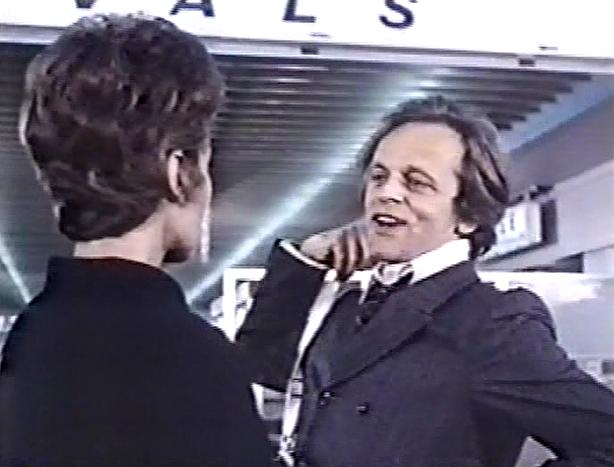
Finally, finally, the moment we’ve been waiting for – Mr Klaus Kinski’s arrival.  He saunters in all casual like, hand in pocket as usual (goes without saying really) and says to vinegar face Helen: “I bet you’ve been looking for me! My name is Pavel Richko.  I’m travelling on a Finnish passport, and I’m here for… serious business.  You are a friend.  You came to meet me at Le Bourget.  And I’m going to kiss you! Smile! Smile, that’s an order!”  Good old Pavel!

Pavel is way too blasé for Helen, so when he later arrives at her apartment, announcing that it’s “not exactly cheerful, is it?”, she’s not best pleased.  He’s been shopping and wants to show Helen his purchases – she doesn’t seem to approve of the brightly coloured dressing gown he couldn’t resist:

“It’s dreamy, isn’t it?  You don’t think it’s swish?  Too bad!  You’re just jealous of my dressing gown, that’s all.  But I’m not surprised – you’re a monk!”

Trying to take Pavel in hand and making the mission more formal, Helen snaps: “Let me remind you that I am responsible for this operation!”  To which she gets short-shrift from the unrelenting Pavel: “And let me remind you that I have complete freedom of action, means and method.  And that goes for the colour of my dressing gown!”

Their mission begins later, when Helen arrives to wake up Pavel, who is snoozing in a mauve shirt, open to about half way down his chest.  Disapproving Helen might be but even her hatchet face appears to soften at the sight of the very cute Kinski dopily awakening.  Remembering herself, the ever ready Helen asks Pavel if he has a capsule, just in case; he does.  He might be laid-back but he is prepared after all.

Helen has located the whereabouts of Dominique and wants to head off there by speed boat.  Pavel gets his rubber suit and harpoon packed and joins her for the ride.  Helen waits in the boat whilst Pavel, all rubber-suited up, dives into the sea and boards the trawler boat (have you noticed she never actually gets her hands dirty herself?). And even though Gianni is no longer singing J’aime, Pavel still needs to kill him anyway so shoots him with the harpoon gun ASAP; he probably heard about the whistling chorus – you just can’t afford to take any chances…

Pavel doesn’t have so much luck with Dominique and whilst in pursuit of her he falls to the deck below and breaks his back.  Poor old Pavel! He’ll never get to enjoy his colourful dressing gown now!  Seeing some kerfuffle going on on-board, Helen wastes no time in departing the scene in the speed boat.

The police, who had boarded the boat in secret to arrest Dominique after a tip-off from sneaky Gianni, have arrived on the scene and are withholding Pavel’s capsule from him.  He’s the closest thing they currently have to a link to the case and they need answers, so Pavel won’t get an end to his pain just yet. Or will he?

Suddenly hard-faced Helen finds herself surrounded by the police and has her capsule confiscated so she will now live to talk – this means the police don’t need Pavel after all and because policemen are always helpful, as you know, they decide to do him a favour by letting him take his capsule and put himself out of his misery. 

The police tell Dominique that she probably won’t even have to go to trial as she’s been helping them with their enquiries (sounds unlikely but she seems to swallow it) and so they drive her and Helen away to face further questioning.  But the case is one that is destined never to be solved as, when the police make a stop at a service station, a car pulls up alongside them and a man shoots Helen through the car window.  The police now want the man instead – and they want him alive!

Do you know what?  It was a good enough little film – nothing amazing, but some nice cinematography, an excellent soundtrack (which I keep going on about!) and enough action and intrigue to keep you interested.  And a totally camped-up performance from Klaus as the maddening Pavel is well worth a watch.

Let’s hope that someone brings out an official version eventually.

Kinski’s acting methods:

You know I go on about Klaus always having his hands in his pockets, but this performance really takes the biscuit.  From his first appearance at the airport he has his hand in his pocket, then he continues like this even when he has his other arm linked through (the reluctant) Helen’s, until she gets out of his grasp and he instantly puts his other hand in his other pocket and does a double-pocketer.

Then when he arrives at her apartment he walks down the stairs and through her apartment with one hand in one pocket and the other holding his shopping bag.  He just cannot refrain from putting his hand in his pocket.  Although he pretty much has to when he’s in the rubber suit, but that’s probably the only reason why he hasn’t got his hands in his pockets then; because he doesn’t have any!

Other information about the film:  The film was shot in early summer of 1969.  It was Kinski’s first French film.

Posted in Film Review | Tagged , , , , , | 1 Comment

Klaus Kinski wears a gold jacket to the orgy

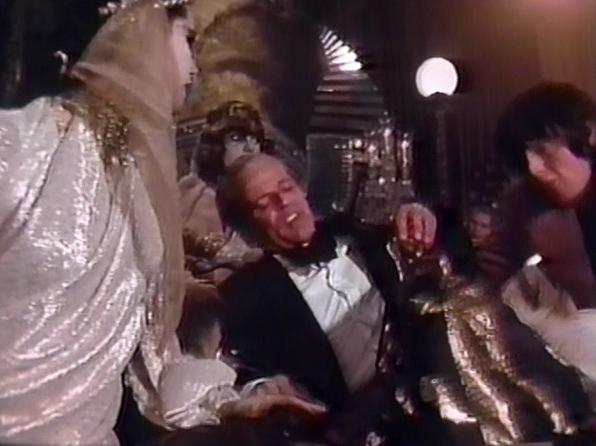
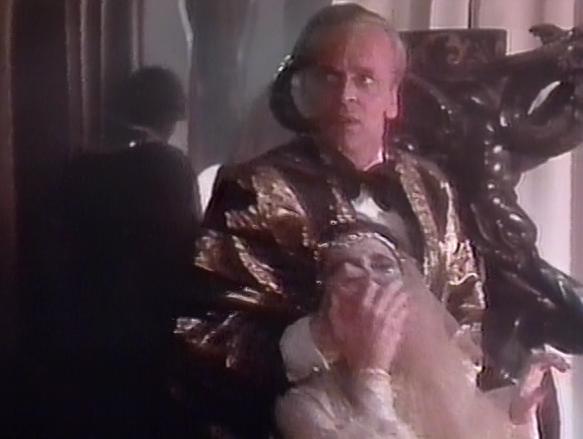
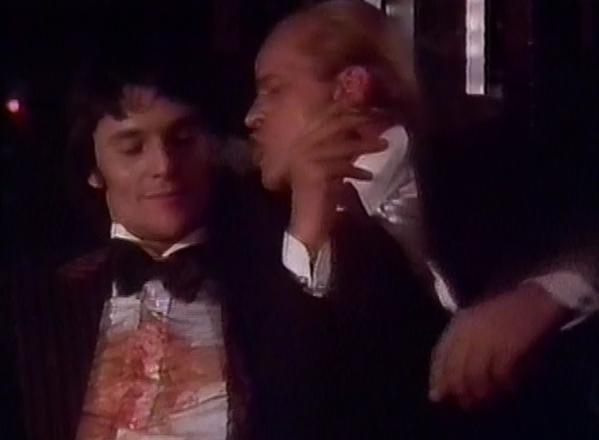
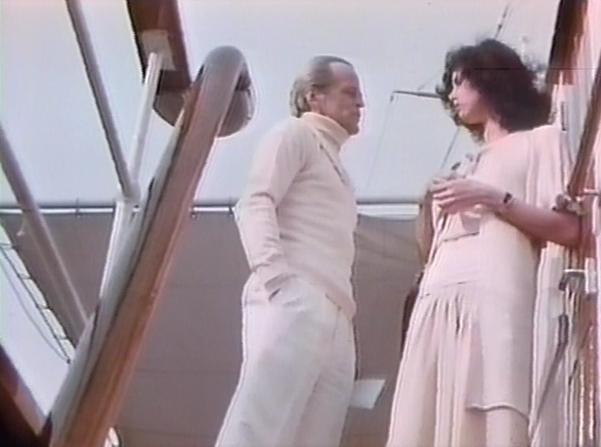
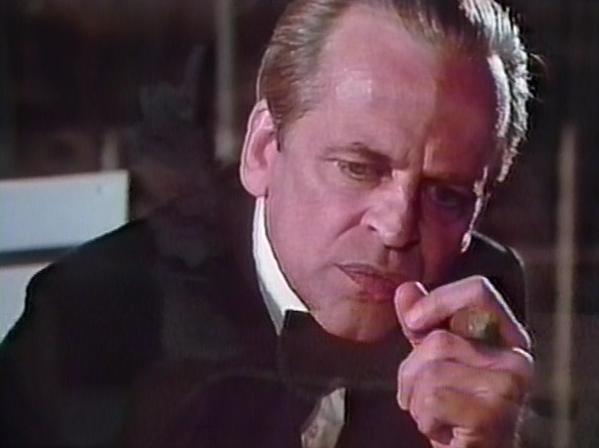
Madame Claude aka The French Woman and Madame Claude und ihre Gazellen (Dir Just Jaeckin, 1977)

Basic plot: Photographer David Evans has photographs of Madame Claude’s high-class call girls entertaining their clients, who just happen to be politicians, high-flyers from multi-national corporations, civil servants, heads of state and dignitaries.  As a result there is a lot of interest in the photographs from the French government, the CIA and Madame Claude herself – will David manage to find a buyer for the photographs before someone gets their hands on the photographs and him?

Cast: Alexander Zakis – Klaus Kinski; David Evans – Murray Head; Madame Claude – Françoise Fabian; Elizabeth – Dayle Haddon; Anne-Marie – Vibeke Knudsen; Pierre – Maurice Ronet; Hugo – Marc Michel; Paul – André Falcon; Lefevre – François Perrot; Jill – Ylva Setterborg

Filming location: Paris

Release date: 11 May 1977

Availability:  Various versions of Madame Claude are available but they’re all rather cheap looking – which says it all really.  To make matters worse, the film is dubbed into English.  You can get the DVD from Amazon for less than £7 including postage. 

The film in full – *SPOILER ALERT*:

Madame Claude is supposedly based on a true story about Fernande Grudet, known as Madame Claude, who ran a network of call girls in Paris in the 1960s.  Madame Claude has a case coming up at court in a month’s time regarding unpaid taxes but refuses to settle outside of court, even though the same judge ruled against her in a previous case – she’s stubborn and has a bit of a chip on her shoulder about her profession:  “On what basis can they tax my profession?  As far as the government is concerned my business doesn’t exist; yet society needs my services.  Well, then, recognise it.  Once they establish my legitimacy I’ll pay their taxes!” 

It seems Madame Claude believes that her organisation is protected because of the nature of her clientele – she says there isn’t one multi-national corporation, not one agency of government, not one foreign embassy that doesn’t use her girls on a regular basis.  But on the flipside, because of the clientele Madame Claude’s girls attract, there is also great interest in her work from unwanted quarters. 

The main source of irritation for Madame Claude is an annoying photography called David Evans, played by Murray Head.  Despite the fact that Claude’s girls can get paid big fat pay cheques for sleeping with the clients, they seem to prefer giving freebies to David who only seems to want to snatch photographs of them with their high profile clients.  This is, naturally, against Madame Claude’s policy as she doesn’t like scandal and having photographs of her girls with the clients means they are all open to blackmail.  He’s a naughty boy that David…

Madame Claude isn’t the only one who objects to David having such photographs – the CIA are also interested in tracking him down, as are the French government.  God forbid there should be a scandal, eh?

Claude decides to nip it all in the bud by banning her girls from seeing David: “Every one of you is my creation.  And all of you know that without me, none of you would be wearing $10,000 coats.  Without me you are nothing!”  Bossy old cow, ain’t she?  I’m guessing this is because the girls like sex so much that they give it away to an unscrupulous photographer whilst Claude doesn’t actually enjoy sex at all – not one bit, apparently – and that, what with the Catholic guilt she must be feeling as an ex-convent girl, makes her a bit bitter.   So if she doesn’t like sex, what is she trying to get from her girls?  “I suppose a kind of power… to have control over men; control those who dominate the world.  [And] Money – the necessary ingredient that gives a woman real freedom, real emancipation.”  Yeah, Claude’s into women’s rights alright.  Unless the women in question want the right to see David Evans, of course…

None of this stops the girls from seeing David, nor David from attempting to get photographs of high-profile clients – he even travels worldwide to get such opportunities.  One night in Bangkok Just Jaeckin, I mean, just joking! One night in Baghdad with Jill (one of Claude’s girls) was just such an opportunity for him to get a photograph of the prince she is spending time with; this was the scoop he needed to get the CIA off his back, but his plans are thwarted and results in a warning from Claude to keep away.

Unfortunately the CIA are tracking both Claude and David and they somehow come to the conclusion that David is working for Claude and that she plans to use his photographs to blackmail some of her clients.  It’s all a bit messy.  As is the plot to the film, come to that.  One strand of the film concerns a young lady called Elizabeth who Claude happens to see shop lifting in a posh boutique – Claude decides Elizabeth would make a good call girl and pursues her relentlessly with telephone calls until she gives in and becomes one of her girls.  Another is about a female dentist who’d love to be one of Madame Claude’s girls, only Madame Claude says she can’t as she doesn’t wear white panties and takes too much pleasure in washing herself in a bidet (no, really, I’m not making it up!).  Another sequence is about a composer called Pierre (played by the camp looking Maurice Ronet, complete with black eyeliner and a rather sinister acne scarred face) who breaks the girls in for Madame Claude by being their first client and then sends her a review of their performance – the scene where Elizabeth visits him is so cliché ridden that it is embarrassing.  Pierre, the cardigan and slipper wearing type, goes in for the totally unbelievable set-up of lovemaking on rugs and leopard skin cushions in front of a roaring log fire.  Pass the sick bag! 

Then there’s a couple of playboys called Hugo and Alexander who live a life of great wealth, luxury and depravity, and here’s where Klaus enters the scenario!

When Klaus says to David Evans, “Hugo says you’ve got quite a collection of pictures of me screwing”, I’m not sure if he’s just playing himself.   But apparently not – Klaus plays Alexander Zakis, best friend to Hugo, and acquaintance of David Evans.  But David has got himself into a spot of bother with Alexander because it seems that he is one of Madame Claude’s clients and David has been tracking his conquests too.  Whilst Alexander might find this amusing he also needs to be clear with David that there will be consequences should the photographs get into the wrong hands, so he slaps his face a little (Jaeckin-ly, sorry, jokingly – I must stop doing that!), gets him in a necklock-lite whilst ordering David to pour him a drink, then slaps his head again.  That should do the trick, eh? 

Despite being surrounded by women, as any wealthy playboy should be, the scenes between Alexander and David smack a little of homo-eroticism with a bit of face stroking etc.  But if we needed proof that Alexander is definitely not attracted to men, as soon as David clears off Alexander transfers his attentions to yet another woman.  Well, even without Claude’s girls there are always plenty around…

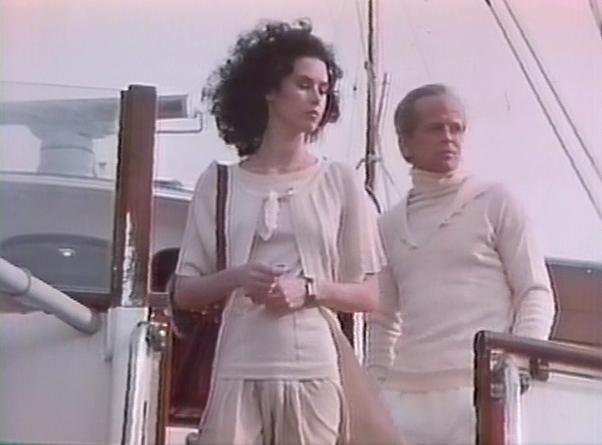
This is not the last we see of Alexander, however, as he later hires Elizabeth to travel on a trip to the Bahamas with him and his guests.  He hasn’t hired Elizabeth for himself, but to entertain his son Frederick.   Alexander introduces his son Frederick as an “imbecile” and at first I wondered if he really was supposed to be a bit simple – well, he was wearing a Mickey Mouse sweatshirt, so it is easy to see where Klaus is coming from!  But it seems that Frederick is the “idiot son” because he claims that when he inherits his father’s wealth he wants to give it away to the poor.  This idea is laughable to Alexander who says he detests the word generosity. 

Elizabeth gets an idea that maybe Alexander is a bit of a monster – I wonder where she got that idea from?!!  He’s rude to his son and says there’s no room for generosity in the world.  But he claims that that’s not all there is to him and in a speech that mirrors Klaus Kinski’s real life he says:  “I’ve done it all!  Had it all!  And there is only one thing in my life that I care about: my son.”

But Alexander’s idea of caring about his son is a little untraditional: “I want him to be a man.  I hate his weakness.  There is one lesson that he has to learn – and the sooner the better – with money he can buy anything!” (Note, my copy of the DVD, 905 Entertainment, US version, I guess, has a slight fault here and the final sentence of this sequence is repeated twice for no apparent reason). 

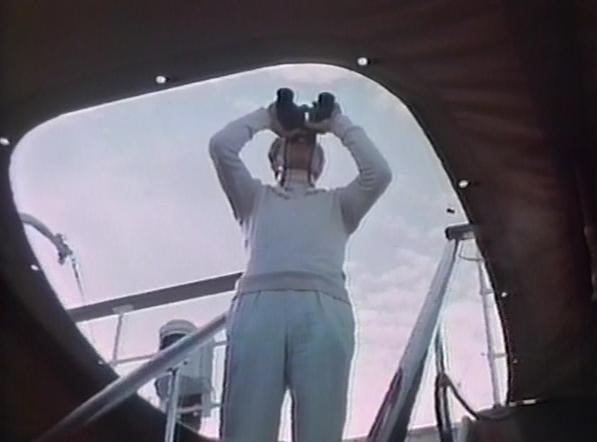
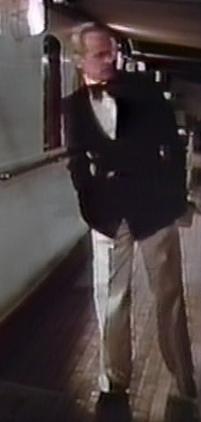
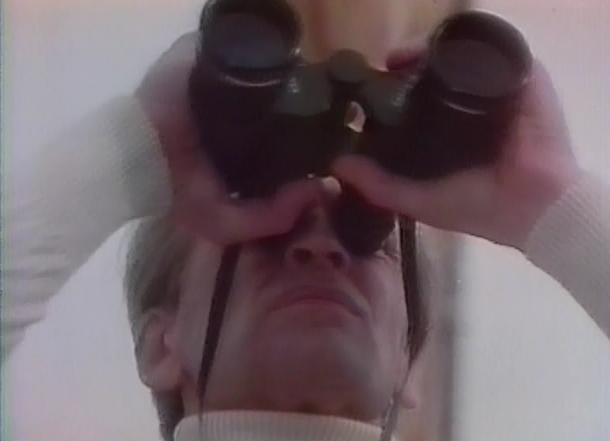
As if to prove the point Alexander has “bought” Elizabeth to make Frederick into a man.  Although Frederick is not too interested initially, Elizabeth wins him over (Alexander watches in the distance with the aid of binoculars, to ensure that Elizabeth manages to entice him to do the deed) and strikes jackpot.  Well, she thinks she does – but later Alexander pays her, tells her she’s got the wrong idea if she thinks she’s going to marry his son and then sees her off the yacht before she can say goodbye to Frederick.  She shouldn’t be disappointed – after all, she was being paid and what made her think that Frederick was different to any other client?   

Meanwhile, back at the ranch David is being pursued by various interested parties who want to get their hands on both him and his photographs – things are hotting up a bit and David is trying to keep a low profile until he can meet with an unnamed contact to hand over the photographs.  He heads over to Anne-Marie’s apartment to do the exchange but when Lefevre arrives saying he’ll give him a free ride to the border in exchange for the photographs, he doesn’t just mean the photographs of Madame Claude’s girls; he wants the photographs of the clients too.  In fact, he doesn’t just want them, he insists on having them – with a gun for a bit of added persuasion.  Anne-Marie, unfortunately, walks in on the exchange.  The next thing you know Anne-Marie has been killed by someone (it’s unclear who), the photographs have gone (no one is sure who has them) and David has been beaten up.  When he manages to recover himself, he flees the building and steals a taxi to make a getaway.

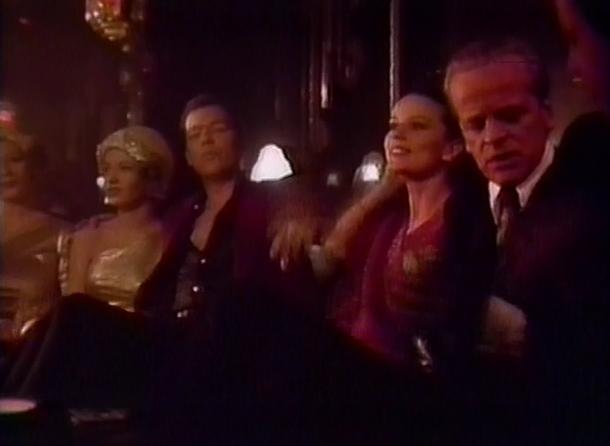
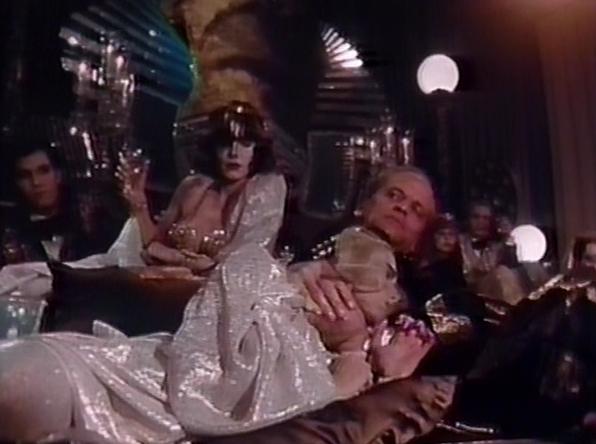
David goes to a country mansion where Hugo and Alexander are hosting an orgy, apparently for Hugo’s wheelchair ridden elderly father – the mind boggles… David’s requests for help are denied and when he says he believes someone is going to kill him, Alexander indicates to Hugo that they need to get David off the premises as soon as possible.  I guess all the blood would ruin Alexander’s lovely golden orgy jacket.   And there’s nothing like a bit of murder for putting a dampener on a good old fashioned sexual orgy now, is there? 

David is seen off the premises, the orgy recommences and then Hugo and Alexander decide on a whim to set off for Mexico, bundling girls into their car to take with them – well, someone has to carry to the suitcases, don’t they? 

Meantime, David wanders around the woods, dazed and terrified – talking to himself, shouting to anybody or nobody – until he meets his end with multiple gunshot wounds. 

It seems that someone else got their hands on the photographs; Washington dropped their case and were no longer interested; Madame Claude’s organisation suffered a down-turn in clientele as a result and the whole incident made Elizabeth leave the business.  But who cares, really?

You see, crime never pays.  And neither do these films.  If you watch the film for a bit of sex and nudity, you’ll be disappointed – they’re the most unsexy films with just a few tit shots and a bit of moaning and groaning; if you watch them for a coherent story line, again you’ll be sorely disappointed.  If, however, you watch them for Klaus Kinski being a very naughty boy, then I guess we have a winner.  Yet another classy performance from Mr Kinski complete with a bit of manhandling and some smoke blown in the face for poor old Murray Head. 

The soundtrack is provided by the wonderful Mr Serge Gainsbourg (if Klaus is my favourite actor, Serge is my favourite everything else!) and this is, if truth be told, the real reason I bought the film in the first place.  The main theme for the film is Yesterday Yes a Day which is one of the loveliest songs Jane Birkin has ever recorded, so Madame Claude does have its selling points after all.  Gainsbourg had turned down the offer to provide the soundtrack to Just Jaeckin’s Emmanuelle in 1974 and lived to regret it when the film went on to gross $100M worldwide – I guess he felt he couldn’t afford to turn down Jaeckin’s Madame Claude after that, and also Emmanuelle 3 (Goodbye Emmanuelle), although he would have been wrong as they were neither destined to be as popular as Emmanuelle.  Never mind, Serge!
Kinski’s acting methods:

Hand in pocket as ever:

Sometimes Klaus throws in a double (both hands in pockets) to keep us on our toes:

WARNING * KLAUS KINSKI QUOTES CONTAINING

OFFENSIVE LANGUAGE *

Other information about the film:  Christian David claims in his Kinski die Biographie (Aufbau, Berlin, 2008, pp248-249) that Jaeckin’s request to work with Klaus was initially met with some resistance by the film’s producers, surprise, surprise! Apparently, and excuse the poor attempt at translating from the German text, they were concerned that Klaus would ruin the film because he doesn’t listen to anything or anyone, won’t be directed and would only be interested in the money on offer. Sounds about right.   But what is truly surprising is that Jaeckin proved his producers were wrong because Klaus actually behaved himself and according to Christian David he took his work seriously, did not treat Jaeckin badly, was not domineering and pulled no tricks.  And although they discussed how the role should be played, Jaeckin was under no illusions about Klaus and his usual behaviour – he was always “diplomatic” with him and kept an eye on the fuse to prevent the bomb from exploding!

According to Kinski Uncut (Bloomsbury Publishing, London, 1997), Klaus once dated a certain Jasmin, former prima ballerina of the Oslo Opera, who he says was one of Madame Claude’s girls.  He relates the sorry tale (pp111-116) and here are some extracts:

Meanwhile Jasmin has been hard at work.  She refused a striptease offer because the money wasn’t good enough.  But she seems to be making a lot of money anyway.  The dress she’s wearing on her naked skin much have cost at least a thousand francs. [Jasmin]…“I was a call girl.  Those are girls who get hooked up by phone to businessmen, diplomats, politicos, movie stars, and so on.  But also vice squad cops.  They don’t pay… Our madam is an ex-hooker – Madame Claude.  Her office is on Rue Lincoln in the Eighth Arrondissement.  Everything goes through her office, the calls, the appointments, the payments, everything.  We have nothing to do with any of it.  She keeps thirty percent of the fee, and we get the rest.  I’ve saved a lot of money.  …On average it was thirty to thirty-five [clients] a week.  …The girls get between a hundred and a hundred and fifty francs [per guy].  Sometimes you get a tip.  That doesn’t go through Madame Claude, of course.  …the girls say that some of the johns are high-ranking politicians and police officials.  Madame Claude pays us for the cops so that we don’t have to do freebies.  The cops reciprocate by protecting Madame Claude’s organisation.  Aside from movie stars, whom we recognise of course, all I know is that the shah of Iran gets girls from Madame Claude whenever he is in Paris.” …I fly to Munich to see Pola.  Meanwhile Jasmin flies to Berlin to look for an apartment.  But by the time I arrive in Berlin, she’s dead.  She was struck by a hit-and-run driver on Clayallee; they were bringing her to the hospital with a badly fractured skull and she died en route.  I could see her – she’s at the morgue – but I don’t go.  I couldn’t take it.  I return to Paris and stay in the same room where Jasmin told me about Madame Claude.  When I run out of money to pay the hotel bill, I sleep under the bridges of the Seine.  At first the clochards leave me alone, and I figure they accept me.  But then they change their minds about letting me sleep near them.  They drive me away, hurling rotten tomatoes at me.
Despite the fact that the film was being made by one of Klaus’ “friends”, Just Jaeckin, Klaus did not sound too happy about being involved in the film – even though the film seems to have had its perks (Kinski Uncut, p253):

It’s an insult that I have to do the movie Madame Claude, and here in Paris to boot.  The salary is also wretched.  But we need the money.  The girls who play Madame Claude’s prostitutes in the movie fuck like professionals.  Especially the very young ones, but also the married ones, whom I can fuck only if their husbands are briefly out of town.  A very young extra has a tiny, almost naked cunt, like a mouth, very tiny ass cheeks, and very tiny tits.  I always have to telephone her horny mom before I can fuck the daughter.

Klaus, Klaus, Klaus…!!!


Click the image to purchase from Amazon

Posted in Film Review | Tagged , , , , , , , , , , , , | 2 Comments

Klaus Kinski wears tight, white ski-pants

The Soldier aka Codename: The Soldier; Der Söldner; Le soldat (Dir James Glickenhaus, 1982)

Basic plot: When Russian terrorists steal a nuclear device, they hold the world hostage by declaring that they will contaminate half of the world’s oil supplies unless the Israelis pull out from the West Bank.  The US government calls on an anonymous agent, codenamed The Soldier, to assist them in finding a resolution to the matter

Cast: Dracha – Klaus Kinski; The Soldier – Ken Wahl; Susan Goodman – Alberta Watson; Ivan – Jeremiah Sullivan; The President – William Prince.

Filming locations: Buffalo, New York, USA; Kurfürstendamm and other locations in Berlin, Germany

Release date: June 1982

Availability:  The Soldier is available on a Cinema Club DVD, which includes the film trailer as a bonus feature.  The DVD costs about £8 including postage from Amazon.

The film in full – *SPOILER ALERT*:

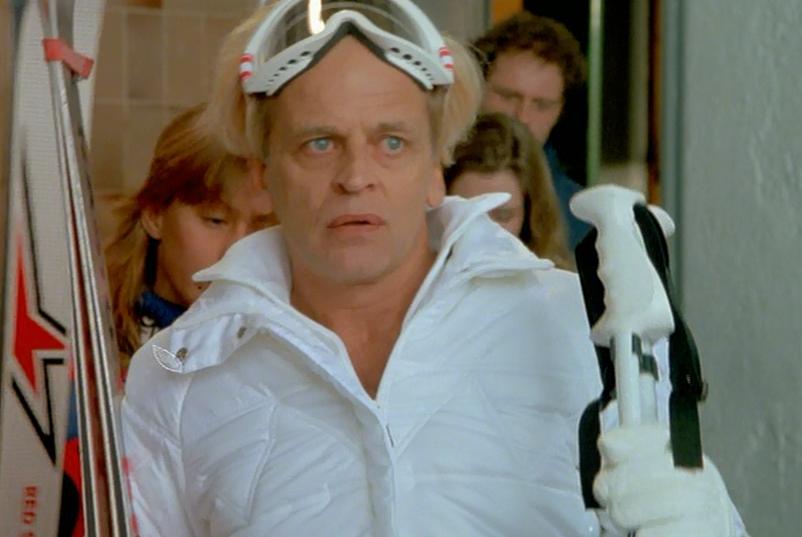
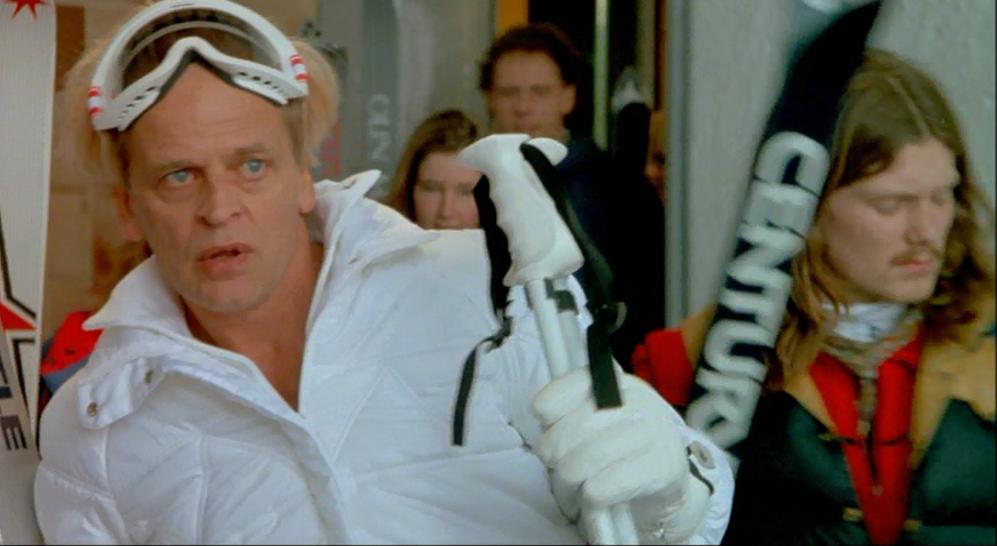
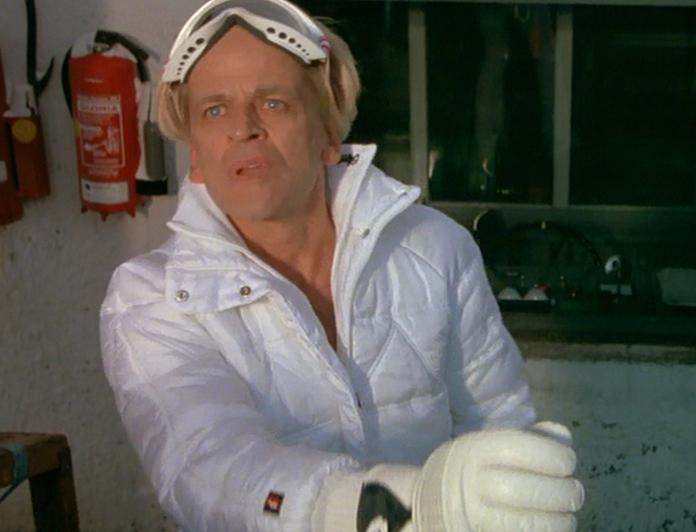
Well, if you like helicopters, massive explosions, men on fire, dead bodies everywhere and ski-chase shoot-outs, then this is the film for you.  Unfortunately that’s not at all my cup of tea and, unfortunately for me, Klaus Kinski, who definitely is my cup of tea, is not in the film for very long at all.  Expect to see Klaus for just the one sequence at about 30 minutes into the film – it’s all over within less than 3½ minutes.  On the plus side, you get to see his tiny buttocks encased in tight, white ski-pants.  What more could you ask for?

As for The Soldier – I must admit because of the DVD cover (and the way Amazon market the film) I had originally thought the film was called Ken Wahl Codename: The Soldier and only realised later that he was in fact the “star” of the film.  Apparently Ken Wahl was in The Wanderers but it’s been so long since I saw that film that I can’t recall him if he was.  Anyway… hereafter known as The Soldier Ken Wahl, ah yes! What happened in the film?

The best thing about the film, apart from Klaus’ tiny appearance, is the stylish opening credits along with the Tangerine Dream soundtrack.  But aside from that, from what I can gather The Soldier Ken Wahl is in charge of a special force “completely outside the normal channels”.  There are only five members of the unit and they are superbly well-trained.  The Soldier Ken Wahl reports only to the Director of the CIA.  The Director contacts The Soldier Ken Wahl for assistance when a group of Russians steal some plutonium and potentially hold the world hostage by declaring that they will detonate their device and thus contaminate half of the world’s oil supplies unless the Israelis pull out from the West Bank within 96 hours.  

The scene where the Russians steal the plutonium is a laugh – they blow up the lorry and two cars which are protecting the plutonium but somehow the contents remain totally intact.  They remove the plutonium and escape with it in the boot of an Alfa Romeo. 

Naturally the Israelis are not prepared to pull out of the West Bank, so disaster seems imminent.  At this point the US “unleash” (unofficially, of course) The Soldier Ken Wahl to save the day – you don’t assign The Soldier Ken Wahl, you unleash him, according to the film’s tagline…

Before he will take on the job, The Soldier Ken Wahl wants to know if the Russians are really behind the threat.  The Director of the CIA does not authorise anything but lets slip that Dracha, a Russian KGB agent, is allegedly on a skiing vacation in St Anton, Austria.  Although he’s a loyal KGB agent, Dracha (Klaus Kinski) has always been straight with the US in the past, so The Soldier Ken Wahl heads off to St Anton to see if he can get any information out of Dracha.  Have they not heard of telephones, these special agents? 

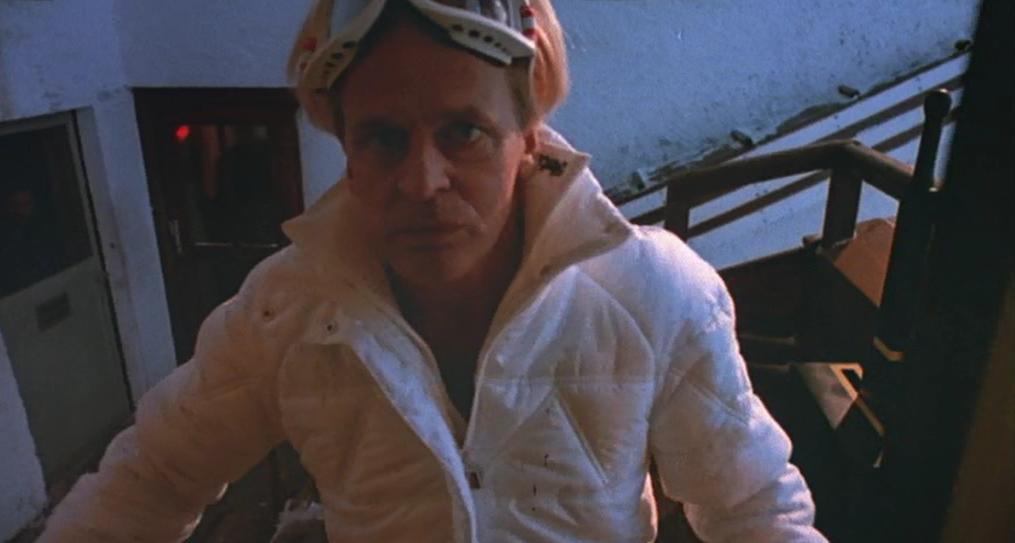
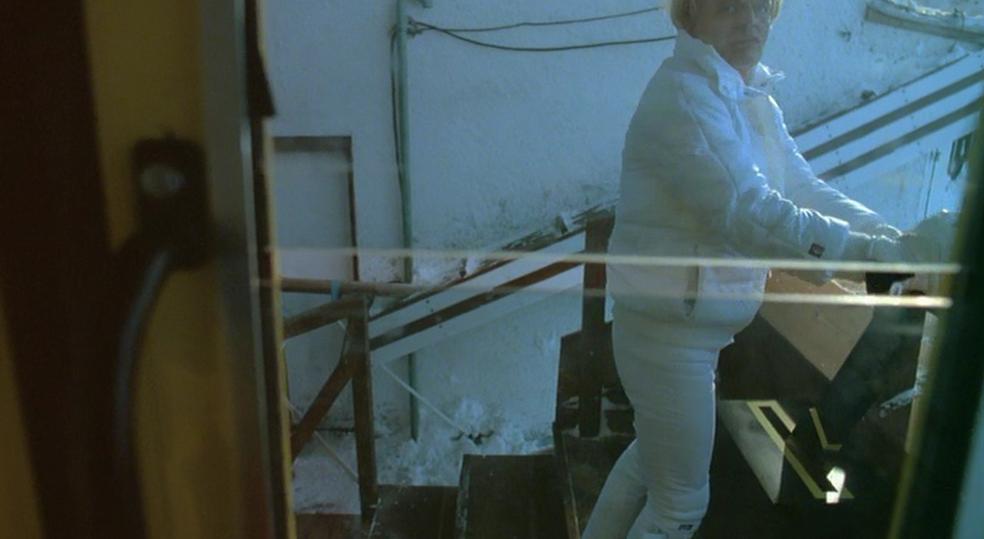
Anyway, here comes Klaus… dressed from head to toe in white ski gear, including goggles worn on the forehead.  Fantastic!  He spends the 3½ minutes doing the following:

  • Staring at The Soldier Ken Wahl
  • Staring moodily out of the ski lift window
  • Pouting
  • Pretty much not talking at all (apart from two lines of text: a) What does the rest of the CIA think of this idea of yours?, b) I see)

The Soldier Ken Wahl is totally unaware that he is now on the KGB’s wanted list because he was responsible for the deaths of four KGB agents (who are apparently trained to use prams to trick diplomatic limousines into stopping before they make their attacks!).  His trip to see Dracha leaves him in their direct firing line, so when they finally stop staring each other out, Dracha and The Soldier Ken Wahl make their way to a private ski lift and chat briefly (see comments above, you can hardly call that a chat, can you?) before Dracha locks The Soldier Ken Wahl in the ski lift and sends it off on its journey.  A couple of KGB agents are concealed on the sides of the slopes waiting to shoot down the ski lift with The Soldier Ken Wahl inside.  But The Soldier Ken Wahl is too clever for that (he’s superbly well-trained, see?) and has already kicked his way out of the lift and is down on the slopes skiing (when did he get the skis on?!!), in a high speed chase with some agents wielding guns.  Dracha sees the escape, looks vaguely concerned and then flees.  That’s the last we see or hear of him – unless I fell asleep for the rest of the film, which I don’t think I did.  Sadly.

Anyway, the rest of the film is what you’d expect – more of the same, fights, explosions, car chases etc – and when the Director of the CIA is blown up (the Russians planted a bomb in his desklamp), The Soldier Ken Wahl finds himself operating totally outside of governmental channels and with only his four unit members for assistance.  He doesn’t die – he can’t because he’s The Soldier Ken Wahl – but he does sustain a variety of injuries and gets to have some kind of love interest thing going on in between attacks (which I believe is compulsory in such films – I’ve not seen many of these films, but there’s always a love interest somewhere), plus a massive car chase across the Berlin Wall.  Blah, blah, blah.

Not one of Klaus’ best choices, this one – and that’s saying something! When they say Dracha’s allegedly on a skiing vacation, I reckon Klaus actually was on vacation there and the director saw him and asked him if he wanted a day’s work for pocket money because I can’t imagine that it was the role that drew Klaus to take the work. 

Kinski’s acting methods:

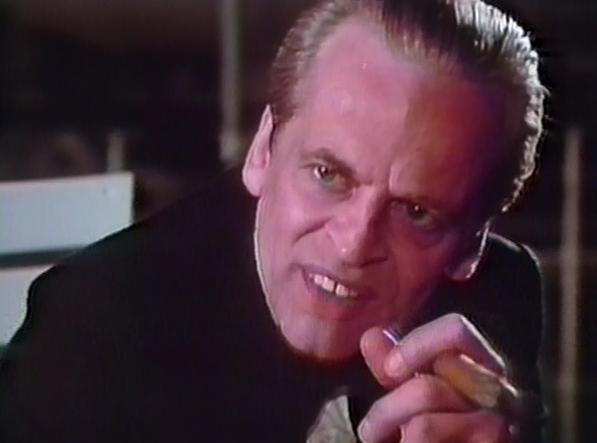
What with all the ski gear to carry, Klaus was unable to put his hands in his pockets as is his wont – he probably couldn’t have pockets in those ski-pants as they only just fit where they touch! – so there are no shots of Klaus performing his usual schtick.  Instead, he does get to do what he does best – STARE and look out of windows moodily.  There’s so little to go on with this film, what else can I say?  I’ve provided lots of Klaus shots to illustrate the review and brighten it up a little instead.

Klaus is listed as making a “special appearance” in The Soldier.  I’ll let you into a secret, shall I?  I think “special appearance” is a codename for a blink -and-you’ll-miss-it appearance!Other information about the film:  In his book Kinski Die Biographie (aufbau taschenbuch, Berlin, 2008), Christian David says Klaus was paid $15,000 plus expenses to fly over to St Anton for filming between 11 – 13 January 1982.


Click the image to purchase from Amazon

Posted in Film Review | Tagged , , , , , , , | 2 Comments

Klaus Kinski gets a whipping

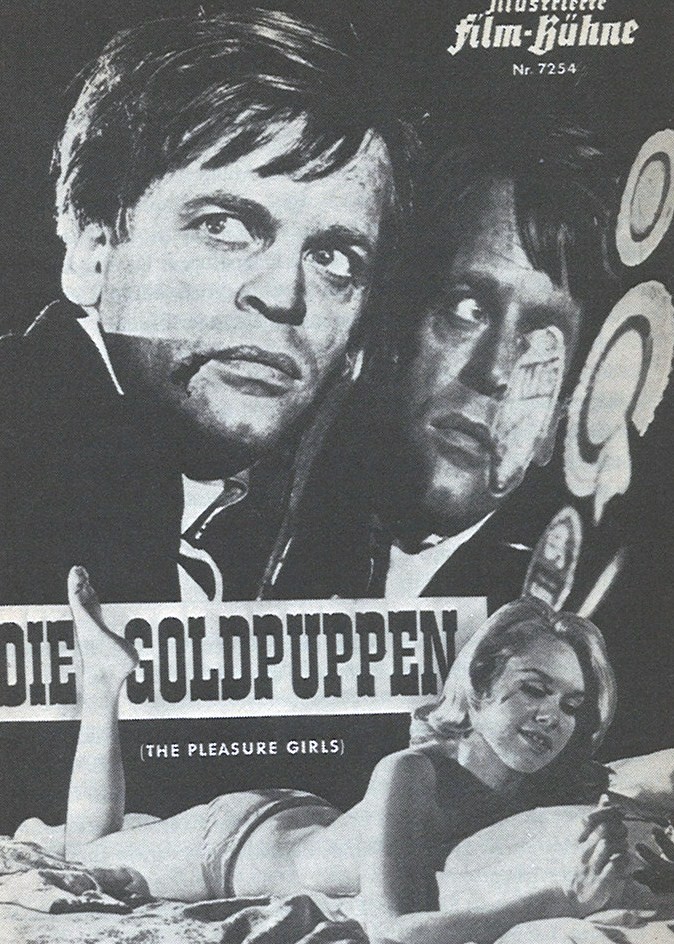
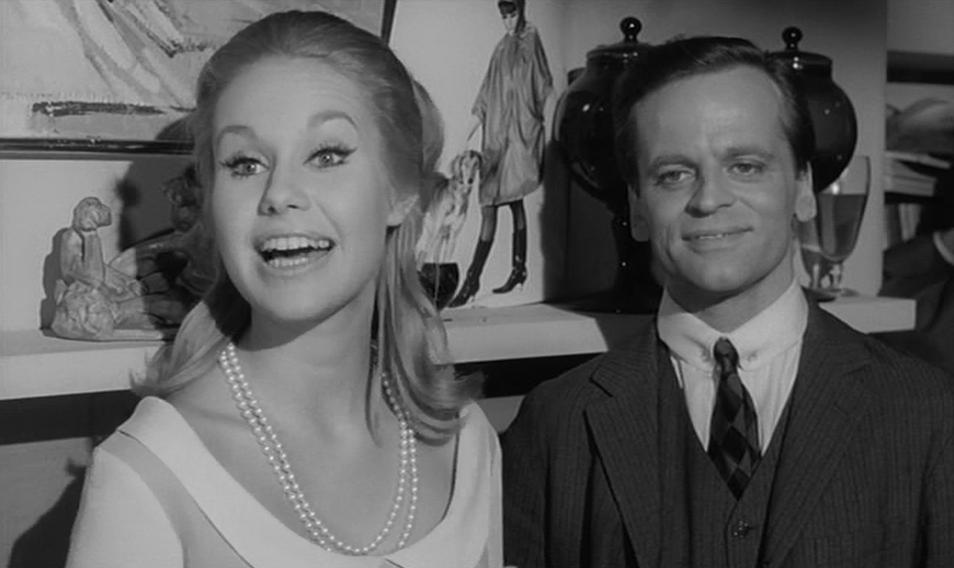
The Pleasure Girls aka Die Goldpuppen (Dir Gerry O’Hara, 1965)

Basic plot: Sally Feathers moves to Swinging 60’s London from the countryside to take up a career in modelling.  She lodges in a Kensington town-house with friends from her school days, Angela and Dee; Dee’s brother Paddy; and two other girls, Marion and Cobber.  The film follows the various ups-and-downs of their love lives over one weekend.

Cast: Nikko Stalmar – Klaus Kinski; Sally Feathers – Francesca Annis; Dee Wells – Suzanna Leigh; Keith Dexter – Ian McShane; Prinny – Mark Eden; Angela – Anneke Wills; Paddy Wells – Tony Tanner; Marion – Rosemary Nicols; Cobber – Colleen Fitzpatrick; Ivor – Jonathan Hansen.

Filming location: London – the house is 48 Lexham Gardens, W8 – and Twickenham Studios

Release date: 3 December 1965

Availability:  The Pleasure Girls is available on a BFI Flipside dual format Bluray / DVD set, which has a retail price of £19.99 but currently costs £10.99 from Amazon.  The set includes the alternative complete export cut on Bluray and the cut version on DVD with bonus features of the export version scenes, the original theatrical trailer and two unrelated but excellent short films (The Rocking Horse, dir James Scott, 1962 and The Meeting, dir Mamoun Hassan, 1964).  There is also a booklet including photographs and articles about the film.  The packaging is lovely.

The film in full – *SPOILER ALERT*:

Firstly, I should say that the original theatrical trailer and the various taglines for the film try to sensationalise The Pleasure Girls and make it sound far more shocking than it actually is – at least to today’s audience, anyway. 

Here’s the commentary on the trailer:

Meet the Pleasure Girls.  They came for the kicks, these bitter-sweet beauties of London’s bed-sitter land.  The big city offered adventure; romance; excitement.  The Pleasure Girls, they take the kicks and the shocks of big city life in their stride.  Ian McShane as a young photographer; looking for a quick development.  Francesca Annis as Sally; fresh and innocent.  Two people with burning ambitions – in love with life and each other.  To them it’s a city for conquests.  Klaus Kinski as the ruthless Nikko; he had money and enemies.  Suzanna Leigh as Dee – did she love the money or the man?  Mark Eden and Rosemary Nicols – Pleasure Girl loves Leisure Boy.  And she’s courting disaster.  Tony Tanner as Paddy.

And the taglines:

  • Kept in a plush pad for his desires… she played the game and paid the price!
  • They made love their way… ANY WAY!!!
  • Profane love was their pleasure
  • The tryst with a twist… it stopped, when she stopped paying
  • The boy they all liked… BUT he liked BOYS!

Well there is some truth in some of this but it’s not quite how they were selling the film…

Sally Feathers arrives in London on Friday, moving in to the Kensington town-house (which is hardly bed-sitter land) where her friends Angela and Dee already live with two other girls and Dee’s brother Paddy.  Sally is starting on a modelling course on Monday morning and has just the weekend to settle in to her new home.

At the house Sally meets Paddy, Dee’s brother – he’s a very friendly man and seems to be everybody’s best friend.  Sally is told that he “gives comfort to the lovelorn.”  Paddy is flirty with all the girls but he refuses Sally’s offer to attend the fireworks party with her and insists that she must go without him as he has an engagement he cannot postpone.  He has a friend called Ivor who is referred to as “wet” by Angela.  Keith, who Sally meets later, refers to Paddy as “drippy”.  It’s ironic that the one genuinely nice guy in the film also happens to be gay.  The film deals with this issue very obliquely – when Sally is upset later in the film, she barges into Paddy’s room looking for comfort and sees him with Ivor; they are both fully clothed and nothing seems to be going on between them but somehow the nature of their relationship becomes apparent to Sally and she flees.  She obviously feels uncomfortable at this discovery but Paddy also feels uncomfortable and wants reassurances that she won’t be writing off their friendship just because of his sexual preferences.

Cobber, the Australian flatmate, is a very peripheral character but what we know about her ties in very much with the theme of the film, which seems to be that the girls are all looking for wealthy men to pay for an expensive lifestyle for them.  Cobber wants to be an actress so is taking elocution lessons (which don’t appear to have worked at all) by day and works at the Crazy Horse Club in the evening where “she seems to meet loads of rich men”.  We discover that she used to date the photographer Keith but she dumped him because he was not rich enough for her.  She’s now dating someone called Peter.  When asked “Peter who?” she simply replies, “Peter E-Type”.  That says it all really.

Marion, the only other flatmate Sally has not met before, is a typist and we’re told that “she’s a nice kid, actually, but she’s very unlucky with the men.”  She is dating a man called Prinny who claims to be descended from Polish nobility, “a long way back”.  He is sexist, argumentative, aggressive and basically no good but Marion continues to date him anyway.  Her flatmates do not hide their disdain for Prinny – in fact he appears to be widely disliked and derided wherever he goes – and yet Marion does not let this bother her.  As Keith says of Prinny, “He’s no gentleman, the Prince.” Although Marion is not dating for wealth like the other girls, Prinny appears to be dating her for her money instead. He is always cadging cigarettes and never takes Marion on dates, presumably because he does not have the money to do so.  Instead they stay home and he gets her in the family way.  When Marion tells Prinny she is pregnant he is not best pleased and insists that she gets an abortion, which will cost £50.  He has no money to pay for the abortion and Marion has very little herself so he forces her to pawn a brooch that her grandmother gave to her even though she does not want to do so.  

She tells Prinny that the doctor says they should forget the abortion and “try and make a go of things”, but this idea does not appeal to him at all so he takes the brooch out of Marion’s bag and says he will get the money they need for the abortion and then save up to get the brooch back.  But Prinny does not pawn the brooch, he takes it to Nikko and asks him if he knows anyone who would buy it; Nikko buys it for his girlfriend for £105.  He then goes immediately to the casino and gambles all the money away, plus more besides.  The other men at the gambling table refer to Prinny as the Prince of the Ponces.  Later, in return for a bounced cheque, Prinny gets his comeuppance. When Marion discovers what has happened to her brooch and that Prinny has lied to her, she tells him that aside from the money he also put her on the gambling table and he lost.   She has decided to have the baby anyway, without Prinny, and later turns him away when he arrives at the house asking to come in to get away from some men who are going to cut him up. 

Angela, Sally’s school friend, seems to be a beatnik in training.  Although attractive she does not appear to do too well with the men and is something of a peripheral character to the story.  In one scene she has been stood up by a date and although there is a man interested in her, she refers to him as The Old Sport and tries to avoid him.  She tells him she won’t be attending a party as she will be “washing her hair”, when really this is because she does not want him to tag along.  This does not stop her, however, from accepting the drinks he buys for her. 

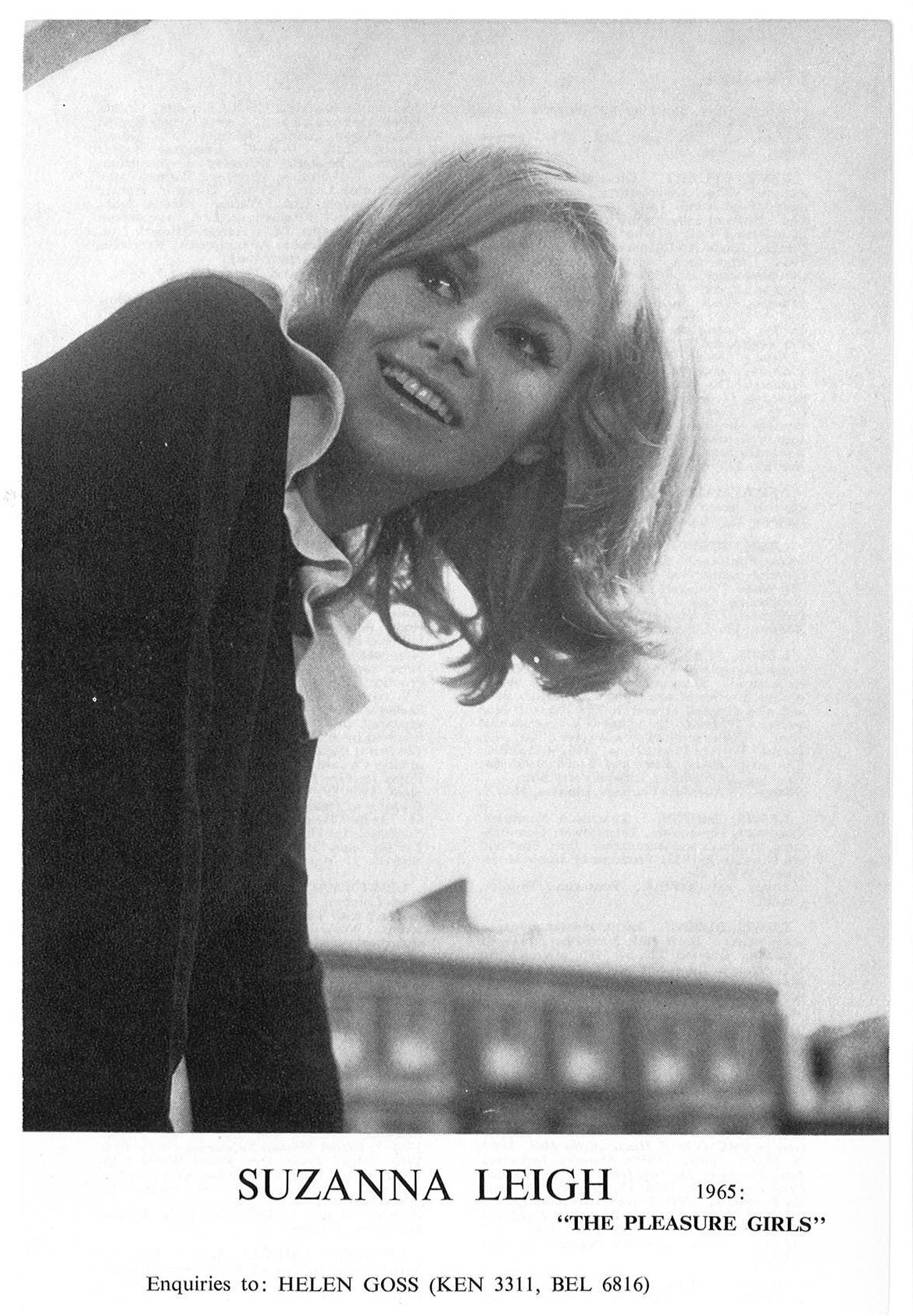
Dee, Sally’s other school friend, is very glamorous (played by Hammer House actress Suzanna Leigh). 

Despite the fact that she is dating Nikko, she says she should get a job at the Crazy Horse cabaret club like Cobber so she can meet loads of rich men.  When Angela tells her that this sounds “awfully mercenary”, she says that when she marries it will be “for love AND money”.  Angela is not the only one who thinks Dee is motivated by money, Keith, who is a fairly astute judge of character, says, “She picks ’em like a water diviner… Dee knows [Nikko is ruthless], only she’s money mad; she’ll sit with him every night in the casino, and every time he wins he’ll give her a few chips.” 

In the next scene, we discover that what Keith says is the truth, as Dee takes the chips Nikko gives to her and cashes them in.  But when Nikko offers to buy her a mink coat she refuses saying she does not want to be “minked up like a tart” and would rather have a car instead.  However, later in the film, when she encounters Nikko’s drably dressed wife at the hospital she is indeed wearing a mink coat. 

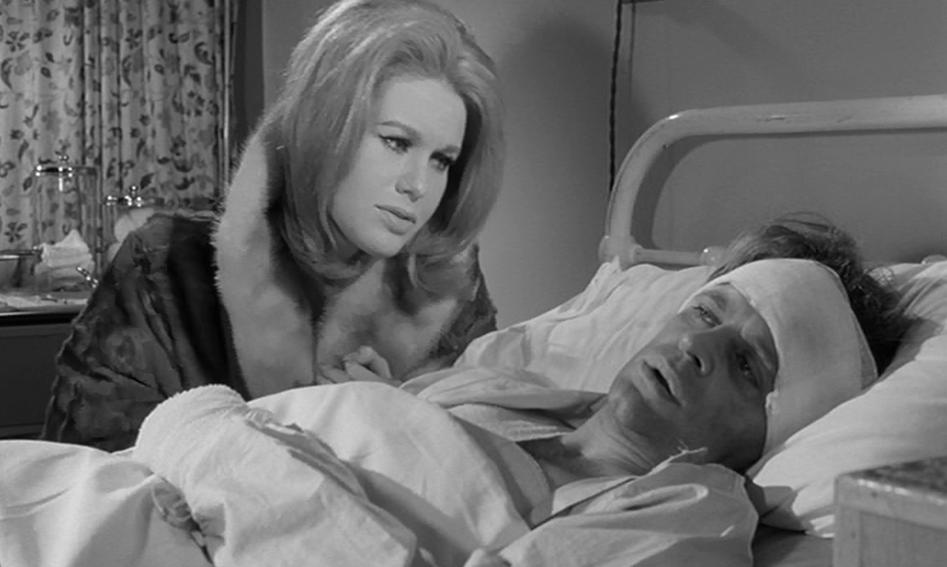
All this said, Dee does appear to genuinely care for Nikko and encourages him to give up his line of work after witnessing a set-to with a rival gang; she also wants him to make a honest woman of her by divorcing his wife and marrying her.  Dee comes to Nikko’s rescue twice and then when he is in hospital, wounded after the second attack on him, she says she loves him and would never leave him, not even if he was broke because she now realises what she could have lost.  So although Dee does seem to be the minked up tart she refers to, she is a tart with a heart after all. 

Nikko, as he’s played by Klaus, we’ll save for later and take separately…  

Sally is “fresh from the country” when she arrives in London on Friday afternoon, declaring herself to be “on the career kick, no time for love.”  Friday evening she goes to the fireworks party. 

At the party, she meets Keith who is a young up and coming fashion photographer; Sally is hoping to become a model.  Keith is a little direct for Sally’s tastes and as he seems to know everyone from the King’s Road, he has already formed an opinion of them and offers it up willingly, “Come inside and I’ll mark your card.”  It has to be said that aside from the comment he makes about Paddy being “drippy” (he’s a bit embarrassing and annoying at times with his over-enthusiastic twitterings but that’s the worst thing you can say about Paddy), everything else he says about everyone else is true. 

Despite taking offence at some of Keith’s comments, Sally cannot help but be interested in him (back in those days Ian McShane was actually quite a looker, so it’s hardly surprising).  Nonetheless, Keith has a (brief) history with Cobber and the other girls do not take his work seriously (Dee asks how he’s doing with the passport photographs).  He is also a bit persistent in his requests to go home with Sally.  In fact, it all seems a little crazy that they met on the Friday and are both declaring love for each other on the Sunday.  When Keith arrives to take Sally out for a drive in the countryside on Sunday it is an unannounced visit despite that fact that she had said she would be unavailable on the Sunday; Keith does not want to take no for an answer.  But he has to – at the end of the night he puts the pressure on again, saying that although he loves Sally he cannot wait to spend the night with her and so she storms off upset.  Paddy tells Sally that if Keith really cares he will be back and he is right as Keith redeems himself when he arrives on Monday morning to drive Sally to modelling school.  There is hope…  It is also noticeable that Keith takes Sally “the country girl” out to the country for a drive – the characters in the film are all said to want to “see life” in London and yet Keith is taking her away from that life, perhaps because the life they are surrounded by in London is at times sordid or at the very least not ideal.  Keith is probably hoping to protect and shelter Sally from that side of Swinging London, whilst at the same time trying to get her to come home with him!

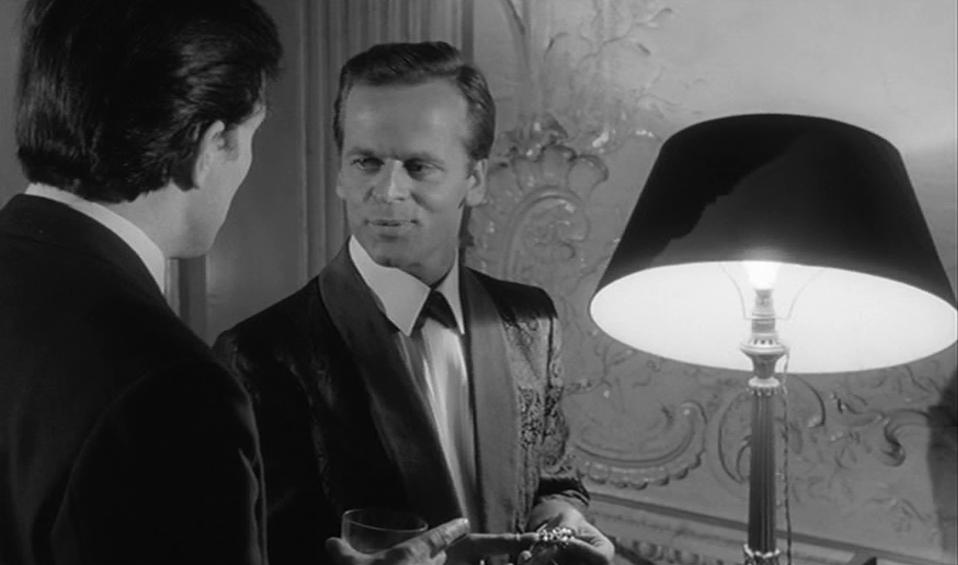
Klaus plays Nikko Stalmar, a wealthy landlord involved in a rent racket, letting run-down properties to poor immigrants. Nikko wears sharp suits and smoking jackets and has a beautiful central London apartment where he entertains his glamorous girlfriend Dee. 


It’s implied that Nikko has a wife and family living in a house in Mill Hill (North London) where he returns at the weekends.  Otherwise he spends his time collecting rents from his tenants along with his henchmen and a big dog.  Nikko says he is addicted to gambling and maybe that’s true – when he’s not at the casinos with Dee on his arm, he plays the slot machines in the bars they frequent. 

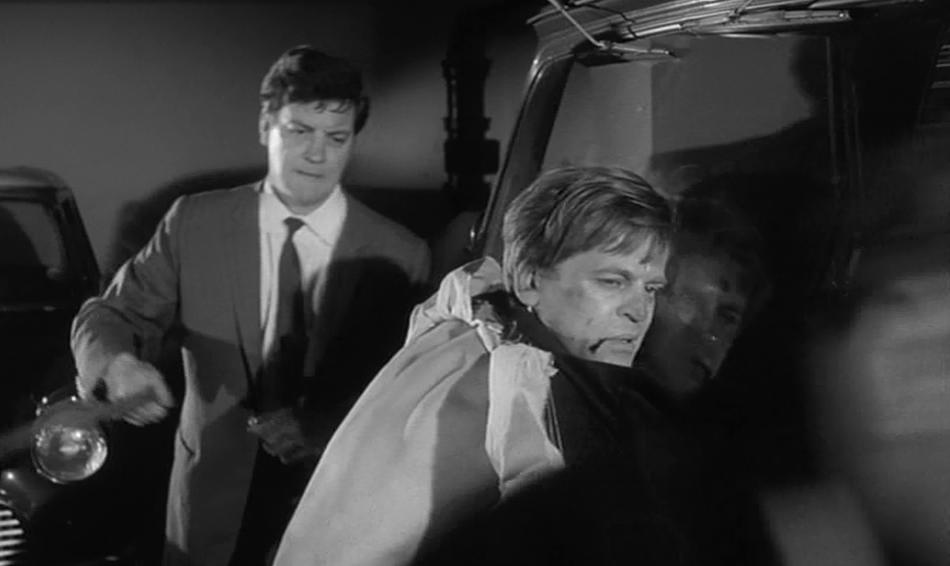
But he also gambles with his own life as he is constantly under threat from rival gangs and from his tenants who are fed up of the menacing way in which their rent is extracted from them.  Nikko narrowly escapes attack when Dee drives him to safety on one occasion.  On the second occasion he is not so lucky and is jumped by a gang who have come to see him “on behalf of the tenants” at the garage where he keeps his car. 

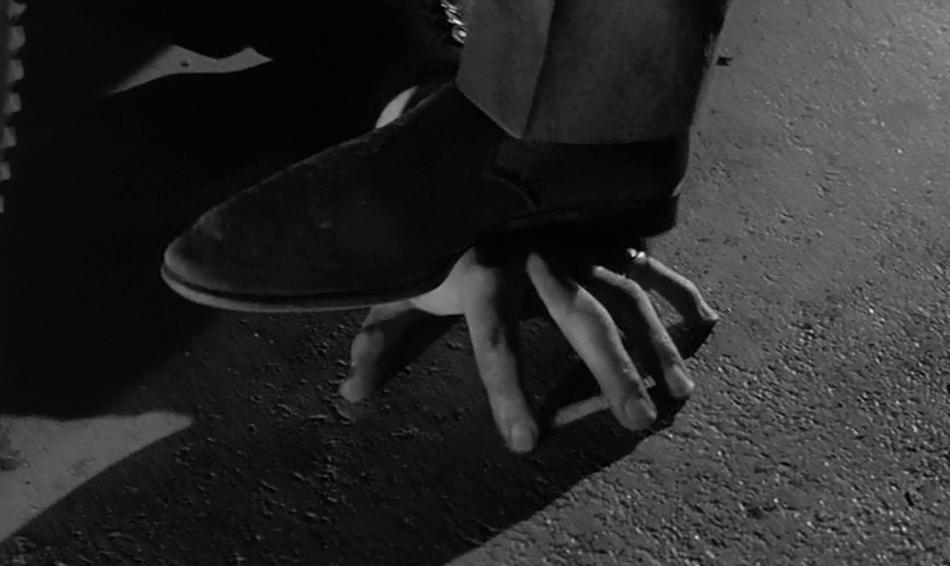
He manages to escape the gang initially but is found hiding under a car and is beaten up and whipped. 

Luckily for Nikko, Dee again comes to the rescue looking for her ring which she believes she has left in Nikko’s car. 

She raises the alarm when she discovers the garage attendant tied up behind the counter.  The gang flee and Nikko is taken to hospital for treatment with Dee accompanying him. 

 When Nikko was attacked the first time, Dee asked him to get out of the business – she seems to know the nature of Nikko’s business – and he says that he intends to do so and will leave his wife for her but asks her to move in with him in the meantime.  Dee refuses this offer as she says that her parents would not approve of her living with a man out of wedlock. 

Although Nikko says he will leave his wife, it is not clear that he is telling the truth.  This said, he does seem to care for Dee and despite all his other faults he has a good side to him and even takes her out on driving lessons so she can get a driving licence to drive the car she so desires.  When Dee realises that Nikko has unknowingly bought Marion’s brooch from Prinny, Nikko says that she can give it back to Marion and that she doesn’t need to say where she got it from, that she could say she found it on the floor or something rather than revealing Prinny for the louse that he is. 

It is this action which makes Dee realise how much she really likes Nikko, “You are a darling; if only people knew!”  “It’s only money,” Nikko says.  Which echoes what Prinny says as he gambles away the last £25 of the £105 Nikko paid him for the brooch.  And also echoes what Keith says as he treats Sally to dinner, although Keith appends it with “you cleaned me out, that’s all.”

The Pleasure Girls is about money but it’s about lifestyle too and ambition and morals.  It’s a great little film if you take it at face value – and it offers lovely cinematography, good acting and an infuriatingly catchy theme sung by The Three Quarters.  But if you look too closely there are too many issues being covered in one short film (it’s only 82 minutes long) – slum landlords; beatniks; Swinging London; compulsive gambling; pregnancy outside of wedlock; homosexuality; extramarital affairs; sex outside of marriage – in such a way that they are only touched on in the most perfunctory way, as are some of the characters who are not very well developed.  All that said, it works and it’s definitely worth a watch – and that’s not just for Klaus on this occasion!

Kinski’s acting methods:

Yet again Klaus wears his customary black leather gloves:

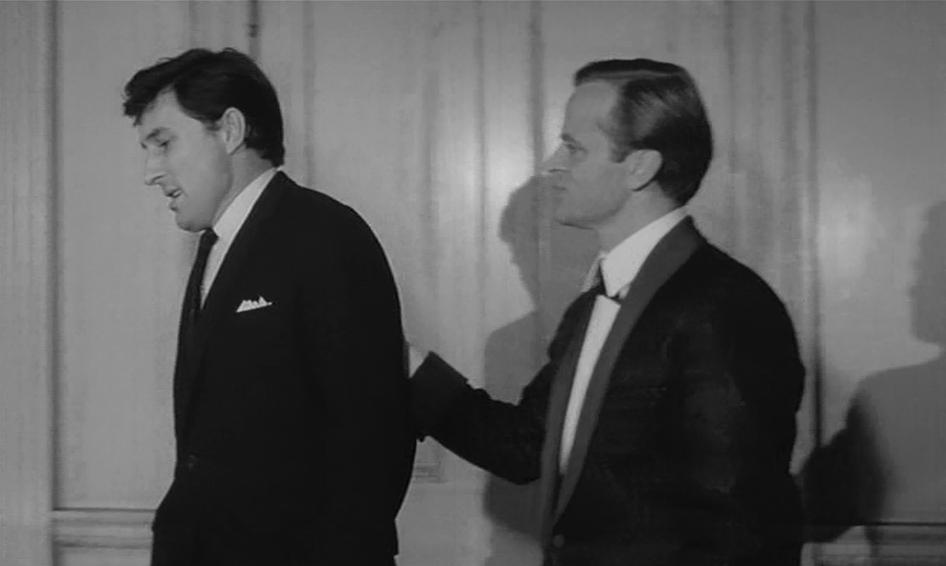
And saunters through the film with his hands in his pockets, where possible:

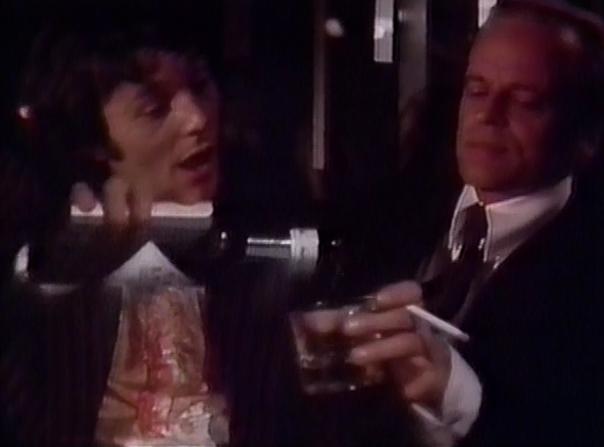
My favourite screenshot is this one where he finally has to take his hands out of his pockets to make a drink – he looks like his hands are welded into the pockets!

Other information about the film:  The film was shot in only four five-day weeks at a Kensington town-house as it was much cheaper to rent than a professional studio.  The director thinks the entire project cost £30,000 to make.  Klaus, who “just happened to be passing through town”, was paid £900 for 9 days’ work.    

O’Hara said he got the idea for the film when meeting with Raymond Stross to discuss some of his scripts.  Stross suggested to O’Hara that he should write about what he knew – and O’Hara was part of the ‘Swinging Sixties’ scene, spending a lot of time in clubs and discos, “regularly [hobnobbing] with the notorious landlord Peter Rachman and Mandy Rice-Davis over afternoon tea at the Kardomah coffee house on the Kings Road.”  He originally planned to call the film A Time and a Place

Once the script was completed O’Hara contacted Stross about working on it but unfortunately Stross had to pull out as he had a film lined up in America with his wife Anne Heywood; he assigned all copyright to O’Hara. 

In the BFI DVD booklet, Sue Harper says in her article, Getting On With Their Own Happiness – The Pleasure Girls, that initially the director Gerry O’Hara had written a script about Mandy Rice-Davis, Peter Rachman (a slum landlord in the 1960’s who made profits by intimidating his tenants), the Profumo Affair and illegal gambling dens.  The film touches on Rachmanism in the slum landlord character played by Klaus Kinski, but aside from the visits to casinos (where there was no indication that this was an illegal set-up) none of the other aspects of O’Hara’s original script remain.

The British Board of Film Censors examiners insisted that certain elements of the film be minimised, avoided or removed: showing a crumpled bed suggesting homosexuality; nudity between men; Mandy Rice-Davis; showing links between the Profumo scandal and the Royal Family; Rachmanism. 

Gerry O’Hara had previously made a film (That Kind of Girl – also available as a BFI Flipside DVD, which comes with a recommendation from me!) for the production company Compton-Tekli.  The company was run by Tony Tenser and Michael Klinger and specialised in exploitation films.  In getting Compton-Tekli to fund the production of The Pleasure Girls, O’Hara was subject to certain restrictions and conditions. 

“Klinger and Tenser were in control of the casting, and they signed Klaus Kinski on the grounds that he would bring an air of European sophistication to the project.  O’Hara was dismayed to find that Kinski’s English pronunication was so poor that he had to re-write the script: “since he couldn’t roll his ‘r’s’, I took out all the ‘r’ words,” O’Hara recalled.”

Klinger and Tenser also insisted on more bedroom scenes “with participants lying down”; they kept O’Hara out of the final edit; they apparently arranged to insert some orgy scenes into the final cut without O’Hara’s knowledge but when he found out he complained about this to the British Board of Censors and the orgy scene was removed from the final release; the film was marketed as an exploitation film.

An article on The Pleasure Girls on the Cathode Ray Tube website (http://cathoderaytube.blogspot.com/2010/05/british-cult-classics-pleasure-girls.html) indicates that Clive Donner had originally directed the majority of the film (about three-quarters of it) and walked out when Klinger and Tenser insisted on more sex and nudity.  This is when Gerry O’Hara is said to have stepped in.  The interview with Anneke Wills is very interesting but it’s at odds with what Gerry O’Hara and Sue Harper say in their articles – Wills indicates that O’Hara changed the title and used the theme song, which O’Hara actually says he despised himself and didn’t want to use…  

Revealing just how far times have changed, the BFI booklet indicates that one viewer was said to have complained about The Pleasure Girls, somehow suggesting that it would “incite juvenile violence at holiday weekends”!

Klaus is credited as guest star.


Click the image to purchase from Amazon

Posted in Film Review | Tagged , , , , , , , , , , , , , , , , , , , , , | 3 Comments

Klaus photos – until the next review is uploaded…

I just recently acquired these photographs of Klaus and thought I should post them until I can finally upload some new reviews I’m working on.  I was so pleased to find them; especially the tinted ones which look very attractive.

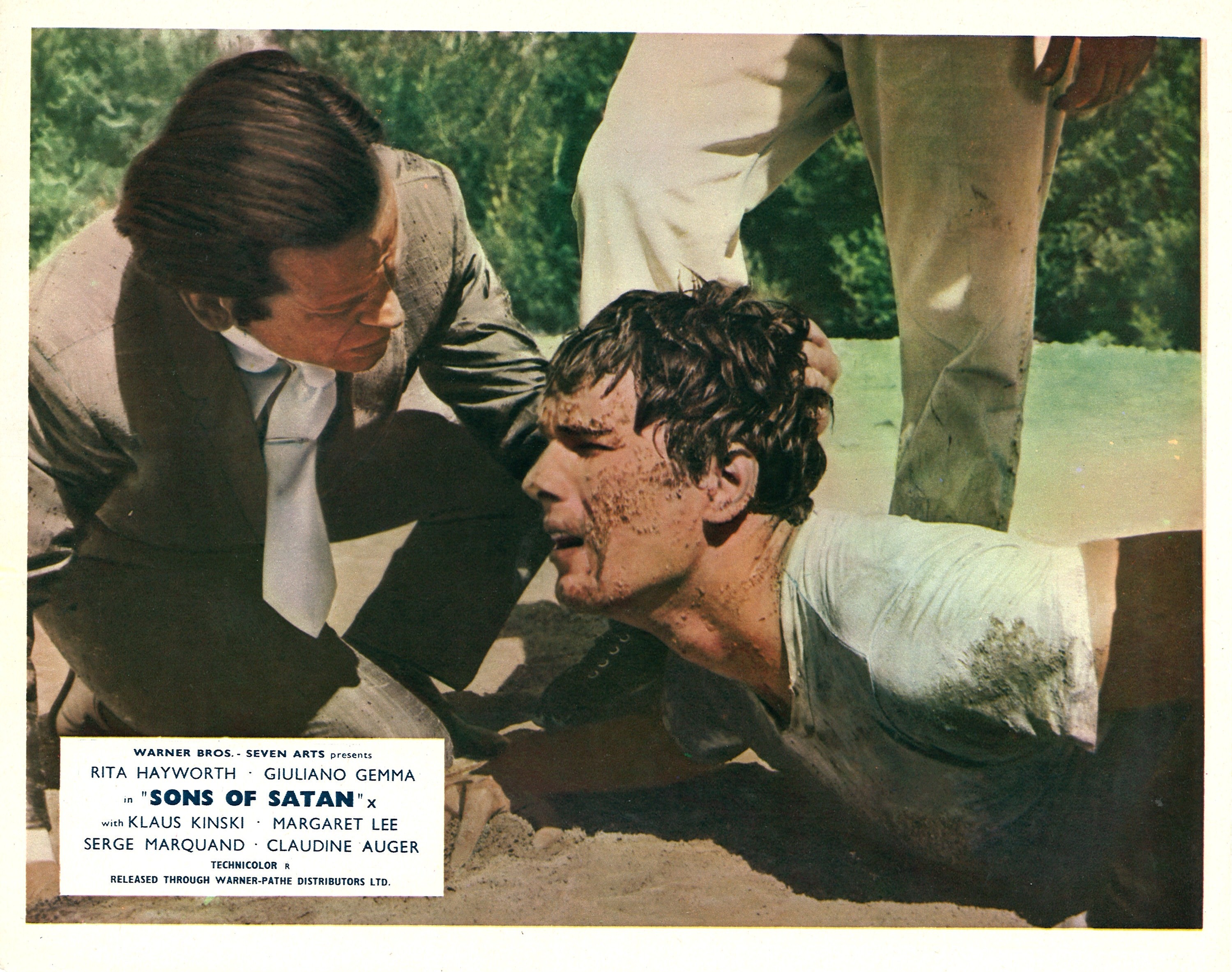
I haven’t actually seen Sons of Satan but really want to now as it looks good from the 8 stills I got in the lobby set I bought.  The surprise was Rita Hayworth.  I was convinced she was not in any of the photographs and was even laughing about “the older lady” in the photograph who is facing away from the camera, whilst her knees are front on; that, I discovered, was Rita Hayworth… Never realised she had such bad knees.  Check them out for yourself.

I love the fact that Klaus is tucking into some cake in this picture – it reminds me of the sandwich eating scene in Creature – and the fact that the other guy has a slice of cake in the palm of his hand whilst smoking a cigarette.  Classy service Klaus gets from his mum – yes, Rita Hayworth was playing his mum apparently!

Not sure what Klaus is up to here but it’s clearly no good!

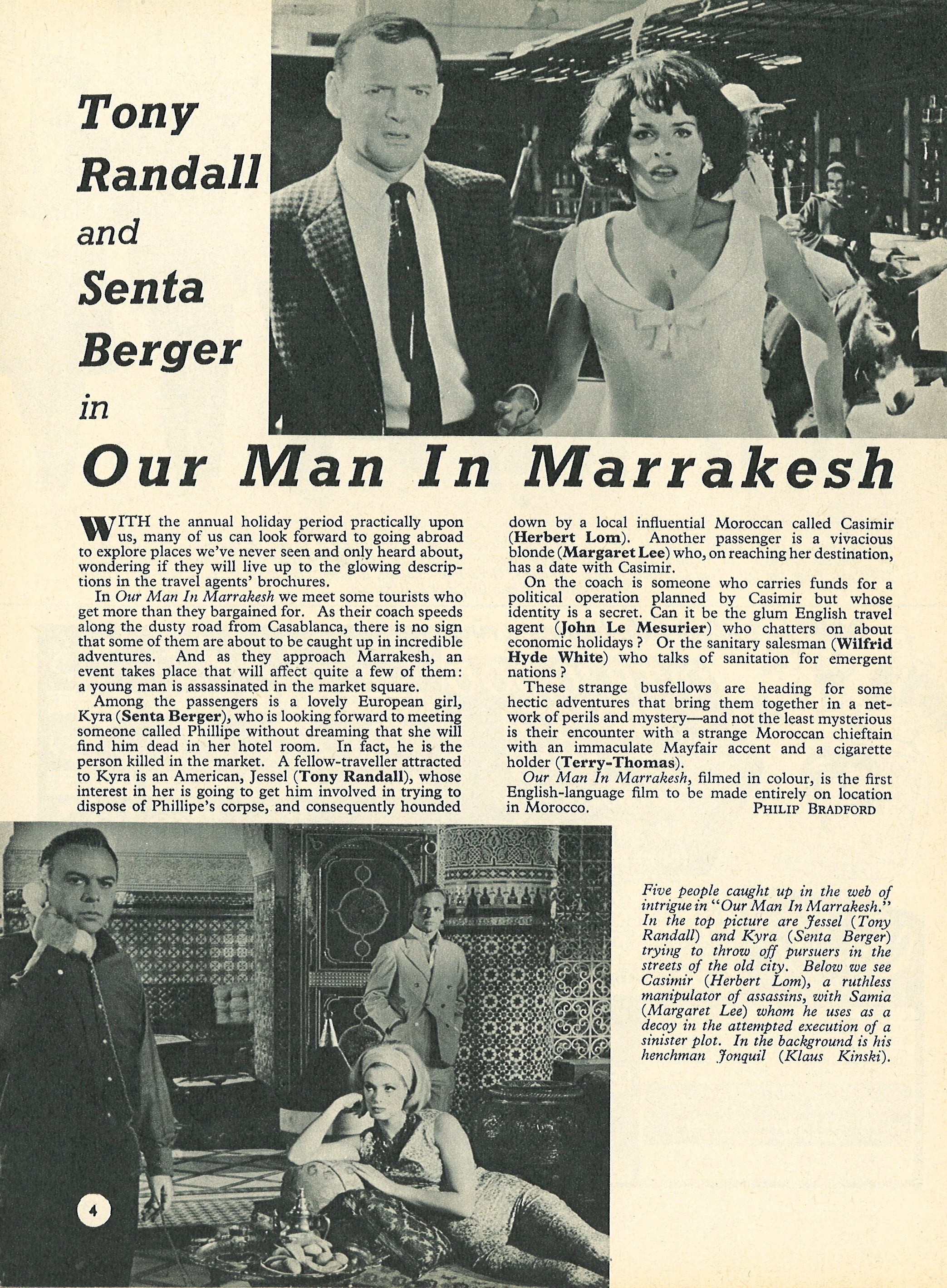
Aside from Sons of Satan I found some material for a film I have seen: Our Man in Marrakesh.

This is a review of Our Man in Marrakesh taken from the June 1966 edition of ABC Film Review.  Klaus does not get a mention in the review, although there is a rather lovely photograph of him with his hands in his pockets (as ever), loitering in the background whilst Margaret Lee and Herbert Lom have a chat.  Luckily I managed to find a lobby card set for this film too, also tinted, so here is the same photograph larger and in colour:

Klaus doesn’t even get a mention on the lobby cards, which is a bit of a shocker, but these are clearly UK or US issues and Klaus probably had a lower profile over here during that period. 

I’ll review Our Man in Marrakesh shortly but in the meantime, here is the final photograph of Klaus from the lobby set:

Looking very handsome…

Finally, I got some stills from Android.  All of this in one day – a good day for a Klaus collector:

At least I think it’s Android, as I recall Klaus trying to touch up the lady and getting caught out and that’s what he seems to be doing in these shots…I really enjoyed Android so I’ll get on to reviewing that too – soon. 

What’s my excuse for not being around to finish off any of my Klaus reviews?  Well, I have been busy making a special “limited edition of one” Klaus Kinski model for my boyfriend.  It became quite a complicated project.  I modelled it out of air-dry clay, painted it with acrylic paint and then decided I wanted dolls’ hair for it so I ordered some on the internet and had a nightmare glueing it on (NB dolls’ hair is meant to be inserted into the tiny holes on dolls’ heads, not to be attached to clay models…). 

That sorted, I decided to get a recordable microchip and record some Klausisms on it – which is when it became the Klaus Kinski Evil Face, as it shouts and curses quite a lot.  Surprise, surprise, eh?

Then I got an installation box for it and came up with the idea of making it into a faux product – the Evil Face – available only from Pisspoor Gallery (I was going for the Presspop Gallery look but I’m incapable, hence…).

Pity the picture is not too good – I really liked my work on the Evil Face logo, shamelessly stolen from the Evil Face DVD cover!

So, what (or who) is the target market for the Evil Face?

It’s all in the packaging:  Ever feel like you need telling off?  Ever need putting in your place?  Then you need the KLAUS KINSKI EVIL FACE!  Ready-programmed with a variety of reprimands for all occasions, the KLAUS KINSKI EVIL FACE will give you the talking to that YOU need!

But what does Klaus have to say for himself?

Select from the following rebukes:

  • You can lick my ass!
  • I’m going to smack you in the face – you can count on it!
  • I am not your superstar!
  • Shut the fuck up so you can hear what I’m going to say now!
  • You stupid pig!
  • You won’t tell me whether I can scream or not!

Yes, that’s the KLAUS KINSKI EVIL FACE which has been keeping me busy and away from my reviews.  But now it’s taken pride of place on my boyfriend’s shelves and is there for those times he needs a good talking to.  I’d better get on with some reviews soon though, otherwise I fear my creation may turn on me and start screaming at me instead!

Posted in Photos | Tagged , , , , , , , , , , , , , , , , , , | 2 Comments

Klaus Kinski Eats Flies

COUNT DRACULA aka Nachts, wenn Dracula erwacht; Les nuits de Dracula; El conde Drácula (Dir Jess Franco, 1970)

Basic plot:  Jonathan Harker, a trainee lawyer from London goes to Transylvania to assist Count Dracula with papers for a property deal.  Harker finds he is being held captive at Count Dracula’s castle and after a nightmare about the brides of Dracula awakens with two small wounds on his neck.  He throws himself out of a window in an attempt to escape the castle and when he awakens he is being treated in Van Helsing’s private clinic near London.  Harker’s fiancée, Mina, and her best friend, Lucy, visit him and find themselves drawn into Van Helsing’s investigation of Jonathan’s condition and the mysterious Count Dracula. 

Cast: R M Renfield – Klaus Kinski; Count Dracula – Christopher Lee; Jonathan Harker – Fred Williams; Professor Abraham Van Helsing – Herbert Lom; Mina Murray – Maria Rohm; Lucy Westenra – Soledad Miranda; Dr John Seward – Paul Müller; Quincey Morris – Jack Taylor

Filming locations: Alicante, Spain; Estudios Cinematográficos Balcázar, Esplugues de Llobregat, Barcelona, Cataluña, Spain; Munich, Germany

Release date: 3 April 1970

Availability:  Count Dracula is available from Amazon in NTSC Special Edition DVD format and costs around about £12 including postage costs. 

 The film in full – *SPOILER ALERT*:

There’s not a lot of point in going into any great detail about the premise of the story; everyone’s seen Dracula films before and/or read the novel.  This film follows the standard structure for Dracula adaptations and, surprisingly for a Jess Franco film, there are no nude ladies involved.  The possibilities for female nudity were endless (I had imagined Soledad Miranda would be wearing a cape à la She Killed in Ecstasy for her role as a vampire) but Franco was obviously taking this adaptation as seriously as he could and was hoping that it would be the most faithful adaptation of Bram Stoker’s novel.  It’s a pretty good attempt at one in any case and should not be dismissed as “trash” just because it’s “a Jess Franco Film”.

The cast are great – Klaus as ever on form; Christopher Lee and Herbert Lom give good solid performances (Lee makes the Count an almost gentlemanly, sensual vampire);  Maria Rohm and Soledad Miranda look absolutely beautiful, and Soledad in particular gives a wonderful performance as Dracula’s love interest; Fred Williams is incredibly easy on the eye as the naive Harker. 

The mise-en-scène could at times be problematic for viewers, especially for those not used to seeing low-budget films (I’m not including myself here) – Franco almost consistently makes night appear to be day (whenever anyone ventures out at night, the sky is bright blue) and day appear to be night in the film (a cock crows, it’s daybreak but the next second Harker is in what appears to be a very dark lamp lit street); the wolves are clearly Alsatian dogs; the bat noises sound like monkey noises; you can almost see the string holding the “bats” afloat outside the window; the repetitive use of the mirror in the Count’s castle to show that he has no reflection; the boulders made of polystyrene; I could go on… But it’s pointless to criticise Franco for making low-budget movies (it’s what he does!) and there is some charm in the “look” of the film, good cinematography, a soundtrack from Bruno Nicolai that sounds like a cross between Nino Rota and John Barry (which can only be a good thing), the expected cameo appearance from Franco and other typical Franco quirkiness.      

Yes, that’s supposed to be a bat outside the window…

I personally love the “Why do you look at me so strangely?  Why does everybody look at me like that?” sequence of character faces:

 And the extensive use of stuffed creatures for no apparent reason was something else that I just found amusing.  Are they really that scary? Jonathan Harker and Quincey Morris obviously seem to think so…

Christopher Lee may have the role of Dracula in this film, but Klaus, without really speaking a word, steals the film as far as I’m concerned.  Call me biased if you like but Klaus as the mute, zoophagous maniac Renfield made compulsive viewing. From the first moment we see Renfield throwing his food at the wall I knew it was going to be good.  Rubbing the food into the wall and seeming to take great pleasure in this, it’s not long before the Klaus in Renfield obviously starts to think how disgusting it is to have food all over his hands and he repeatedly flicks his hands to try to get the food off (I’m sure he got some alcohol out as soon as the cameras were off him so he could give his hands a deep clean!). 

And who’d want to eat such disgusting looking food when you have secreted a box of bugs in a hole (the dunny?) in your cell?  Yes, Renfield likes to eat bugs.  Apparently this is because he wants to consume their life, because their life force will then become his.  This is not apparent from the film – Renfield just looks like a lunatic who likes to eat bugs in the film, but that’s okay as that requires no explanation. 
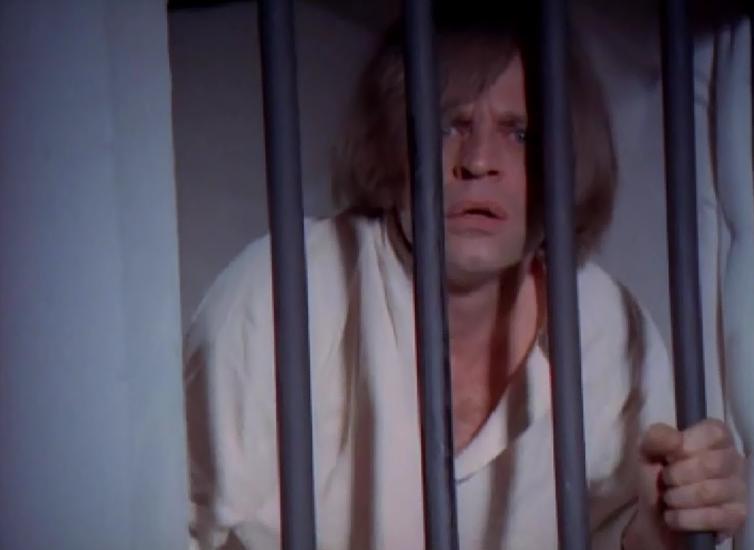
Renfield seems to have some psychic connection with Count Dracula and senses that he is nearby, jumping onto the window ledge to look at the house acrossthe way which has been purchased by the Count who wants to start “a new life in a new land”.  From time to time Renfield becomes very agitated and screams (although we never actually see Renfield shouting or screaming in the screen space), at these times Doctor Seward usually tends to him and is very gentle with Renfield.  It becomes clear as the film goes on that Renfield’s seizures, screaming and crying tend to coincide with times when Dracula is in close proximity and/or is carrying out his attacks. 

Van Helsing explains, “The man whose voice you hear was once as sane as you or I.  He had a daughter, young and beautiful.  Together they were travelling in Transylvania.  They stopped in a town called Bistritz.  One night the girl was found unconscious in her bed; half dead from loss of blood.  Day by day, like the fly who is the spider’s prey, she grew weaker.  Her father watched and waited by her bedside.  Until one night, when she was close to her end, the neighbours heard a terrible shriek – and the father as he is now.” 

Despite the fact that Renfield clearly abhors Dracula and is upset by his presence, at times he too appears to be under the Count’s spell.  Sensing the Count is in his new home and seeing him appear at the window, Renfield breaks his way through the bars on his window and then throws himself to the ground causing himself several injuries; he has to wear a neck brace and has his arm in plaster.  Doctor Seward feels that Renfield’s sickness has passed and tries to get him to communicate.  He asks Renfield what he knows and although we do not hear him speaking we can hear grunts and Seward obviously gets enough information out of Renfield to be able to inform Van Helsing that Dracula now lives in the house across the street. 

As a result Mina says she would like to speak with Renfield as he could be the key to Count Dracula.  Van Helsing consents to Mina’s request and agrees that it’s possible Renfield may reveal more to her than he does to the staff at the clinic.  Unfortunately for Mina the Count decides to take control of Renfield once more and orders Renfield to kill Mina.  Renfield obeys the order and grabs Mina by the throat, fighting off the warden to strangle her. 

But as Jonathan Harker, currently being attacked by Count Dracula’s stuffed animal minions, shows Dracula a crucifix, the Count’s powers abate.  At that moment Renfield releases Mina from his hold.  When we next see him he is in a strait jacket, or rather, looks like we’re supposed to believe he is in a strait jacket – a cut-price one.  Look at this picture – this looks like a blanket wrapped around Renfield, held in place with several belts.  Renfield’s hands are actually not held in place with anything, Klaus is holding his arms across his chest but his hands are clearly totally free, meaning he could easily open the belts and free himself.  That the warden should look so smug and say to him, “I’d like to see you find your way out of that, my lad”, is therefore laughable. 

Renfield looks very sad and when we next see him Doctor Seward asks him what is wrong and he mouths the word Varna, which is where Dracula is headed.  Shortly afterwards Seward finds Renfield dead in his cell.  For a character who only appears for about 8 minutes of a 93 minute film, Renfield is key to the action and thanks to his information Jonathan Harker and Quincey Morris are able to track down the Count and put an end to his life by setting fire to him in his coffin. 

Count Dracula is well worth a watch.  It’s got everything you can want in a vampire film:

Klaus Kinski playing a nutter

Beautiful women

Sexy vampire ladies


Erm, stuffed sharks… and

Sexy Dracula

and bad visual effects

To round off the review, here’s Klaus catching insects:

What more can you ask for?

Other information about the film:  In biographical notes of Klaus Kinski on the Venom (Dir Piers Haggard, 1981) DVD, Jay Marks and Waylon Wahl recount a story about Dracula: “While making Jess Franco’s Count Dracula (1969), in which he played the lunatic Renfield, Kinski castigated Franco for shooting his scenes on a set instead of in a real sanitarium cell.  Franco responded by telling the actor: “I had planned to shoot it in a real cell but then it occurred to me that they might not let you out!””


Click the image to purchase from Amazon

Posted in Film Review | Tagged , , , , , , , , | 4 Comments

Klaus Kinski Scares a Lady with a Comb

THE FIGHTING FISTS OF SHANGHAI JOE aka The Dragon Strikes Back; My Name is Shanghai Joe; Il mio nome è Shanghai Joe; Mezzogiorno di fuoco per Han-Hao; Der Mann mit der Kugelpeitsche; Mein Name ist Karate-Jack (Dir Mario Caiano, 1974)

Basic plot: Shanghai Joe moves to Texas with the hope of getting work as a cowboy there.  As an outsider and foreigner he finds it harder than anticipated to be accepted and he encounters racism and ignorance everywhere he goes.  Finally he appears to get his wish when he is offered work on Stanley Spencer’s cattle ranch.  Joe soon realises, however, that it is not cattle that his boss trades in but slaves smuggled in from Mexico. Fighting against this injustice Joe angers his boss, resulting in Spencer offering up a reward of $5,000 to anyone who can bring him the head of Shanghai Joe.

 Cast: Scalper Jack – Klaus Kinski; Shanghai Joe – Chen Lee; Burying Sam – Gordon Mitchell; Pedro, the Cannibal – Claudio Undari; Tricky – Giacomo Rossi-Stuart; Spencer – Piero Lulli; Mikuja – Katsutoshi Mikuriya; Cristina – Carla Romanelli

Release date: 11 January 1974

Availability:  The Fighting Fists of Shanghai Joe is available from Amazon for less than £3 brand new on US import DVD as part of a double DVD set, with four other films: Vigilante Western Collection.  The film is dubbed, as usual, but the bonus is you get four other westerns to watch and one of them features Klaus Kinski: And God Said to Cain

The film in full – *SPOILER ALERT*:

It’s 1882 and Shanghai Joe is in San Francisco.  He’s decided he wants to make changes – he doesn’t want a job ironing shirts for $1 a week; he doesn’t want to wash dishes; and he doesn’t want to serve meals in restaurants.  Shanghai Joe’s already done that kind of work back home and now he wants to relocate to Texas – anywhere in Texas – and become a cowboy.  Joe is told that real cowboys are fast and mighty strong but that’s okay because Joe is pretty fast and strong himself; we know this because we see him cracking a coconut open with just one flick of a yoyo.

So, Joe might have the qualities that make a real cowboy but acceptance is not exactly forthcoming and he encounters a lot of racism and ignorance on his journey to Texas.  In fact, the clerk at the train station would rather colour in the nipples on a photo of a nudie lady than serve the incredibly polite Shanghai Joe. 

The Americans Joe encounters never give him an easy ride – from insisting that he rides on top of the stagecoach instead of with the other passengers; to trying to con him in a game of five card stud; to making pathetic racist comments and poor jokes at his expense (“Why do the Chinese use chopsticks to eat with?  Because they’ve never seen a fork.”  I didn’t laugh and neither did the man who said it when he found of just what Joe could do with a fork.), Joe is constantly derided and told that he is “not like everyone else”. 

Sometimes Joe takes these insults and the unfair treatment with a smile (when forced to ride atop the stagecoach, Joe takes the opportunity to wave at passing children as he rides away), but other times he’s just happy to outsmart the perpetrators whether with his lightning fast reflexes or his other special abilities.  But there are times when Joe has to make use of his skills in martial arts and fighting.  Most of the fighting is done with great humour, however, even if it is bloody.  And there’s always the sense that the idiots are only getting their comeuppance anyway.

Eventually after gaining himself a much-deserved reputation as someone who can handle trouble when it comes, Joe is offered a job working for Stanley Spencer, the biggest cattle raiser in the area.  Spencer’s men tell Joe that they are losing cattle to rustlers every day and they could do with his help.  But he doesn’t even have time to collect his first pay cheque before he realises that Spencer is smuggling from Mexico – but not cattle, he’s running a slave trading business with the ranch serving as cover.

When the Mexican army arrive to bust up the operation and to find out who is responsible for the slave trading just at the moment 28 new recruits arrive, Spencer’s men suspect that Joe has set a trap for them.  In order to make sure there are no witnesses to name the recruiters, Spencer’s men open fire and shoot at the Mexicans. 

As the soldiers advance Joe beats up Spencer’s men and then flees the scene.  Once the soldiers have gone Joe inspects the scene of the crime and finds one Mexican is still alive.  The Mexican man begs to be killed but instead Joe bandages his wounds and gives him water.  He helps him onto a horse and tells him: “Go home and tell them that slavery is far worse than hunger.”

After further battles with Spencer and his men, Joe heads off to see the Marshall to report to him that Spencer is a slave trader; unfortunately Joe does not realise that as far as everyone else around there is concerned Spencer is the No 1 citizen.  So instead of the Marshall taking action against Spencer, he proposes to arrest Joe for stealing a horse from Spencer’s ranch.  Joe doesn’t hang around to be arrested.

Hearing that Joe has tried to dob him in to the Marshall, Spencer declares that Joe is a menace to one and all and offers $5,000 to whoever brings in Joe’s head.  Several characters are suggested as ideal for the job and most likely to succeed:  Pedro the Cannibal; Burying Sam; Tricky the Gambler; and Scalper Jack.

Joe discovers the plot to have him murdered when a love interest arrives on the scene – Cristina, the daughter of the Mexican man who Joe had helped following the Spencer gang attack, comes to tell Joe that she’s heard that Spencer has hired 4 killers to track him down and kill him.  She invites him to go off into the mountains with her (she’s a bit forward like that) and to live with the Mexican people.  Within seconds Joe and Cristina are in love but Joe keeps his mind on the job in hand and says he should stay in Texas in order to stop the Mexican slave trading from starting up again. 

Staying in Texas means facing the killers, of course…  The killers are all played by great character actors – Pedro the Cannibal is big and hairy; Burying Sam is tall and spectre-like; Tricky the Gambler fancies himself as a bit of a looker and a dandy – and the attempts at killing Joe are played for laughs.  But even if they give him some trouble, none of the killers is a match for Shanghai Joe.  So this is where we finally encounter Scalper Jack (Klaus Kinski)…   

Joe has just bid farewell to an incredibly batty but kind-hearted Doctor who came to see Cristina to treat her for glandular fever.  Scalper Jack lies in wait to have a quiet word with the Doctor to find out Joe’s current whereabouts. 

Scalper Jack, we’re told, is not really evil, he just has one great vice in life: scalping his victims whilst they’re still alive – “because it’s no fun scalping a dead man.”  The Doctor is utterly dismayed to come across Jack at the roadside. Moments earlier he had been telling Joe that he had planned to leave the West because “America’s got some of the biggest bastards God created.”  Unfortunately he left it a bit too late…

Seeing the Doctor’s wagon, Jack wakes himself up, gets off the rock he’s been dozing on and, hands in pockets, saunters casually over to the Doctor, who simply exclaims, “Jack!”.  Jack’s obviously got a terrible memory as he then asks the Doctor, “Do you know who I am?”  Nah! He just got lucky when he plucked the name Jack off the top of his head; the top of which Jack is about to cut off with his mighty fine scalping knife collection if the Doctor does not tell him where Shanghai Joe is currently residing.  Like the crazy but kind-hearted fool that he is, the Doctor resists and Jack’s knives come out. 

Jack gets the Doctor on the ground and tears off his glasses, throwing them down – but they must have been fitted with elastic as, in a classic continuity error, they are back on the daft Doctor’s furry fizzog just 3 seconds later.  Jack tells him, “Don’t move or you’ll really get hurt.”  Think about that proposition for a moment: you either sit still and get scalped alive, or you move and you really get hurt…?  There’s not a lot to choose from, is there?

Either way the Doctor’s scalp ends up on Jack’s person and Jack having, one way or another, discovered the whereabouts of Shanghai Joe watches the property until Joe makes an appearance.  When Joe exits the house, from his hiding place Jack gets Joe in his sights and shoots him twice – once through each leg.  Then, moving in closer on horseback, he admires his handiwork (should that be legiwork?), riding in circles around the maimed Joe, clearly delighting in the damage he has done. 

One moment he displays a smug toothy grin; the next his expression changes and darkens as he brings the butt of his rifle down to smash Joe in the face.

When Joe eventually comes around, he is back inside the house and is wearing shackles.  Jack is sitting at the bottom of the bed combing the hairpiece that came courtesy of the Doctor and singing to himself.  Cristina is snivelling on the bed, and probably hoping that what she’s seeing is a result of some severe side effect to the glandular fever medication (you know, the type, affects from 1-in-10000 to 1-in-100000), but unfortunately it’s not; Scalper Jack is no hallucination, he’s a living nightmare.  He’s the kind of living nightmare that manages to scare a feverish lady by waving a comb in front of his face and telling her to shush. 

If she’s scared of that she has not yet noticed the scary looking doll hanging in a hammock.  Scalper Jack has though and he seems to have taken a shine to the funny looking thing:  “You’re so pretty.  Pretty.  Sweet.  Ha ha! Pretty.  Pretty.  Ha ha!”  He likes the doll so much that he lets it wear the Doctor’s scalp.  Looking for a replacement for the scalp, he goes over to inspect Cristina’s rather fine head of hair.  She doesn’t like being so brutally inspected as Jack straddles her and pulls her hair, and she whimpers loudly. 

Seeing Joe looking at him, Jack sneers “What are you looking at?” and then approaches Joe, having decided to take his scalp first instead.  Cristina snivels and Joe fights back as Jack takes his knife to Joe’s head, breaking out of the shackles and, despite the bullet wounds to the legs, taking on Jack for a short but exciting fight.  Poor old Klaus, dead in less than 8 minutes’ screen time, but what a part he played!

RIP Scalper Jack…

Jack’s scalp is despatched as a kind of love token to Spencer – obviously not what he’d expected as he did not appear to be best pleased with the gift.  One of his men says, “There’s no doubt about it, that’s Jack’s scalp.”  I wasn’t so sure myself as the hair was black rather than blonde but this is the world of Shanghai Joe where production props and continuity are not important.

Joe is more interested in getting rid of the bullets from his legs with just acupuncture for pain relief.  Bullets gone, he’s immediately in training for his final show down.  He doesn’t know who the next potential killer will be but Joe has been in training for the fight against evil all his life.  We’re told he’s put himself through several years of strenuous training; he can bear hunger; he can bear pain; he can bear thirst.  His body is as flexible as a reed but as hard as steel. 

Just as well, really, as the next killer has been through exactly the same training as Joe and knows all the same tricks and techniques.  Unlike the crazy killers Joe has faced up until now, the next guy Spencer engages knows what he is doing and is a fair match for Joe.  Yes, this guy went through exactly the same Fire Lotus training that Joe took but unfortunately he must have been off sick the day they covered the most important lesson: the Fire Lotus knowledge should not be used to commit an act of injustice or else the Lotus will wreak its vengeance.  Yes, I don’t know what I’m talking about and I don’t know the guy’s name either but, trust me, this is all covered right at the end of the film in super quick time.

Anyway, the mysterious guy tracks down Joe to Cristina’s village.  He reveals his Fire Lotus tattoo and says he has betrayed the law and wants to kill Joe.  So Joe, somewhat surprised to see a fellow Fire Lotus disciple (they’re few and far between), prepares for the final showdown.  Without going into detail, the fight and its end are spectacular.  And, of course, having held the Fire Lotus law sacred Joe is repaid with good.  But he cannot live with Cristina in her village because he’s a man on a mission; a man alone.  His life belongs to the victims of injustice and not to just one woman, even if she is beautiful.  With that Joe rides off into the distance looking for evil so he can repay it with justice.

Kinski’s acting methods:

As ever, Klaus has his hands in his pockets:

And it took him a little while to remove them:

There was the usual great close up of his eyes (or eye in this case):

A bit of hat wearing, a lot of weirdness, he kills, then he dies, the usual really.

This is Scalper Jack resting his chin on the scary doll, which is wearing the scalp.  If that’s not creepy, I don’t know what is…

The first sighting of Jack is 1 hour 7 minutes and 48 seconds into the film and with a total on-screen time of less than 8 minutes it’s surprising that Klaus is credited as “co-starring”.  Nonetheless, he’s the star as far as I’m concerned; his appearance is what I was waiting for and I was not disappointed.

Wearing a silly hat, Klaus’ ears appear to stick out.  He looks like a cross between Dopey and Michael York; not the most flattering look for my idol – but he still manages to look handsome at times…


Click the image to purchase from Amazon

Posted in Film Review | Tagged , , , , , , , , | Leave a comment